
To move your tiny house without surprises, guarantee your tow setup is carefully planned with the right trailer, hitch, and a vehicle that can handle the weight. Use a weight-distributing hitch for even load spreading, and check that all connections are secure. Choose a sturdy, reinforced trailer with quality brakes, lighting, and securement tools to protect your luxury features. Paying attention to these details helps prevent damage and ensures a smooth, safe journey—continue to discover how to optimize your move.

Get compact home essentials delivered free with Prime
- Fast, free delivery on millions of items
- Prime Video, Amazon Music and more included
- Member-only deals all year
Key Takeaways
- Ensure the tow vehicle is rated for the tiny house’s weight and dimensions.
- Use a high-quality, reinforced trailer with proper weight capacity and secure attachment points.
- Distribute weight evenly with a weight-distributing hitch to enhance stability and control.
- Conduct thorough safety checks on brakes, lighting, and securing straps before departure.
- Plan the route carefully to avoid rough roads and minimize vibrations and movement during transit.
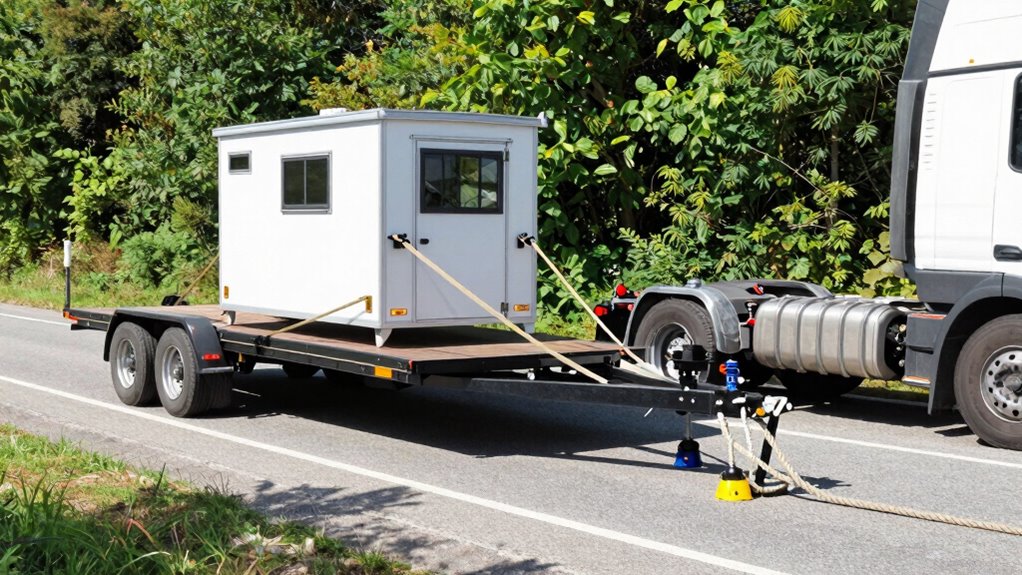
Moving a tiny house can be a smooth process if you choose the right tow setup from the start. Your choice of tow setup impacts not only the safety and efficiency of the move but also how well your tiny house maintains its luxury features and interior design during transit. When selecting a towing system, you want to guarantee it supports the weight and dimensions of your tiny home without causing undue stress on the structure or compromising its aesthetic appeal. A proper setup involves more than just hitching up and hitting the road; it requires careful planning to prevent surprises along the way.
Choosing the right tow setup ensures safe, smooth transport and preserves your tiny house’s luxury features and aesthetic appeal.
A key aspect is understanding the weight distribution and confirming your tow vehicle can handle the load. Your tiny house, often equipped with high-end finishes and luxurious features, needs a setup that minimizes movement and vibrations, which could otherwise damage delicate interior design elements. Using a weight-distributing hitch can help spread the load evenly across your axles, providing better stability and reducing sway. This setup is essential if your tiny house includes custom cabinetry, luxury fixtures, or premium appliances, all of which can be costly to repair or replace if damaged during transit. Additionally, ensuring your trailer has proper weight capacity is crucial for a safe and secure move. It’s also important to regularly check your equipment and connections for signs of wear to prevent breakdowns during the journey.
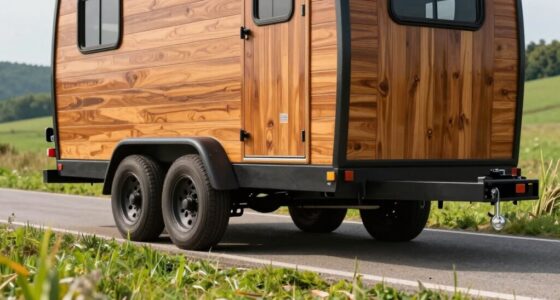
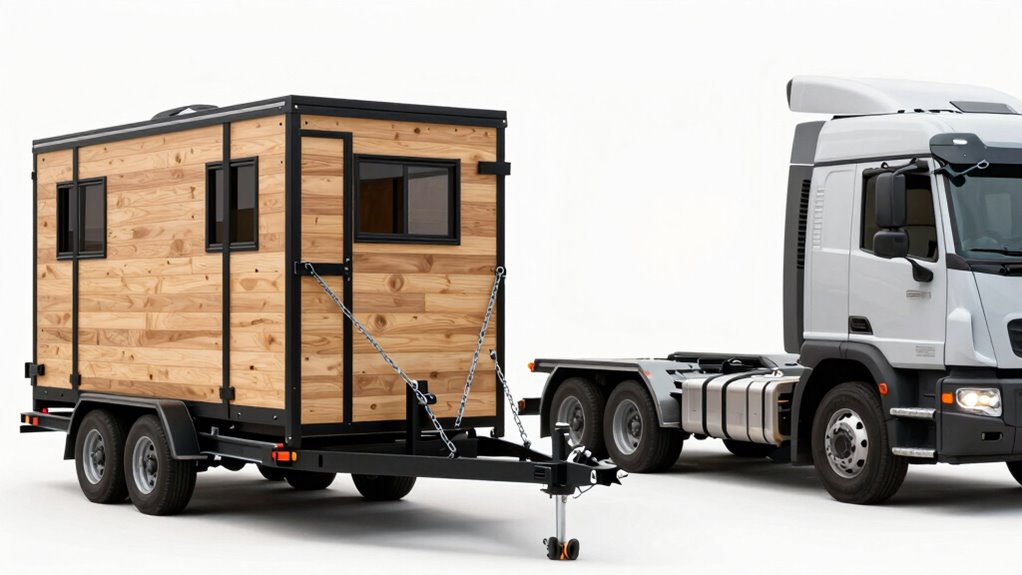
Additionally, the type of trailer you choose plays a significant role. For a tiny house with intricate interior design details, a gooseneck trailer often offers better control and stability compared to bumper pulls. It guarantees smoother handling and reduces the risk of bouncing, which could disrupt your carefully curated interior aesthetic. The trailer’s construction quality also matters—opt for options with reinforced flooring and solid framing to prevent flexing that could crack or damage luxurious finishes. Selecting a trailer with reinforced flooring can be especially beneficial for maintaining the integrity of the interior over long distances.
Safety features are equally important. Make sure your tow setup includes reliable brakes, especially for longer distances. Upgraded braking systems on your trailer can prevent accidents and protect your interior features from sudden jolts. Pay attention to lighting and signaling systems as well, since visibility is vital when navigating busy roads with a sizable load. Properly securing your tiny house with high-quality straps and wheel chocks guarantees it stays in place during transit, preserving the integrity of your interior design and luxury features.
tiny house trailer with reinforced flooring
As an affiliate, we earn on qualifying purchases.
As an affiliate, we earn on qualifying purchases.
Frequently Asked Questions
What Is the Maximum Weight a Tow Setup Can Handle Safely?
You can typically tow a tiny house weighing up to 10,000 to 15,000 pounds safely, but it depends on your tow vehicle and setup. Make certain you have proper towing insurance to cover potential damages and roadside assistance in case of breakdowns. Always check your vehicle’s towing capacity and the tiny house’s weight before moving. This guarantees a safe journey and peace of mind, no surprises along the way.
How Do I Choose the Right Trailer for My Tiny House?
You should choose a trailer based on your tiny house’s size and weight. Look into different trailer types like gooseneck or bumper pull, which offer stability and ease of maneuvering. Consider suspension options too—spring suspension is common, but air suspension provides a smoother ride for heavy loads. Make sure the trailer’s weight capacity exceeds your tiny house’s weight, ensuring safe and reliable transport.
Are Special Permits Required for Towing a Tiny House?
They say, “Better safe than sorry,” and that’s true when towing a tiny house. You’ll likely need special permits and possibly a towing license, depending on your area’s permit regulations. Always check local and state regulations before you hit the road. Some places require permits for oversized loads, so securing these in advance guarantees a smooth move without surprises or fines. Planning ahead keeps your journey safe and hassle-free.
How Do Weather Conditions Affect the Towing Process?
Weather conditions greatly impact your towing process. You need to prioritize weather safety and stay alert to changing road conditions. Rain, snow, or ice can make roads slippery and reduce visibility, increasing the risk of accidents. Wind can also push against your tiny house, making control difficult. Before you start, check weather forecasts, plan for delays if necessary, and guarantee your vehicle and trailer are well-maintained to handle adverse conditions.
What Safety Equipment Should I Have During Towing?
You should have essential safety gear like reflective vests, gloves, and sturdy footwear to guarantee visibility and protection. An emergency kit is also vital, including first aid supplies, flashlight, batteries, and basic tools. These items help you stay prepared for unexpected situations during towing. Always double-check that your safety gear is in good condition, and keep the emergency kit accessible, so you’re ready to respond quickly if needed.
Conclusion
By choosing the right tow setup, you can guarantee a smooth, surprise-free move for your tiny house. Remember, proper planning and equipment are key to avoiding accidents and damage. Did you know that nearly 60% of moving accidents happen due to improper towing setups? Staying informed and prepared helps you avoid that statistic. With the right approach, your tiny house journey can be safe, efficient, and stress-free—making your new adventure as enjoyable as it should be.
Halloween Picks
halloween
As an affiliate, we earn on qualifying purchases.