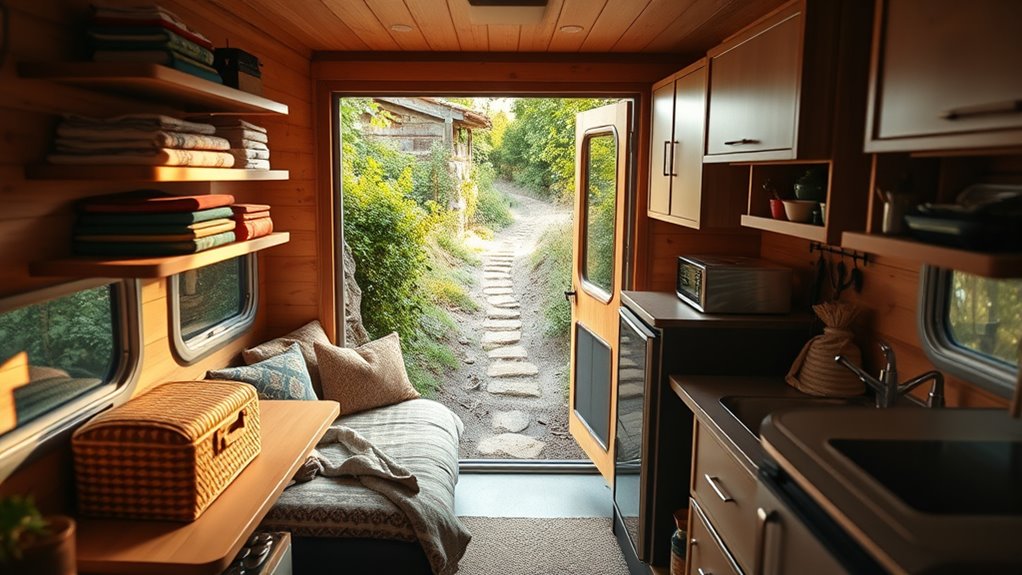

To prepare your tiny home for long trips, focus on installing reliable power sources like high-efficiency solar panels and a sturdy battery bank to keep lights and appliances running. Keep your water system efficient with low-flow fixtures and backup supplies, and plan routes with designated stops for refueling and water. Organize safety equipment and troubleshoot mechanical issues beforehand. With these tips, you’ll be ready for a smooth and enjoyable journey—exploring more ways to stay prepared along the way.
Key Takeaways
- Install efficient solar panels and a reliable battery system to ensure consistent power supply during long trips.
- Incorporate low-flow fixtures and water filtration to conserve water and reuse gray water effectively.
- Prepare backup water supplies and plan routes with designated stops for refueling and recharging needs.
- Conduct thorough vehicle safety checks, organize emergency kits, and verify all systems before departure.
- Develop a detailed travel plan, keep essential items accessible, and pack versatile, space-saving gear for ease and comfort.
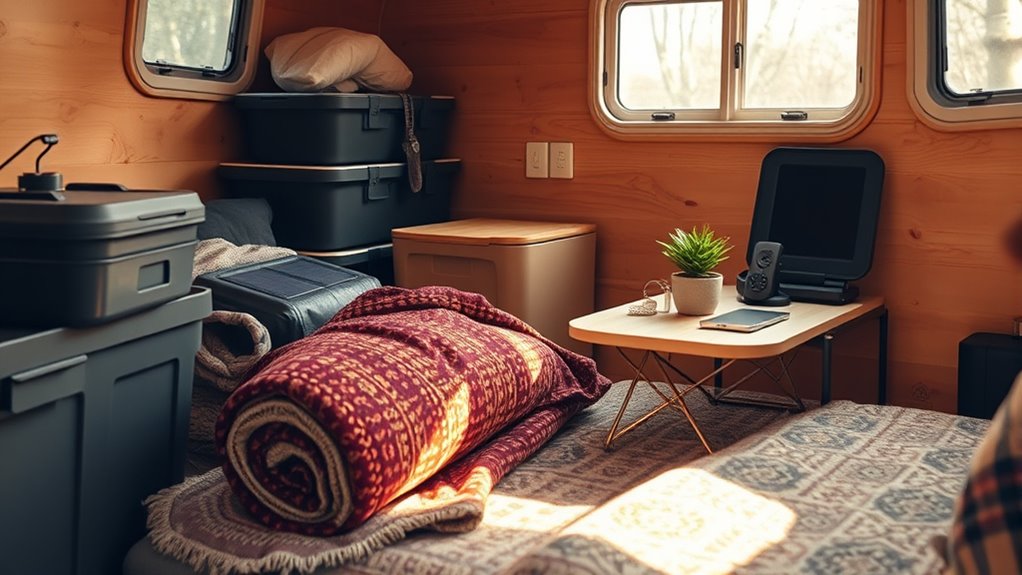
Starting on long trips with your tiny home requires careful preparation to guarantee comfort, safety, and functionality on the road. One of the most essential aspects is setting up reliable power sources, and solar power is an excellent choice for tiny homes. Installing flexible, high-efficiency solar panels allows you to harness sunlight during your journey, reducing dependence on external power hookups. Make sure your solar system includes a quality battery bank to store energy for cloudy days or overnight use. This setup keeps your appliances, lights, and even small gadgets running smoothly without draining your batteries unexpectedly. Before hitting the road, test your solar system thoroughly to confirm it provides enough energy for your needs, and consider adding portable solar panels for extra flexibility when parked in sunny spots.
Water conservation is equally crucial for long trips, especially when you’re away from readily available water sources. To maximize your water supply, invest in low-flow fixtures for your sink, shower, and toilet. These fixtures considerably reduce water consumption without sacrificing comfort. Additionally, consider installing a water filtration system that allows you to reuse gray water safely for flushing or outdoor cleaning. Always keep an eye on your water levels and plan your stops accordingly, especially when traveling in remote areas. Stock up on water bottles and portable containers, and practice mindful water use—turn off faucets when not in use, and avoid wasting water on unnecessary tasks. Keeping a backup water supply is a good idea in case you encounter unforeseen delays or limited access to fresh water.
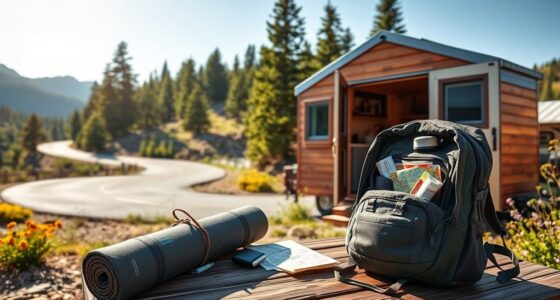
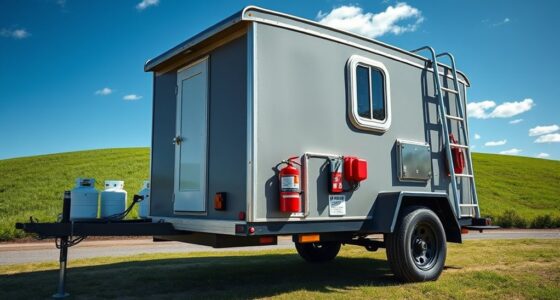
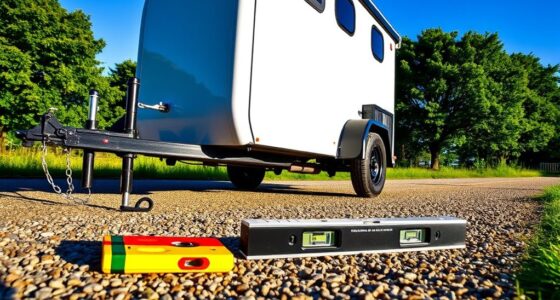
Preparing your tiny home for long trips also involves organizing your storage and essentials for easy access. Keep your emergency kit, tools, and spare parts within reach, and ensure your safety equipment, like smoke detectors and fire extinguishers, are fully functional. Before departure, check your tires, brakes, and hitch connections to prevent breakdowns on the road. Don’t forget to familiarize yourself with your route and potential stops for refueling, water, and power. Having a detailed plan helps you stay relaxed and confident during your journey. Pack lightweight, multi-purpose items to conserve space and weight, and always leave some room in your storage for unexpected finds or necessities. Preparing your tiny home thoughtfully guarantees that your long trips are enjoyable, safe, and stress-free, allowing you to focus on the adventure ahead with peace of mind.
Frequently Asked Questions
How Do I Secure My Tiny Home Against Theft During Travels?
To secure your tiny home against theft during travels, implement strong security measures like sturdy locks on doors and windows. Use alarm systems and motion-activated lights to deter thieves, and consider installing surveillance cameras for theft prevention. Keep valuables out of sight and park in well-lit, secure areas. Regularly check your security setup before leaving, ensuring all measures are active and effective to protect your tiny home on the go.
What Are the Best Ways to Manage Waste on Long Trips?
Managing waste on long trips is simple if you use portable composting systems for organic waste and plan gray water disposal carefully. You might worry about cleanliness, but with sealed compost bins, odors stay contained. Always locate designated dumping sites or use eco-friendly portable gray water disposal options. Regularly empty and clean your waste systems to prevent buildup, ensuring your tiny home stays fresh and environmentally friendly during extended adventures.
How Can I Ensure My Tiny Home’s Appliances Are Energy-Efficient?
You can guarantee your tiny home’s appliances are energy-efficient by choosing models with high energy ratings and low power consumption. Incorporate solar power to harness renewable energy and reduce reliance on external sources. Practice energy conservation by turning off appliances when not in use and using smart energy management systems. These steps help lower your overall energy use, making your tiny home more sustainable and cost-effective during long trips.
What Emergency Supplies Should I Carry for Remote Trips?
You’ll want to carry emergency supplies like a thorough first aid kit and ample food storage, because in remote trips, help can be miles away! Pack extra bandages, antiseptic, and any necessary medications. Stock non-perishable food, water, and snacks to keep energy up. Don’t forget flashlights, batteries, and a multi-tool. Being prepared guarantees you can handle surprises confidently, even if you’re stranded in the middle of nowhere.
How Do I Handle Internet Connectivity in Remote Areas?
To stay connected in remote areas, you should use satellite internet or mobile hotspots. Satellite internet provides reliable coverage even far from cell towers, guaranteeing you can access essential info and communicate. Mobile hotspots are convenient if you’re within cellular range, offering flexibility and quick setup. Carry a backup power source for your devices, and check coverage maps beforehand to confirm you’ll have connectivity during your trip.
Conclusion
As you pack up your tiny home for long journeys, you might find that the little things—like a cozy blanket or a favorite mug—suddenly become treasures. It’s funny how, in preparing for miles ahead, you realize what truly matters is the comfort and memories you carry inside. Sometimes, the smallest touches make the biggest difference, turning every trip into a homecoming. And when you arrive, you’ll see it’s these moments that make the adventure worth every mile.