
TL;DR

Get compact home essentials delivered free with Prime
- Fast, free delivery on millions of items
- Prime Video, Amazon Music and more included
- Member-only deals all year
Washington D.C. has announced that its network of smart composting bins has achieved a key collection milestone. This development highlights the city’s efforts to expand sustainable waste programs and reduce landfill waste. The full impact and future plans remain under discussion.
Washington D.C. has announced that its network of smart composting bins has achieved a significant collection milestone, marking a key step in the city’s efforts to expand sustainable waste management. The milestone underscores the growing adoption of innovative waste solutions aimed at reducing landfill contributions and promoting environmental responsibility. This development is important for urban sustainability initiatives and could influence other cities considering similar programs.
The milestone was officially reported by Waste Today and indicates that the city’s smart composting bins have collected a substantial volume of organic waste since their deployment. The bins, equipped with sensors and data-tracking technology, are part of Washington D.C.’s broader initiative to encourage composting among residents and businesses. While the exact collection figures have not been publicly disclosed, officials confirmed that the milestone reflects increased participation and effectiveness of the program.
According to city officials, the smart bins are designed to optimize collection routes, monitor fill levels remotely, and provide real-time data to waste management teams. This technological integration aims to improve efficiency, reduce operational costs, and promote higher participation rates among residents. The program’s expansion aligns with the city’s sustainability goals, including reducing waste sent to landfills and lowering greenhouse gas emissions.
Environmental advocates have welcomed the milestone, emphasizing that urban composting is a critical component of sustainable city planning. The city’s efforts are also part of a larger trend toward deploying smart waste management solutions in metropolitan areas, which seek to leverage technology to address waste challenges more effectively.
Implications for Urban Sustainability and Waste Management
This milestone demonstrates Washington D.C.’s commitment to integrating technology into waste management, potentially setting a model for other cities. The successful deployment of smart composting bins can lead to increased composting rates, reduced landfill reliance, and lower greenhouse gas emissions. It also highlights the potential for data-driven waste solutions to improve operational efficiency and resident engagement. As cities face mounting pressure to meet environmental targets, such innovations become increasingly relevant.
As an affiliate, we earn on qualifying purchases.
Growing Interest in Smart Waste Solutions in U.S. Cities
Over recent years, urban centers across the United States have shown increased interest in smart waste management technologies, including sensor-enabled bins and data analytics. These solutions aim to optimize collection routes, reduce costs, and improve recycling and composting participation. The trend is driven by municipal sustainability goals, technological advancements, and public demand for greener urban living. Washington D.C.’s recent milestone fits within this broader movement, which remains in a relatively early phase of widespread adoption.
While specific figures on composting participation are often not publicly available, reports indicate that cities implementing smart waste solutions are experiencing gradual increases in participation rates and operational efficiencies. The trigger for this growing interest appears to be a combination of policy initiatives, environmental commitments, and technological innovation, though the exact motivations vary among municipalities.
It is important to note that the overall effectiveness and scalability of these solutions are still being evaluated, and the long-term impacts on waste diversion remain to be seen.
Details of the Collection Volume and Future Expansion Plans
The specific volume of organic waste collected through the smart bins has not been publicly disclosed. The long-term impact on waste diversion rates in Washington D.C. is still being assessed, and plans for expanding the program are under consideration.
It remains uncertain how the program will scale, whether additional smart bins will be deployed, and how participation levels will evolve over time. The ongoing effectiveness of the technology in maintaining high engagement is also yet to be determined.
Next Steps for Washington D.C.’s Composting Initiative
City officials plan to evaluate the performance of the smart composting bins and assess the impact of the milestone on waste diversion. They are considering expanding the program to additional neighborhoods and increasing outreach to encourage participation. Further data collection and reporting are expected in the coming months to inform future decisions.
Other cities are likely to observe Washington D.C.’s progress and may consider adopting similar smart waste management solutions, potentially leading to broader implementation of urban composting technologies nationwide.
Key Questions
What exactly is a smart composting bin?
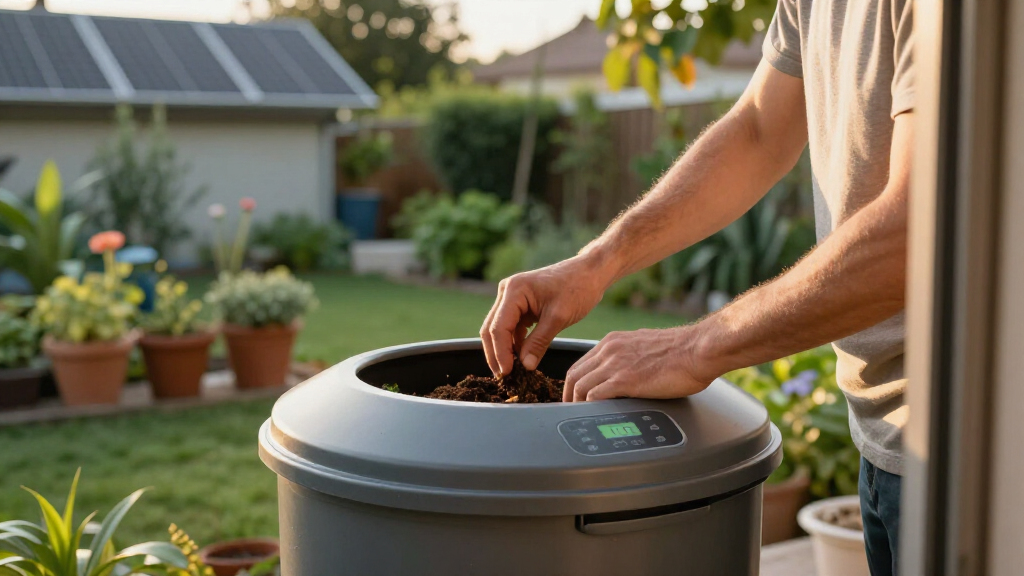
A smart composting bin is a waste container equipped with sensors and data-tracking technology that monitors fill levels, temperature, and other parameters to optimize collection and composting processes.
How much organic waste has been collected so far?
The specific volume of waste collected through Washington D.C.’s smart composting bins has not been publicly disclosed. Officials have confirmed a significant milestone but have not released detailed figures.
Will the program expand further?
City officials are considering expanding the program to additional neighborhoods and increasing outreach efforts, but specific plans have not yet been announced.
How does this impact the city’s sustainability goals?
The milestone indicates progress toward reducing landfill waste, lowering greenhouse emissions, and promoting sustainable urban practices, aligning with Washington D.C.’s broader environmental commitments.
Are other cities adopting similar technology?
Yes, several cities across the U.S. are exploring or implementing smart waste management solutions, including sensor-enabled bins, as part of their sustainability strategies.
Source: local
Halloween Picks
halloween
As an affiliate, we earn on qualifying purchases.