TL;DR
The small holes in some electrical plug prongs originally fitted over bumps inside older outlets to help keep plugs from slipping out. Modern outlets grip the blades directly, and manufacturers may now use the holes to position prongs during production or attach tags and locks.
A Family Handyman report explains that the small holes in some electrical plug prongs were originally designed to fit bumps inside older outlets, helping keep plugs from slipping out. Modern receptacles grip the metal blades without those bumps, while manufacturers may still use the holes during production or to attach tags and locks.

Get compact home essentials delivered free with Prime
- Fast, free delivery on millions of items
- Prime Video, Amazon Music and more included
- Member-only deals all year
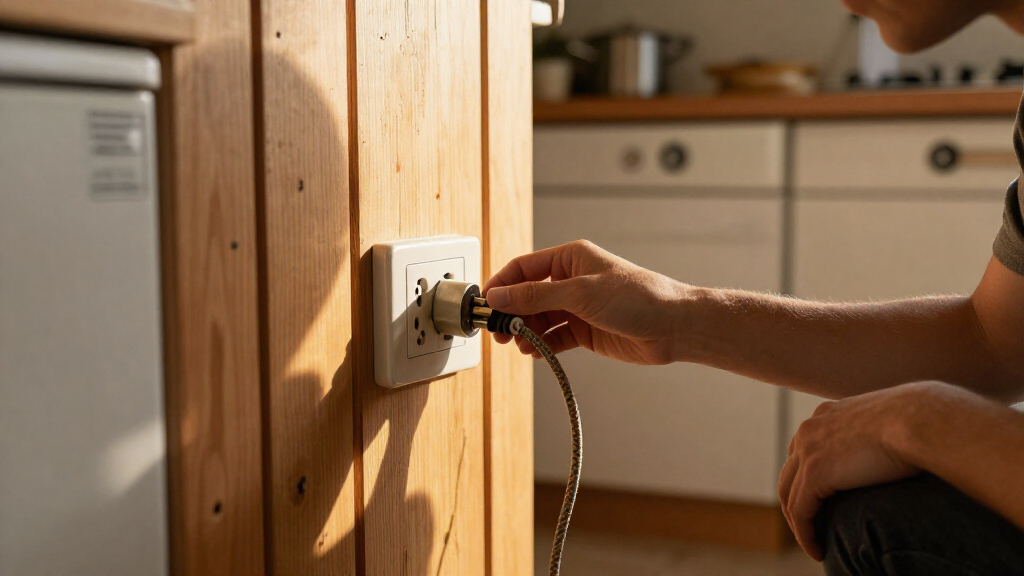
The holes appear near the ends of the flat metal blades on some plugs. In older outlet designs, small internal bumps, sometimes called detent nibs, fitted into those openings when a plug was inserted. The arrangement helped hold the plug in place, but it also made removal harder.
The National Electrical Manufacturers Association says manufacturers generally stopped using the bumps because they made it harder for outlets to meet the maximum force allowed for withdrawing a plug, without helping meet the minimum retention requirement. Today, the outlet’s contacts grip the prongs directly. If a plug repeatedly slips out, the source says the outlet may need replacement.
The holes are not required by American plug standards, according to the report, and they do not carry current or provide grounding. Manufacturers may use them to hold blades in place during production, or to attach a safety tag or lock to an unplugged appliance. On a three-prong plug, the round third prong provides the ground connection; the holes in the flat blades do not.
What the Holes Mean for Safety
Understanding the feature can help people distinguish a plug’s design from its safety function. The holes themselves do not make a plug safer, keep children from accessing an outlet, or serve as a substitute for grounding. Those functions depend on other parts of the electrical system and the equipment.
For child protection, the Electrical Safety Foundation International describes tamper-resistant receptacles as having internal shutters that block access when an object is inserted into only one opening. The holes in plug blades do not operate those shutters. If a plug is difficult to insert into a tamper-resistant outlet, the foundation says the plug itself may be damaged, rather than the receptacle being faulty.
A loose-fitting outlet deserves attention because the outlet, not the holes in the plug, is responsible for gripping the blades. The report says a receptacle that no longer holds a plug may need replacement. Electrical repairs should be handled with appropriate care, and readers unsure about a faulty outlet should consult a qualified electrician.
Products Worth Considering

LEVOIT Vital 200S-P Smart Air Purifier for Large Rooms, White

Hisense 55-Inch E6SR Series Hi-QLED 4K UHD Smart Roku TV (55E6SR, 2026 Model)

Philips Hue Play HDMI Sync Box 4K + 65 Play Gradient Smart TV Strip Light
As an affiliate, we earn on qualifying purchases.
From Retaining Bumps to Blade Grip
The original design relied on a mechanical fit between the holes and the bumps inside a receptacle. Changes to outlet requirements made that approach less useful: manufacturers needed outlets that held plugs securely while also allowing them to be withdrawn within specified force limits. The NEMA explanation cited by Family Handyman says the bumps complicated compliance with the withdrawal-force limit.
That history does not mean every outlet or plug is identical. Plugs vary in the number and shape of their prongs, and the presence of holes is optional. NEMA sets guidance for the size and placement of holes when manufacturers include them, but the report says the feature is not mandatory. It also has no connection to whether a plug is grounded.
What Varies by Plug Maker
The report does not identify which manufacturers currently use the holes for production or for attaching tags and locks, or how common each practice is. Those uses are described as possibilities, not as the reason for every hole on every plug. The precise purpose can therefore vary by product and manufacturer.
The source also does not establish whether a particular loose plug is caused by worn outlet contacts, a damaged plug, or another issue. A plug’s appearance alone cannot diagnose an electrical fault. No new standards change or safety alert is reported.
Check the Plug and Receptacle
There is no announced regulatory or industry change tied to the explanation. For readers, the practical next step is to check that plugs fit firmly and to treat repeated slipping or visible damage as a reason to stop using the affected outlet or device until it has been checked. The holes are not a repair feature.
For tamper-resistant outlets, avoid forcing a plug that will not insert normally; the Electrical Safety Foundation International says excessive force may point to a damaged plug. Anyone uncertain about an outlet’s condition should seek help from a qualified electrician rather than attempting an electrical repair without the needed knowledge.
Key Questions
Why do some electrical plug prongs have holes?
The holes originally fitted over bumps inside older outlets to help hold plugs in place. Manufacturers may now use them to position blades during production or attach tags and locks.
Do the holes help electricity flow?
No. The holes do not carry electricity. The flat blades conduct power whether or not they have holes.
Are the holes a child safety feature?
No. Tamper-resistant outlets use internal shutters to restrict access to their openings. The holes in plug blades do not provide that protection.
Do the holes provide grounding?
No. In a three-prong plug, the round third prong provides the ground connection. The holes in the flat blades are unrelated to grounding.
What should I do if a plug slips out of an outlet?
The report says an outlet that no longer grips a plug may need replacement. Because the cause cannot be diagnosed from the plug holes alone, have a qualified electrician check a loose or damaged receptacle.
Source: familyhandyman.com