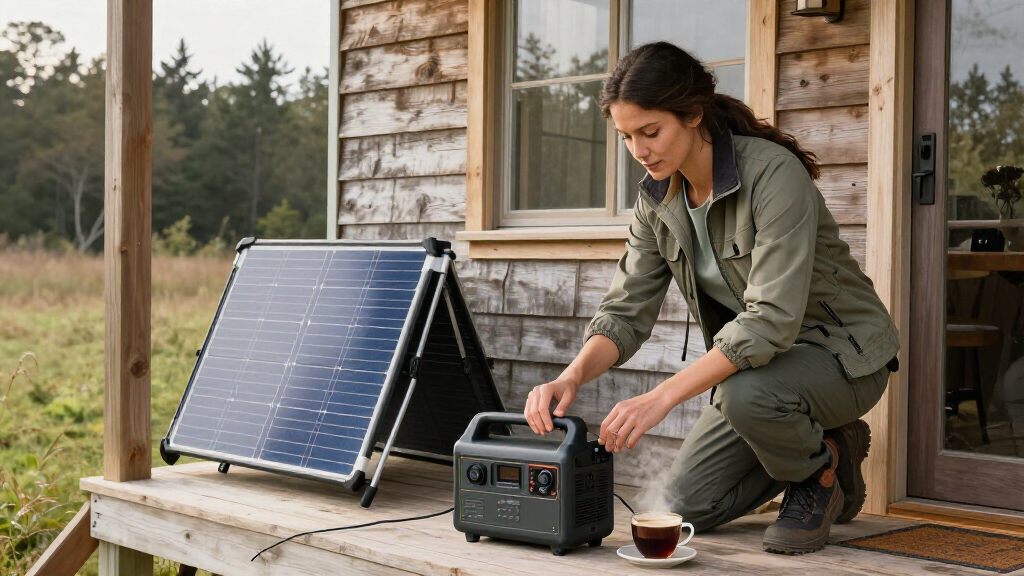

For most tiny-house owners, the UDPOWER S2400 is the strongest overall fit among these tiny house solar generators, thanks to its 2,083Wh LiFePO4 battery, 2,400W output, and six AC outlets. The BLUETTI Elite 100 V2 is a more compact alternative with a 200W panel included, while the Anker SOLIX C1000 Gen 2 suits buyers who want a capable station from a recognized power brand. The central tradeoff is between battery capacity and appliance output on one side, and portability, included solar hardware, and system expandability on the other. A small power station can cover electronics and select appliances, but it may not run every household load for long. Continue reading for the full breakdown and guidance on matching capacity to your actual tiny-house routines.

Get compact home essentials delivered free with Prime
- Fast, free delivery on millions of items
- Prime Video, Amazon Music and more included
- Member-only deals all year
Complete the kit


Key Takeaways
- UDPOWER S2400 leads for higher-demand use: its 2,083Wh LiFePO4 battery and 2,400W output give it more headroom than the smaller stations in this lineup.
- BLUETTI Elite 100 V2 is the clearest panel-included middle ground: it pairs a 1,024Wh station with a 200W solar panel without moving up to the S2400’s larger capacity class.
- The lineup spans very different power needs: DaranEner‘s 576Wh capacity is better aligned with light loads than with running several household appliances.
- Included panels change the value equation: the UDPOWER S1200 and BLUETTI Elite 100 V2 list panels in their kits, while the S2400 is described with a solar-panel option, so buyers should check exactly what is included.
- Output and stored energy solve different problems: a higher wattage rating can support more demanding devices, but battery capacity determines how long they can run.
| UDPOWER S1200 1190Wh Solar Generator Kit with 120W Panel |  | Best for Included Solar Capacity | Battery capacity: 1190Wh | Battery type: LiFePO4 | Solar panel: 120W foldable, IP65 waterproof | VIEW LATEST PRICE | See Our Full Breakdown |
| DaranEner 600W Portable Power Station with 576Wh Capacity and 100W Foldable Solar Panel |  | Best for Compact Starter Backup | Battery capacity: 576Wh | Battery type: LiFePO4 | Continuous output: 600W | VIEW LATEST PRICE | See Our Full Breakdown |
| UDPOWER S2400 Portable Power Station with Solar Panel Option |  | Best for High-Demand Backup | Battery capacity: 2083Wh | Battery type: LiFePO4 | Output and peak power: 2400W output; 3000W peak | VIEW LATEST PRICE | See Our Full Breakdown |
| Solar Generator with Panels Included, Portable Power Station 1200W Peak |  | Best Lightweight 576Wh Kit | Battery capacity: 576Wh | Battery type: LiFePO4 | Continuous and peak output: 600W continuous; 1200W peak | VIEW LATEST PRICE | See Our Full Breakdown |
| Anker SOLIX C1000 Gen 2 Portable Power Station |  | Best Fast-Recharging Mid-Size Station | Battery capacity: 1,024Wh | Battery type: LiFePO4 | Output wattage: 2,000W | VIEW LATEST PRICE | See Our Full Breakdown |
| BLUETTI Solar Generator Elite 100 V2 with 200W Solar Panel Included, 1024Wh |  | Best for Fast, Compact Backup | Battery capacity: 1,024Wh | Battery chemistry: LiFePO₄ | Surge power: 3,600W | VIEW LATEST PRICE | See Our Full Breakdown |
| tiny house solar generator | Battery capacity | Battery type | Weight | AC outlets |
|---|---|---|---|---|
| UDPOWER S1200 1190Wh Solar Gen | 1190Wh | LiFePO4 | — | 5 |
| DaranEner 600W Portable Power | 576Wh | LiFePO4 | 15.2 pounds | — |
| UDPOWER S2400 Portable Power S | 2083Wh | LiFePO4 | 41 pounds | 6 |
| Solar Generator with Panels In | 576Wh | LiFePO4 | 13.67 pounds | 3 x 110V |
| Anker SOLIX C1000 Gen 2 Portab | 1,024Wh | LiFePO4 | 11.3kg | — |
| BLUETTI Solar Generator Elite | 1,024Wh | — | 25 lb | 4 |
More Details on Our Top Picks
UDPOWER S1200 1190Wh Solar Generator Kit with 120W Panel
The UDPOWER S1200 pairs a 1,190Wh LiFePO4 battery with a supplied 120W panel, giving tiny-house owners a ready-made solar starting point and more stored energy than the 576Wh DaranEner or the other 576Wh portable station here. Its five AC outlets and range of USB and DC connections suit several small loads at once, such as lights, a router, and device charging. The tradeoff is its modest panel size: replenishing this much capacity from solar can take time, so it fits best as backup or for light daily use rather than as a complete household power system. The panel and station ship separately, and the listed dimensions describe an unusually broad, thin panel rather than clarifying the station’s size. Compared with the higher-output UDPOWER S2400, this is easier to justify for modest loads but has less reserve and power headroom.
Pros:- 1,190Wh LiFePO4 capacity provides more stored energy than the 576Wh options in this lineup.
- Includes a foldable, waterproof 120W solar panel.
- Five AC outlets plus USB, car, and DC ports support varied small-device loads.
- 1800W peak power offers some short-duration surge headroom.
Cons:- The 120W panel may recharge the large battery slowly in limited sunlight.
- Panel and power station ship separately.
- Station weight is not specified, making installation and portability harder to judge.
Best for: Tiny-house owners seeking a LiFePO4 backup battery with a foldable solar panel included for lights, networking equipment, and small electronics.
Not ideal for: Buyers who need to run high-wattage appliances or recharge a large battery quickly from solar; the 120W panel and unspecified station weight limit planning.
- Battery capacity:1190Wh
- Battery type:LiFePO4
- Solar panel:120W foldable, IP65 waterproof
- Peak power:1800W
- AC outlets:5
- USB ports:2 USB-C and 4 USB-A
- Other outputs:Car port and 2 DC5521 ports
- Listed dimensions:18.7 x 31.5 x 0.59 inches
Our verdict“Choose the S1200 for a larger LiFePO4 reserve and included solar panel for modest tiny-house loads, not for fast solar replenishment or appliance-heavy living.”
DaranEner 600W Portable Power Station with 576Wh Capacity and 100W Foldable Solar Panel
For a tiny house with low daily power needs, the DaranEner 600W is a straightforward starter option: its 576Wh LiFePO4 battery and included 100W panel can support a short list of essentials without the bulk of the 41-pound UDPOWER S2400. Its 1.1-hour AC recharge time is useful when grid power is available between outages, while the 600W continuous limit sets a clear boundary around what it can run. Think lights, phones, a router, or compatible medical equipment—not a kettle, heater, or several substantial appliances together. At 15.2 pounds, it is portable enough to move, though heavier than the 13.67-pound 576Wh station in this roundup. The panel also provides a modest solar input, so this is better suited to occasional backup or short off-grid stays than to serving as a tiny house’s main energy supply.
Pros:- Includes a foldable 100W solar panel for off-grid charging.
- LiFePO4 battery is specified for over 3,500 cycles.
- AC recharge is listed at 1.1 hours.
- 15.2-pound weight is manageable for occasional relocation.
Cons:- 576Wh capacity offers less reserve than the UDPOWER S1200, S2400, or Anker SOLIX C1000 Gen 2.
- 600W continuous output rules out many high-power household appliances.
- The 100W panel is limited for sustained tiny-house energy use.
Best for: Tiny-house residents who want an easy-to-move starter backup for electronics, lighting, and other low-wattage essentials, with a panel included.
Not ideal for: Owners planning to power heating appliances, kitchen equipment, or multiple high-draw devices, or anyone who needs substantial daily solar generation.
- Battery capacity:576Wh
- Battery type:LiFePO4
- Continuous output:600W
- Peak surge:1200W
- Solar panel:100W foldable
- AC recharge time:1.1 hours
- Weight:15.2 pounds
- Dimensions:12.1 x 7.1 x 9.7 inches
- Output ports:7
Our verdict“Pick the DaranEner for portable, low-wattage backup with a panel included, but not as a primary power source for an appliance-heavy tiny house.”
UDPOWER S2400 Portable Power Station with Solar Panel Option
The UDPOWER S2400 ranks highest here for stored energy and appliance headroom: its 2,083Wh LiFePO4 battery and 2,400W output suit a tiny house that needs more than lights and device charging. Six AC outlets and automatic backup switching add practical value for keeping several connected essentials running during an outage. It also supports up to 440W solar input and lists a 1.3-hour recharge time, though the supplied information does not identify an included panel; the solar panel is an option, and compatibility is limited to the UDPOWER 210W panel. That makes it less of a ready-to-use solar kit than the S1200 or DaranEner bundles. At 41 pounds, it is also far less convenient to move than the Anker SOLIX C1000 Gen 2. This is the strongest backup choice in the group, but its weight and panel constraints matter for a compact home.
Pros:- 2,083Wh capacity is the largest in this product batch.
- 2,400W output and 3,000W peak power provide more appliance headroom than the 576Wh, 600W options.
- Automatic backup switching can keep connected essentials powered during outages.
- Supports up to 440W solar input and lists a 1.3-hour recharge time.
Cons:- At 41 pounds, it is cumbersome to move around a small home.
- Solar panel is an option rather than a clearly included kit component.
- Solar compatibility is limited to the UDPOWER 210W panel according to the supplied data.
Best for: Tiny-house owners who need a larger reserve, multiple AC connections, and automatic outage backup for several essential devices.
Not ideal for: Buyers who need a lightweight station or a complete, flexible solar kit; the unit weighs 41 pounds and solar-panel compatibility is restricted.
- Battery capacity:2083Wh
- Battery type:LiFePO4
- Output and peak power:2400W output; 3000W peak
- AC outlets:6
- USB ports:2 USB-C and 4 USB-A
- Solar input:Up to 440W
- Weight:41 pounds
- Dimensions:15.8 x 9.5 x 10.1 inches
- Listed recharge time:1.3 hours
Our verdict“Choose the S2400 when backup capacity and output matter more than portability, and confirm panel compatibility before planning a solar setup.”
Solar Generator with Panels Included, Portable Power Station 1200W Peak
This 576Wh station is the lightest specified option in the batch at 13.67 pounds, making it easier to store in a compact tiny house or carry between the home and an RV than the 15.2-pound DaranEner. It offers the same 600W continuous output and 1200W peak rating, so the weight advantage does not bring extra appliance capacity. Its LiFePO4 battery, three AC outlets, 100W USB-C port, and solar, wall, and car charging support cover common small-device backup needs. The product title says panels are included, but the supplied specs do not state panel wattage, so I would verify the panel details before treating it as a defined solar package. Car cables are sold separately. Compared with the Anker SOLIX C1000 Gen 2, this option sacrifices capacity and output for a lighter, smaller backup unit.
Pros:- At 13.67 pounds, it is lighter than the DaranEner 576Wh station.
- LiFePO4 battery chemistry supports long-term use.
- Offers solar, AC wall, and car charging methods.
- 100W USB-C output can support compatible higher-power USB devices.
Cons:- 576Wh capacity and 600W continuous output limit runtime and appliance choice.
- Solar panel wattage is not provided in the supplied specifications.
- Car cables are sold separately.
Best for: Tiny-house owners prioritizing a light, compact station for essential electronics and modest loads, especially when moving or storage space is a concern.
Not ideal for: Buyers who need more than 600W continuous output, longer runtime, or clearly documented solar-panel specifications before purchase.
- Battery capacity:576Wh
- Battery type:LiFePO4
- Continuous and peak output:600W continuous; 1200W peak
- Weight:13.67 pounds
- AC outlets:3 x 110V
- USB-C:1 x 100W PD
- Other ports:2 USB-A and 1 x 120W car socket
- Charging methods:Solar, AC wall, and car
Our verdict“Choose this model for a lightweight 576Wh backup station, but verify the included panel’s capacity and skip it if you need stronger appliance support.”
Anker SOLIX C1000 Gen 2 Portable Power Station
The Anker SOLIX C1000 Gen 2 is a strong fit for tiny-house owners who want more output than the 600W DaranEner and lightweight 576Wh station provide, without stepping up to the 41-pound UDPOWER S2400. Its 1,024Wh LiFePO4 battery and 2,000W output can support a broader set of household devices, while the stated 49-minute AC recharge helps when grid power is available between outages. Solar recharge is listed at 1.8 hours, but the supplied specs do not give a panel wattage or say that a panel is included; the BLUETTI Elite 100 V2 in this roundup, by contrast, is listed with a 200W panel. At 11.3kg, the Anker is not featherweight, and its nine outlets may still require a power strip for a busy setup. Its listed 600W running-watt figure also merits clarification against the stated 2,000W output.
Pros:- 1,024Wh LiFePO4 battery offers more capacity than either 576Wh station in this batch.
- 2,000W output and 3,000W peak rating provide greater headroom than the 600W models.
- AC recharge is listed at 49 minutes.
- Solar recharge is listed at 1.8 hours.
Cons:- At 11.3kg, it is heavier than the two smaller-capacity portable stations.
- The supplied specs do not state solar-panel wattage or confirm that a panel is included.
- The listed 600W running-watt figure conflicts with the stated 2,000W output and needs clarification.
Best for: Tiny-house residents who need stronger output than entry-level 576Wh stations and value rapid AC recharging for outage readiness.
Not ideal for: Solar-first buyers who want panel wattage and inclusion clearly specified, or anyone prioritizing the lowest carry weight and capacity needs.
- Battery capacity:1,024Wh
- Battery type:LiFePO4
- Output wattage:2,000W
- Peak power:3,000W
- AC recharge time:49 minutes
- Solar recharge time:1.8 hours
- Total outlets:9
- Weight:11.3kg
- Dimensions:15.1 x 8.2 x 9.6 inches
Our verdict“Pick the Anker for a mid-size battery with high stated output and rapid AC recharge, but confirm its solar-panel setup and output ratings before building around it.”
BLUETTI Solar Generator Elite 100 V2 with 200W Solar Panel Included, 1024Wh
The BLUETTI Elite 100 V2 suits a tiny house where floor space is limited but reliable backup matters. Its 1,024Wh LiFePO₄ battery and 1,800W output can cover small appliances and electronics, while the included 200W panel gives you a ready solar-charging setup. At 25 pounds and roughly 12.6 inches long, it is easier to tuck away than the larger-capacity UDPOWER S2400, though it offers less stored energy and lower output for heavier loads.
Fast AC and solar charging, app controls, and ≤10ms UPS backup add convenience for outages and everyday monitoring. The tradeoff is that 1,800W rules out some high-draw appliances, and the 1,024Wh capacity may call for careful load management through an extended outage. Its four AC outlets also offer less connection room than the S2400’s six.
Pros:- Includes a 200W solar panel for a ready-made charging setup
- LiFePO₄ battery rated for 4,000+ cycles
- Fast AC and solar charging with app-based monitoring
- Compact footprint and 1,800W output for everyday backup loads
Cons:- 1,024Wh capacity offers less reserve than the UDPOWER S2400’s 2,083Wh
- 1,800W rated output cannot handle some high-draw appliances
- At 25 pounds, it is portable but not especially light for frequent carrying
Best for: Tiny-house owners who want a compact, ready-to-use solar backup kit for electronics, lighting, and modest appliances.
Not ideal for: Buyers who need to run high-wattage appliances or sustain several days of household loads without recharging.
- Battery capacity:1,024Wh
- Battery chemistry:LiFePO₄
- Surge power:3,600W
- Included solar panel:200W
- AC outlets:4
- UPS response:≤10ms
- Weight:25 lb
- Dimensions:12.6 × 8.5 × 9.8 in
Our verdict“Choose the Elite 100 V2 if you want a compact solar-ready backup for modest tiny-house loads, but opt for a higher-capacity model if longer runtimes or heavier appliances matter more.”

How We Picked
I ranked these six options around the needs that distinguish tiny-house power from occasional camping: usable battery capacity, AC output, solar readiness, and the ability to support a realistic mix of daily loads. Higher capacity and output earned more weight because a tiny house may rely on one station for several devices, but I did not treat a large rating as an automatic win. Kit completeness, portability, battery chemistry where specified, and practical fit for light versus heavier use also shaped each position.
The ranking reflects the details provided for each product, not claims of hands-on testing. The UDPOWER S2400 ranks first for its combination of capacity, LiFePO4 chemistry, and output; the BLUETTI Elite 100 V2 stands out for a more compact capacity paired with a 200W panel. Lower-capacity options rank better for smaller loads or starter setups, while models with limited or unclear panel details lose ground for buyers who want a ready-to-use solar kit. Before purchasing, I would verify panel inclusion, solar input limits, and device compatibility with the exact configuration offered.
Factors to Consider When Choosing Tiny House Solar Generators
Choosing a generator for a tiny house starts with the way you live, not the largest number on a product page. I would map the loads you need to cover, then check whether the station can run them at the same time and whether its battery can last through the hours you need. These broader checks can prevent a compact station from being asked to do the work of a full home energy system.
Separate running watts from battery capacity
Wattage describes how much power a station can deliver at once; watt-hours describe how much energy it stores. A device with a motor or heating element may demand a brief startup surge above its normal running draw, so check both figures for the device and the station. Then estimate runtime by adding the watt-hours of the loads you plan to use, while allowing for conversion losses and reserve capacity. A high-output model can still run out quickly if the battery is modest and loads stay on for hours. This distinction explains why the S2400’s larger capacity and output address different limits than a smaller station such as the DaranEner.
Build a load list around daily routines
List the devices you expect to use, their wattage, and how many hours each runs in a typical day. Pay special attention to refrigerators, pumps, cooking appliances, and space conditioning, since these can use far more energy than phones or lights. Decide which loads must run together and which can be scheduled one at a time; reducing overlap can let a smaller station do more. Avoid sizing around a single appliance’s peak number or assuming every device will run at its rated draw continuously. If your plan includes whole-house heating or cooking, compare the expected daily energy demand with the station’s capacity before treating a portable unit as your main power system.
Check solar input, not just panel wattage
A panel’s advertised wattage does not tell the whole charging story: the power station’s solar input limits, connector type, voltage range, and charge controller compatibility also matter. A panel rated above the station’s accepted input may not charge it faster, and incompatible connectors can require an appropriate cable. Sunlight, panel angle, shade, and season all affect real-world production, so plan for less than a panel’s peak rating across the day. An included panel can make setup simpler, but it may be too small for the amount of energy you use. Check whether a kit supports adding panels later if regular off-grid use is the goal.
Choose a battery size with reserve in mind
Do not plan to use every listed watt-hour each day: conversion losses and a sensible reserve affect how much energy is available to your devices. A larger battery can cover cloudy stretches or heavier evening use, but it adds bulk and may cost more to move or store. For a tiny house used mainly as a weekend retreat, a modest station may be enough; full-time living calls for a more careful daily-energy calculation. Also check the stated battery chemistry and cycle-life information rather than assuming every station will suit the same charging frequency. The right size is the smallest system that covers your routine with room for the occasional high-use day.
Plan for installation, ventilation, and everyday access
A portable power station still needs a safe, practical home inside a tiny house. Leave room for the unit’s vents, keep it away from moisture and heat sources, and route cords so walkways and exits remain clear. Think about where solar cables will enter, where panels can sit in direct sun, and whether the station is easy to reach when you need to check its display or disconnect a load. A heavy unit that lives in one spot may work well for a fixed setup but be inconvenient if you expect to bring it indoors each night. Before buying, measure both the storage space and the path needed to carry the station there.
Know when a portable generator is not enough
Portable stations are a useful fit for selected loads, but they do not automatically replace a wired household power system. If you need to run large appliances continuously, power multiple circuits, or feed an existing electrical panel, check the station’s approved connection methods and local electrical requirements. Do not improvise a connection to household wiring; use equipment and installation methods approved for that purpose. A larger station may extend runtime, but it cannot solve every limitation in solar input or system integration. Buyers who need whole-house coverage may be better served by a designed battery-and-inverter system than by stacking portable units without a clear plan.
Frequently Asked Questions
Can a portable solar generator run a tiny house all day?
It can cover some tiny-house routines, but whether it lasts all day depends on your loads, sunlight, and battery capacity. Lights, phones, laptops, and efficient small appliances are a very different demand from electric cooking, heating, or air conditioning. Estimate daily watt-hours from the devices you plan to use, then compare that with the station’s capacity and expected solar recharge. Also check whether the station can handle the devices’ combined running and startup wattage. For full-time use, treat a portable unit as part of a power plan rather than assuming it will replace every household circuit.
Should I choose a larger battery or a higher-wattage power station?
Choose based on the problem you need to solve: battery capacity affects runtime, while output affects which devices can run at once. If your appliances fit within a station’s output but the battery runs down too soon, more watt-hours may help more than a higher wattage rating. If an appliance exceeds the station’s output or has a large startup surge, extra battery capacity will not make it compatible. Some tiny-house owners need both, especially when they use several appliances or want longer periods between solar charges. Make a load list before comparing headline specifications.
Is an included solar panel enough for full-time tiny-house living?
Not necessarily. The panel included with a station can make it easier to start charging, but its output may not replace the energy you use in a day, particularly with cloudy weather or high-demand appliances. Check the station’s accepted solar input and whether it can take additional compatible panels. Then compare expected daily production with your estimated consumption, allowing for changing sunlight and panel placement. For a full-time setup, the panel and station should be planned as one system rather than selected independently.
Can I run a refrigerator and other appliances from the same station?
Possibly, if their combined running wattage stays within the station’s output and any startup surge is supported. A refrigerator also cycles on and off, so its energy use over a day matters more than a single momentary wattage figure. Add the energy needs of lights, electronics, and other loads that will operate at the same time, then compare the total with the battery capacity. A station may run the refrigerator but leave little reserve for other appliances or overnight use. Check the manufacturer’s power specifications for each device rather than relying on appliance category alone.
What should I verify before connecting a solar generator to tiny-house wiring?
Check the station maker’s approved connection method, output type, grounding guidance, and any limits on connecting it to a transfer switch or household circuits. A portable station’s AC outlets are not automatically a safe way to energize fixed wiring, and improvised connections can create hazards. Ask a qualified electrician to review the setup and confirm compliance with local rules before making a permanent connection. Also plan how to isolate the station from other power sources and how cords will be protected from weather or damage. If you only need to power a few devices, plugging those devices directly into the station may be simpler than connecting house wiring.
Conclusion
For the broadest mix of tiny-house loads in this lineup, I would choose the UDPOWER S2400 as the best overall because its 2,083Wh LiFePO4 battery and 2,400W output offer more headroom than the smaller stations. The BLUETTI Elite 100 V2 is my best pick for a more compact, panel-included setup, while the Anker SOLIX C1000 Gen 2 is the premium alternative for buyers drawn to Anker’s portable power range, after checking the exact solar kit and input details. For lighter use or a tighter starter setup, the DaranEner 600W is the value-minded choice, but its 576Wh capacity makes it a poor match for extended appliance use. Beginners who want a station and panel in one package can compare the UDPOWER S1200 and BLUETTI kits, confirming included accessories before ordering. If your specific need is more simultaneous AC connections and greater capacity, the S2400 stands out; if portability and an included panel matter more, the BLUETTI is the more balanced fit. I would make the final choice only after matching your daily energy estimate and appliance startup demands to the station’s ratings.
Fall Picks
fall essentials
As an affiliate, we earn on qualifying purchases.