
To use portable heaters safely indoors, always guarantee proper ventilation, especially with fuel-burning models, to prevent dangerous carbon monoxide buildup. Keep the heater away from flammable materials, check cords and plugs for damage, and never leave it unattended for long periods. Install carbon monoxide detectors if you use fuel-powered units. Regular maintenance and following manufacturer instructions are essential for safe operation. If you want to learn more safety tips, continue exploring these important guidelines.
Key Takeaways
- Always ensure proper ventilation and use carbon monoxide detectors when operating fuel-powered heaters indoors.
- Keep heaters away from flammable materials and never leave them unattended for long periods.
- Regularly inspect cords, plugs, and the heater for damage, and avoid using extension cords rated below the heater’s wattage.
- Follow manufacturer instructions carefully for safe placement, operation, and maintenance of the heater.
- Use electric heaters in well-ventilated areas, and avoid operating fuel-based units in small, enclosed spaces without proper airflow.
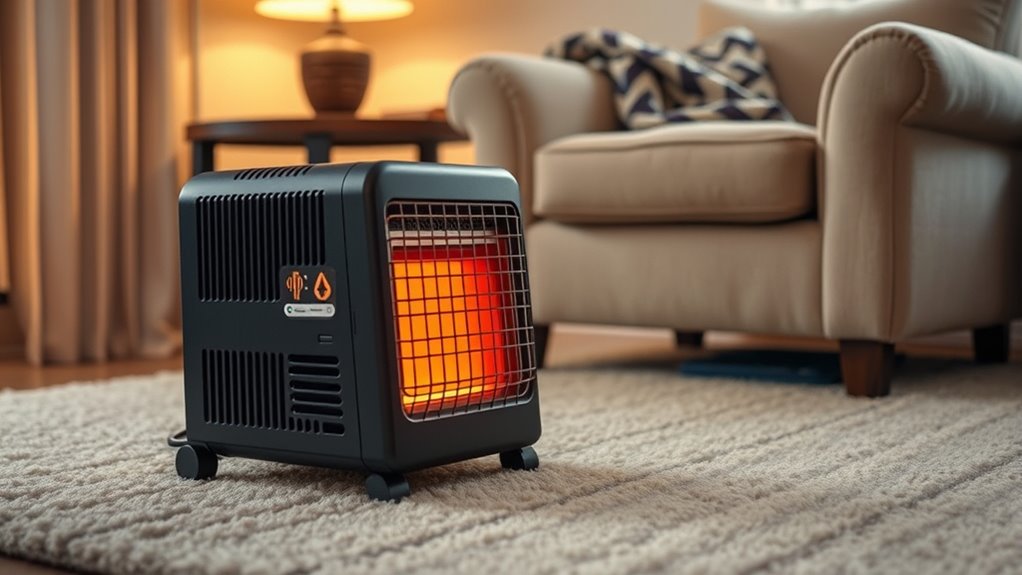
Are portable heaters the right solution to keep your indoor spaces warm and cozy? If you’re considering one for your home or office, it’s essential to understand how to use it safely. Portable heaters can be incredibly effective, but they come with risks if not operated properly. To ensure safety, you must pay attention to ventilation requirements and electrical safety. Proper ventilation helps prevent the buildup of dangerous gases or fumes, especially with fuel-powered units, while electrical safety minimizes the risk of shocks or fires caused by faulty wiring or misuse.
When using a portable heater indoors, first consider the ventilation requirements. Some heaters, particularly those that burn fuel such as kerosene or propane, release fumes that can be harmful in enclosed spaces. You need to ensure there’s adequate airflow and fresh air exchange to prevent carbon monoxide buildup. For electric models, ventilation isn’t usually a concern, but it’s still important to keep the area well-ventilated to avoid overheating or accumulation of dust and debris that could ignite. Always read and follow the manufacturer’s instructions regarding ventilation to reduce health and safety risks. If you’re using a fuel-powered heater, install carbon monoxide detectors nearby to alert you if dangerous gases accumulate. Never operate these units in small, sealed rooms without proper ventilation, as the risks of poisoning or suffocation increase dramatically.
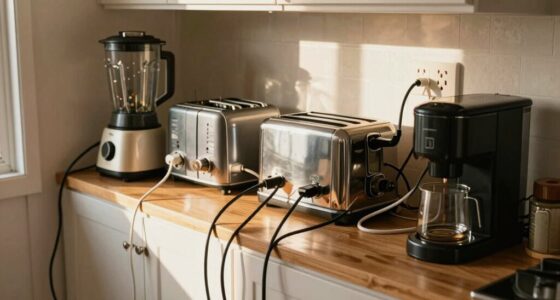
Electrical safety is equally critical. Before plugging in your portable heater, check that the cord and plug are in good condition, without frays or damage. Using an extension cord not rated for the heater’s wattage is a common mistake that can lead to overheating or electrical fires. It’s best to plug the heater directly into a grounded outlet, and avoid overloading circuits, as this can cause circuit breakers to trip or wiring to overheat. Keep the heater away from water sources, such as sinks or damp floors, to prevent electrical shocks. Never leave a portable heater unattended for long periods, especially if it’s unattended overnight. Regularly inspect the unit for signs of wear or damage, and follow all safety instructions provided by the manufacturer.

Space Heater, AUBKN Small Portable Electric Heaters for Indoor Use with Thermostat and Remote,12H Timer, 5 Mode, 1500W PTC Ceramic Fast Safety Heat for Home Office Bedroom
Adjustable Heating Settings: This portable heater offers three heating settings, including 700W, 1000W, and 1500W, allowing you to…
As an affiliate, we earn on qualifying purchases.
As an affiliate, we earn on qualifying purchases.
Frequently Asked Questions
Are Portable Heaters Safe for Use Around Pets and Children?
Portable heaters can be safe around pets and children if you take proper precautions. You should always keep them out of reach to prevent burns or accidental tipping, which can pose safety hazards. Use heaters with tip-over and overheat protection features. Always supervise young children and pets nearby, ensuring their safety and pet safety. By following these tips, you minimize risks and keep everyone protected while enjoying the warmth.
How Often Should I Inspect My Portable Heater for Safety?
You should inspect your portable heater at least once a month to guarantee safety. Follow regular maintenance tips like checking for frayed cords, clean filters, and ensuring vents are clear. An inspection schedule helps catch potential hazards early, preventing accidents. Always unplug the heater before inspecting, and if you notice any damage or unusual odors, stop use and get it serviced. Regular checks keep your heater safe and efficient.
Can I Leave a Portable Heater Unattended Overnight?
You shouldn’t leave a portable heater unattended overnight. Even with regular heater maintenance and careful electrical safety checks, risks like fire or electrical malfunctions remain. Visualize your heater working safely, and then imagine leaving it alone while you sleep—it’s risky. Always turn off and unplug your heater before bed, and avoid unattended use to prevent accidents. Your safety depends on proactive precautions, not just maintenance.
What Is the Best Placement to Prevent Fire Hazards?
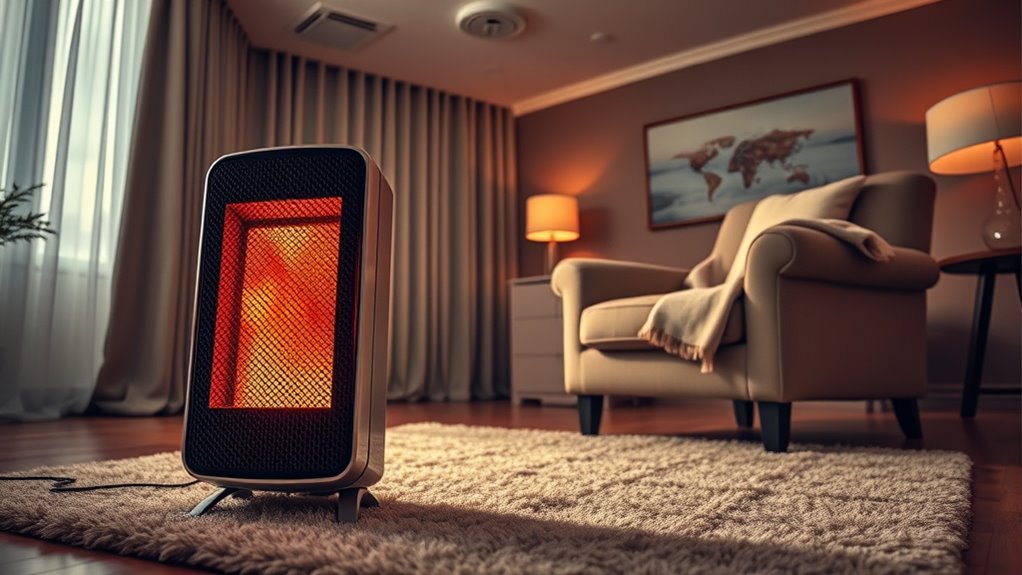
You should place your heater on a flat, stable surface, away from curtains, furniture, and anything flammable. Keep it at least three feet from walls and other objects to guarantee proper heat circulation. Avoid placing it in high-traffic areas or where it could be knocked over. Proper heater placement is vital for fire prevention, helping you stay safe while keeping your space warm.
Are There Specific Safety Features to Look for in Portable Heaters?
Of course, you want a heater that’s practically a superhero. Look for safety features like tip-over shutoffs, overheat protection, and cool-touch exteriors. Don’t forget to check for heater safety certifications—they’re like a badge of honor that says, “I’m safe.” These features keep you from turning your cozy space into a fiery disaster zone. So, pick wisely, and let technology keep you warm and secure.

5-in-1 Carbon Monoxide Detectors,Plug-in Gas Detector with Rechargeable Backup Battery,Monitoring CO Natural Gas Temperature and Humidity Sound Light Alarm Detector,LCD Screen Brightness Adjustable
[High Quality Co & Combustible Gases Alarm Detectors] Gas mainly refers to combustible gases LNG and LPG,such as…
As an affiliate, we earn on qualifying purchases.
As an affiliate, we earn on qualifying purchases.
Conclusion
By following these safety tips, you can keep your home warm without risking a flicker of danger. Think of your portable heater as a trusted friend—reliable when used correctly, but needing your care and attention. When you stay vigilant, you create a safe haven where comfort and safety dance hand in hand. Keep safety in mind, and let your cozy space be a warm embrace, not a trap waiting to spring.
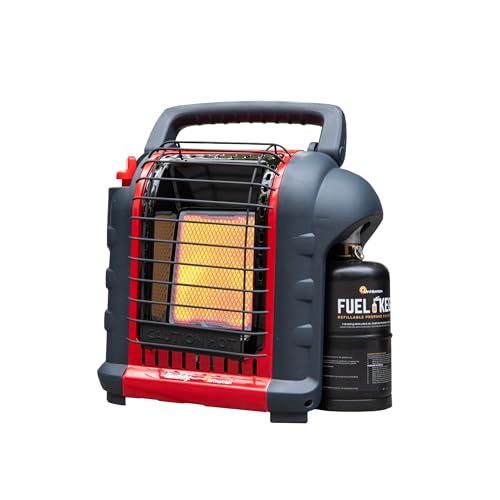
9,000 BTU Portable Buddy Radiant Propane Heater
Emits 4,000 or 9,000 BTU/hr radiant heat
As an affiliate, we earn on qualifying purchases.
As an affiliate, we earn on qualifying purchases.
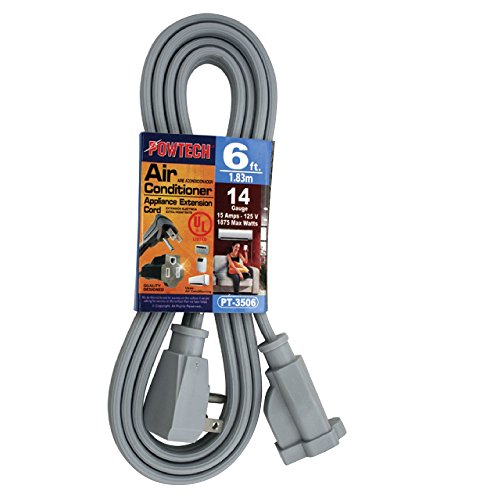
POWTECH Heavy duty 6 FT Air Conditioner and Major Appliance Extension Cord UL Listed 14 Gauge, 125V, 15 Amps, 1875 Watts GROUNDED 3-PRONGED CORD
Air Conditioner and Major Appliance Extension Cord UL Listed. Sturdy cord Ideal for plugging in large appliances such…
As an affiliate, we earn on qualifying purchases.
As an affiliate, we earn on qualifying purchases.