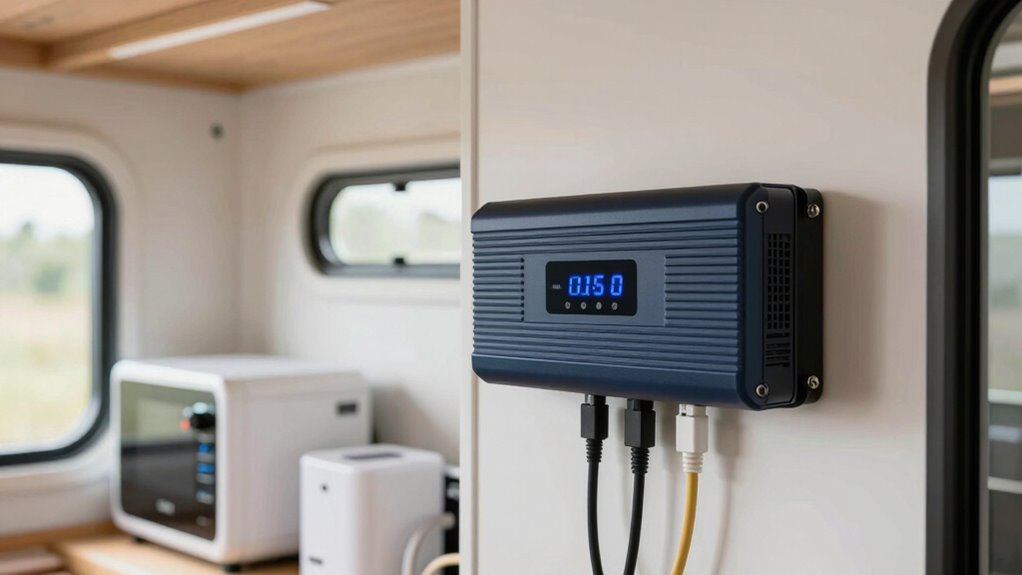

For most tiny-house owners, I’d start with the Renogy 3000W Pure Sine Wave Inverter, whose UPS transfer switch and Bluetooth monitoring suit a home that needs both backup power and visibility into operation. The Giandel 2000W GFCI model is a more moderate-power choice with useful outlet and remote features, while the WZRELB 1000W 48V model may fit a smaller system built around a 48V battery bank. The main tradeoffs are continuous wattage, battery voltage, installation complexity, and whether transfer switching or monitoring is built in. A higher wattage rating does not automatically make an inverter a better match: battery capacity, wiring, and the loads you plan to run all matter. Read on for my comparison of all 10 options and the buyer factors that separate a practical home setup from an oversized or mismatched one.

Get compact home essentials delivered free with Prime
- Fast, free delivery on millions of items
- Prime Video, Amazon Music and more included
- Member-only deals all year
Key Takeaways
- Renogy’s 3000W model stands out for integrated home-style features: its UPS transfer switch and Bluetooth monitoring make it a more complete fit for buyers who value backup handling and status visibility.
- The Giandel 2000W GFCI model offers a middle ground: it has less rated output than the 3000W choices, but adds GFCI outlets, USB-C, and dual remotes for a more feature-rich moderate-power setup.
- Battery voltage changes the system fit: the WZRELB is the only listed 48V option, while most of the lineup is 12V; matching the inverter to the battery bank comes before comparing wattage.
- Transfer switching is a meaningful dividing line: the Renogy and 2500W transfer-switch models are more aligned with backup or source-switching needs than basic inverter-only options.
- Some picks serve narrow roles rather than whole-home loads: the BESTEK 300W is vehicle-oriented, and the Victron Phoenix 500VA is a lower-output option, so neither should be treated as a general replacement for a high-wattage tiny-house inverter.
| BESTEK 300W Pure Sine Wave Power Inverter for Vehicles |  | Best for Small Loads and Vehicle-Based Backup | Continuous output: 300W | Peak output: 700W | Input voltage: 11–17V DC | VIEW ON AMAZON | See Our Full Breakdown |
| GIANDEL 2000W Pure Sine Wave Power Inverter, 12V DC to 120V AC |  | Best for Flexible Everyday 12V Loads | Power output: 2000W | Input voltage: 12V DC | Output voltage: 120V AC | VIEW ON AMAZON | See Our Full Breakdown |
| 2000W Pure Sine Wave Power Inverter, 12V DC to 120V AC |  | Best for Clear Load Monitoring | Continuous output: 2000W | Peak output: 4000W | Input and output: 12V DC input; 120V AC output | VIEW ON AMAZON | See Our Full Breakdown |
| Giandel 2000 Watt Pure Sine Wave Power Inverter 12V DC to 120V AC, 4100W Max, GFCI Outlets, USB‑C 36W, Dual Remote, for RVs, Campers, Off‑Grid Solar Setup |  | Best for GFCI Outlet Convenience | Continuous output: 2000W | Surge output: 4100W | Input and output: 12V DC input; 120V AC output | VIEW ON AMAZON | See Our Full Breakdown |
| WZRELB 1000W Pure Sine Wave Inverter, 48V DC to 120V AC |  | Best for Compact 48V Systems | Continuous output: 1000W | Peak output: 2000W | Input voltage: 48V DC | VIEW ON AMAZON | See Our Full Breakdown |
| LANDERPOW 3000W Pure Sine Wave Inverter, 12V DC to 120V AC |  | Best for Flexible AC and USB Connections | Continuous output: 3,000W | Peak output: 6,000W | Input and output: 12V DC to 120V AC | VIEW ON AMAZON | See Our Full Breakdown |
| 2500W Pure Sine Wave Power Inverter with Transfer Switch |  | Best for Shore-Power Backup | Continuous and peak output: 2,500W continuous; 5,000W peak | Input and output: 12V DC to 120V AC | Waveform: Pure sine wave | VIEW ON AMAZON | See Our Full Breakdown |
| Renogy 3000W Pure Sine Wave Inverter with UPS Transfer Switch and Bluetooth, 12V DC to 120V AC |  | Best for Connected Backup Power | Continuous and peak output: 3,000W continuous; 6,000W peak | Input and output: 12V DC to 120V AC | Waveform: Pure sine wave | VIEW ON AMAZON | See Our Full Breakdown |
| Victron Energy Phoenix 500VA 12V Pure Sine Wave Inverter |  | Best for Low-Draw Essentials | Output power: 500W listed output; 800W continuous; 1,500W peak | Input and output: 12V DC to 120V AC | Waveform and frequency: Pure sine wave; 60Hz | VIEW ON AMAZON | See Our Full Breakdown |
| BELTTT 3000W Pure Sine Wave Inverter, 12V DC to 120V AC, 6000W Peak |  | Best for Long-Reach Remote Control | Continuous and peak output: 3,000W continuous; 6,000W peak | Input and output: 12V DC input; 110V/120V AC listed output | Waveform: Pure sine wave | VIEW ON AMAZON | See Our Full Breakdown |
| pure sine wave inverter for tiny house | Input and output | Waveform | Dimensions and weight | Continuous output |
|---|---|---|---|---|
| BESTEK 300W Pure Sine Wave Pow | — | Pure sine wave | 8.1 × 5.3 × 2.6 in; 1.4 lb | 300W |
| GIANDEL 2000W Pure Sine Wave P | — | Pure sine wave | — | — |
| 2000W Pure Sine Wave Power Inv | 12V DC input; 120V AC output | — | 14.17 × 3.74 × 7.48 in; 6.7 lb | 2000W |
| Giandel 2000 Watt Pure Sine Wa | 12V DC input; 120V AC output | — | — | 2000W |
| WZRELB 1000W Pure Sine Wave In | — | — | 10.1 × 3.8 × 2.5 in; 2.64 lb | 1000W |
| LANDERPOW 3000W Pure Sine Wave | 12V DC to 120V AC | Pure sine wave | 13.77 × 7.04 × 3.34 in; 7.5 lb | 3,000W |
| 2500W Pure Sine Wave Power Inv | 12V DC to 120V AC | Pure sine wave | — | — |
| Renogy 3000W Pure Sine Wave In | 12V DC to 120V AC | Pure sine wave | 19.2 × 10.4 × 3.8 in; 14.8 lb | — |
| Victron Energy Phoenix 500VA 1 | 12V DC to 120V AC | — | 10.8 × 6.8 × 3.4 in; 9.6 lb | — |
| BELTTT 3000W Pure Sine Wave In | 12V DC input; 110V/120V AC listed output | Pure sine wave | — | — |
More Details on Our Top Picks
BESTEK 300W Pure Sine Wave Power Inverter for Vehicles
For a tiny house that needs a little AC power from a vehicle, I’d choose the BESTEK 300W over the larger 12V options here. Its two outlets and two USB ports suit low-draw electronics, chargers, and small devices, while pure sine wave output is a sensible match for compatible sensitive equipment. The tradeoff is the 300W continuous limit: it is not a practical way to run a tiny house’s core appliances, and its vehicle 12V outlet requirement keeps it separate from a permanent battery-bank setup. Compared with the GIANDEL 2000W, this is far easier to carry and suited to lighter loads, but it gives up the capacity and hardwire options needed for broader cabin use. I see it as a supplemental power source, not a house inverter.
Pros:- Pure sine wave output for compatible sensitive electronics
- Two AC outlets plus two USB ports for charging several small devices
- Built-in protection against overheating, voltage problems, short circuits, overloads, and overcharging
- Compact 1.4 lb design is easier to store and carry than the 2000W inverters in this group
Cons:- 300W continuous output rules out most substantial tiny-house appliances
- Requires a compatible 11–17V vehicle power source rather than connecting directly to a higher-voltage house battery bank
- Vehicle outlet use makes it a supplemental option, not a permanent whole-house installation
Best for: Tiny-house owners who want portable power for phones, laptops, and other low-wattage devices from a compatible vehicle outlet.
Not ideal for: Anyone planning to power refrigerators, pumps, kitchen appliances, or several household loads from a dedicated battery bank; 300W continuous output is too limited.
- Continuous output:300W
- Peak output:700W
- Input voltage:11–17V DC
- AC output:120V
- Waveform:Pure sine wave
- Connections:2 AC outlets; 2 USB ports, up to 2.4A per port
- Dimensions and weight:8.1 × 5.3 × 2.6 in; 1.4 lb
- Certifications:ETL, RoHS, FCC
Our verdict“Choose this compact inverter for charging and light device use from a vehicle, not for running a tiny house’s everyday appliances.”
GIANDEL 2000W Pure Sine Wave Power Inverter, 12V DC to 120V AC
The GIANDEL 2000W is a flexible match for a 12V tiny-house battery setup where owners want both household AC connections and convenient device charging. Its two outlets, terminal block, USB-C PD, and dual QC3.0 ports cover more connection needs than the simpler WZRELB 1000W, while the wired remote can make switching the inverter on and off easier when it is mounted out of reach. A 2000W rating is useful for a moderate load plan, but it does not mean every appliance can run together; buyers still need to match startup demand and battery capacity. The inverter lists up to 90% efficiency, so some battery energy becomes heat rather than AC power. I would skip it for a 48V system or for anyone seeking higher-voltage battery compatibility without conversion equipment.
Pros:- 2000W pure sine wave output for a broader range of compatible household loads than the BESTEK 300W
- Terminal block offers a hardwire connection option alongside two AC outlets
- USB-C PD 30W and dual QC3.0 ports provide several direct device-charging choices
- 15-foot wired remote and temperature-controlled cooling support flexible installation
Cons:- 12V input limits compatibility with higher-voltage battery banks unless additional equipment is used
- Up to 90% stated efficiency means some battery power is lost during conversion
- Appliance startup loads still need to be checked against the inverter and battery system
Best for: Tiny-house owners with a 12V battery bank who want a 2000W inverter, hardwire output, remote switching, and built-in device-charging ports.
Not ideal for: Owners with 24V or 48V battery systems, or buyers whose planned appliance loads exceed 2000W continuous output.
- Power output:2000W
- Input voltage:12V DC
- Output voltage:120V AC
- Waveform:Pure sine wave
- Conversion efficiency:Up to 90%
- Charging ports:USB-C PD 30W; dual QC3.0 USB
- AC connections:2 AC outlets and 1 AC terminal block
- Remote and cooling:15-foot wired remote; fan activates at 35°C or above 800W load
Our verdict“Pick this for a 12V tiny-house system that benefits from multiple connection types and remote control, but not for a higher-voltage bank.”
2000W Pure Sine Wave Power Inverter, 12V DC to 120V AC
I’d put this 2000W inverter on the shortlist for a tiny-house owner who wants to see what the system is doing, rather than rely on a basic outlet-only unit. Its LCD monitor reports output wattage, voltage, battery level, and load status, which can help users spot a growing demand before it becomes a battery problem. The 10-foot remote and hardwire output also make it more installation-oriented than the vehicle-focused BESTEK 300W. Its approximately 7.5W idle draw is a useful published detail, though it still consumes power while on without a meaningful AC load. The 2000W continuous rating and 4000W surge rating require careful appliance matching, and the 12V input narrows battery compatibility. Compared with the GIANDEL 2000W, its standout is monitoring, not extra USB charging options.
Pros:- LCD displays output wattage, voltage, battery level, and load status
- 2000W continuous and 4000W surge ratings support more substantial loads than the BESTEK 300W
- Includes two AC outlets, a 20A hardwire output, and a 10-foot wired remote
- Approximately 7.5W idle draw is specified, helping buyers estimate standby consumption
Cons:- 12V input requires a compatible battery system and careful installation planning
- Approximately 7.5W idle draw still uses battery energy when the inverter is on without a load
- Manual startup requires holding the power button for about three seconds
Best for: Tiny-house owners with a 12V battery system who want an LCD view of load and battery status plus a wired remote for a fixed installation.
Not ideal for: Owners using 24V or 48V banks, or buyers who prefer plug-and-play vehicle power and have no need for hardwiring or load monitoring.
- Continuous output:2000W
- Peak output:4000W
- Input and output:12V DC input; 120V AC output
- Waveform and frequency:Pure sine wave; 60Hz
- Idle draw:Approximately 7.5W at 13.6V
- Connections:2 AC outlets; 20A hardwire output
- Display and remote:LCD monitor; 10-foot wired remote
- Dimensions and weight:14.17 × 3.74 × 7.48 in; 6.7 lb
- Certification:ETL listed to UL 458
Our verdict“Choose this 12V inverter if you value visible load and battery information, and can work within its battery and installation requirements.”
Giandel 2000 Watt Pure Sine Wave Power Inverter 12V DC to 120V AC, 4100W Max, GFCI Outlets, USB‑C 36W, Dual Remote, for RVs, Campers, Off‑Grid Solar Setup
For a 12V tiny-house setup where outlet protection and at-a-glance monitoring matter, this Giandel 2000W offers a distinct package: built-in 20A GFCI outlets, an LCD, and a 15-foot remote. Those features make it more convenience-focused than the other 2000W pick, the GIANDEL 2000W, whose listed strengths include a terminal block and more varied USB charging ports. Here, USB-C output is 36W, and the 4100W surge rating gives some headroom for brief startup demand, but the 2000W continuous rating remains the limit for sustained use. Its 12V-only input is a substantial system constraint for buyers planning a higher-voltage bank. The 15 × 8.1 × 4-inch case may also be awkward in a compact tiny-house equipment bay, so installation space deserves attention.
Pros:- Built-in 20A GFCI outlets add a safety feature without requiring separate GFCI receptacles at the inverter
- LCD display and 15-foot wired remote support monitoring and operation from a more convenient location
- 4100W surge capacity provides brief headroom above the 2000W continuous rating
- 36W USB-C output can charge compatible devices directly
Cons:- 12V DC input does not directly match higher-voltage battery systems
- The 15 × 8.1 × 4-inch housing can be difficult to place in a compact equipment area
- 2000W continuous output still limits the number and size of appliances that can run at once
Best for: Tiny-house owners with a 12V battery bank who want built-in GFCI outlets, an LCD, and remote operation in one inverter.
Not ideal for: Owners building around 24V or 48V batteries, or those with very limited mounting space and no room for the larger housing.
- Continuous output:2000W
- Surge output:4100W
- Input and output:12V DC input; 120V AC output
- Waveform and frequency:Pure sine wave; 60Hz
- Outlets:Built-in 20A GFCI outlets
- USB-C output:36W
- Display and remote:LCD; 15-foot wired on/off remote
- Dimensions:15 × 8.1 × 4 in
Our verdict“Choose this Giandel when built-in GFCI outlets and remote monitoring matter more than compact size or higher-voltage compatibility.”
WZRELB 1000W Pure Sine Wave Inverter, 48V DC to 120V AC
The WZRELB 1000W fills a useful gap for tiny houses built around a 48V battery bank: it avoids the 12V input requirement shared by the BESTEK, GIANDEL, and other 2000W models in this batch. Its 1000W continuous rating is more modest, but a 48V system can suit buyers who want this inverter for a defined set of lighter loads rather than whole-house capacity. The soft-start design helps reduce inrush current, and the LED input-voltage display gives a basic check on the supply. Compared with the GIANDEL 2000W, it is smaller and matches a higher-voltage bank, but it provides half the continuous output and lacks the listed wired remote and broader connection features. The aluminum case can become hot, so mounting and ventilation need attention.
Pros:- 48V DC input suits a 48V tiny-house battery system without a voltage-conversion step
- Compact 10.1 × 3.8 × 2.5-inch form is easier to place than the larger 2000W units
- LED display shows input voltage for a quick supply check
- Soft-start design helps reduce inrush current
Cons:- 1000W continuous output is lower than the 2000W GIANDEL models in this roundup
- Requires a 48V DC source and does not directly match a 12V battery bank
- Aluminum housing can become hot during operation, making ventilation and mounting important
Best for: Tiny-house owners with a 48V battery bank who need up to 1000W of pure sine wave AC in a compact inverter.
Not ideal for: Owners with 12V batteries or plans to run multiple high-demand appliances; the input voltage and 1000W continuous ceiling may not fit.
- Continuous output:1000W
- Peak output:2000W
- Input voltage:48V DC
- Output voltage:120V AC
- Waveform and frequency:Pure sine wave; 60Hz
- AC outlets:2
- Dimensions and weight:10.1 × 3.8 × 2.5 in; 2.64 lb
- Housing and warranty:Aluminum; 1 year
Our verdict“Pick this compact inverter for a 48V system with moderate loads, but skip it if your battery bank is 12V or your appliance plan exceeds 1000W.”
LANDERPOW 3000W Pure Sine Wave Inverter, 12V DC to 120V AC
The LANDERPOW stands out for a tiny house that needs both high-output AC and convenient charging without relying on extra adapters. Its 3,000W continuous output, three AC outlets, hardwired terminal, USB-A, and 30W USB-C offer more connection options than the one-outlet Renogy 3000W. A 15-foot wired remote with an LED display also lets you check battery and load information from a more practical location than beside the inverter.
The tradeoff is its 12V battery input: supplying 3,000W at that voltage calls for a suitably capable battery bank and heavy current paths, so it may not suit a tiny-house system designed around higher-voltage storage. Its included two-foot cables also limit installation flexibility. I’d shortlist it for a 12V setup where multiple plug-in devices matter, but not as a substitute for careful battery and wiring design.
Pros:- Three AC outlets plus a hardwired terminal provide flexible connection options.
- 30W USB-C and USB-A ports can charge smaller devices without occupying an AC outlet.
- The 15-foot wired remote displays battery level, output, and errors.
- Pure sine wave output and multiple electrical protections suit household electronics.
Cons:- Requires a 12V battery source capable of supporting substantial current at full output.
- The included battery cables are only two feet long, limiting placement options.
- Its 7.5-pound weight and listed dimensions still call for a planned installation space.
Best for: Tiny-house owners with a capable 12V battery bank who want multiple AC connections, USB-C charging, and a remote status display.
Not ideal for: Owners building around a 24V or 48V battery system, or anyone who needs long battery-cable runs without sourcing appropriately sized cables.
- Continuous output:3,000W
- Peak output:6,000W
- Input and output:12V DC to 120V AC
- Waveform:Pure sine wave
- Conversion efficiency:Over 91%
- Connections:3 AC outlets, hardwired terminal, USB-A 5V/3.1A, USB-C 30W PD
- Remote:15-foot wired remote with LED display
- Dimensions and weight:13.77 × 7.04 × 3.34 in; 7.5 lb
Our verdict“Choose the LANDERPOW for a well-equipped 12V tiny-house system that needs several AC connections and useful remote monitoring.”
2500W Pure Sine Wave Power Inverter with Transfer Switch
This 2,500W inverter’s clearest advantage for a tiny house is its automatic transfer switch: when shore power is available, it can switch between that supply and inverter output in about 12 milliseconds. That makes it a more natural fit for a cabin or small home that alternates between grid access and battery power than the LANDERPOW, which has more continuous output but no listed transfer switch. Its wired LCD remote adds visibility into voltage, usage, and fault alerts.
There are limits to that convenience. The unit does not charge the battery, so charging equipment remains a separate system component, and its 2,500W rating trails the 3,000W LANDERPOW, Renogy, and BELTTT models. The included cables are short and may not suit full-power operation or a distant battery location. I’d favor it for a modest-load setup with shore power, not a high-demand system expecting one box to manage charging too.
Pros:- Automatic transfer switch changes between shore power and inverter output in approximately 12ms.
- Pure sine wave output is suited to compatible household appliances and electronics.
- The 15-foot LCD remote reports voltage, output status, usage, and faults.
- Listed protections cover voltage problems, overload, short circuit, and overheating.
Cons:- Does not charge the connected battery.
- Continuous output is lower than the 3,000W options in this batch.
- Included battery cables are short and may be unsuitable near full output.
Best for: Tiny-house owners with shore power and a 12V battery backup who want automatic source switching and remote system status.
Not ideal for: Buyers who need a battery charger built in, plan sustained loads above 2,500W, or need longer battery cables included.
- Continuous and peak output:2,500W continuous; 5,000W peak
- Input and output:12V DC to 120V AC
- Waveform:Pure sine wave
- Transfer switch:Automatic; approximately 12ms switching
- AC outlets:2
- Remote:LCD wired remote with 15-foot cable
- Battery cables:25 mm² (approximately 3 AWG), 60 cm (1.97 ft)
- Weight and warranty:3 kg; 12 months
Our verdict“Pick this model for a 12V tiny house that needs shore-to-battery switching more than the higher output of the 3,000W alternatives.”
Renogy 3000W Pure Sine Wave Inverter with UPS Transfer Switch and Bluetooth, 12V DC to 120V AC
For a tiny house where backup power and system visibility matter, the Renogy combines 3,000W continuous output with an automatic transfer switch, Bluetooth monitoring, and a wired remote. That pairing gives it a stronger monitoring and backup focus than the LANDERPOW, which offers more outlets but no listed transfer switch or Bluetooth. Its efficiency is specified at over 92%, and the listed protections add useful safeguards for a permanently installed battery system.
The main compromise is the layout: despite its power rating, it has just one AC outlet, so multiple loads may need a separate distribution setup. It is also the largest and heaviest listed 3,000W model here, at 19.2 inches long and 14.8 pounds. Like the other 12V high-output choices, it needs a battery bank and wiring suited to substantial current. I’d choose it for monitored backup integration, not for a compact, outlet-rich installation.
Pros:- Automatic transfer switch supports changing between mains power and inverter power.
- Bluetooth app monitoring and a wired remote provide two ways to check system status.
- Pure sine wave output and over 92% listed efficiency suit a battery-backed household setup.
- Listed protections include voltage, current, and short-circuit safeguards.
Cons:- Only one AC outlet is provided, fewer than the LANDERPOW’s three or BELTTT’s dual sockets.
- Its 19.2-inch length and 14.8-pound weight may complicate tight installations.
- Requires a 12V battery system capable of supplying high current at full output.
Best for: Tiny-house owners with a 12V battery system who want automatic backup switching and app-based status monitoring.
Not ideal for: Buyers who need several built-in AC outlets or have very limited space for a relatively long, heavy inverter.
- Continuous and peak output:3,000W continuous; 6,000W peak
- Input and output:12V DC to 120V AC
- Waveform:Pure sine wave
- Efficiency:Over 92%
- Transfer and monitoring:Automatic transfer switch; Bluetooth app and wired remote
- AC outlets:1
- Standby draw and noise:Less than 18W standby; less than 51dB
- Dimensions and weight:19.2 × 10.4 × 3.8 in; 14.8 lb
Our verdict“Choose the Renogy when connected monitoring and automatic backup switching matter more than built-in outlet count or compact size.”
Victron Energy Phoenix 500VA 12V Pure Sine Wave Inverter
The Phoenix is the outlier in this group: at 500W output, it is meant for selected essentials, not for running a tiny house as though it were on grid power. Its strongest fit is a modest, carefully chosen load where low idle consumption matters. The listed 1W no-load draw in ECO mode can help preserve battery capacity when demand is light, while the NEMA GFCI outlet offers a practical single connection. Compared with the 2,500W transfer-switch model, this Victron trades capacity and automatic source switching for a much lower-power role.
That ceiling rules out many simultaneous household loads, so I would not treat it as a whole-home inverter. It also has one outlet, and cables and communication dongles are sold separately. VE.Direct supports monitoring, but the added hardware may be needed to make that useful in a finished installation. This is the specialist pick for a low-draw circuit, not a replacement for the 3,000W options.
Pros:- ECO mode has a listed 1W no-load draw for low-demand battery systems.
- Pure sine wave output and a NEMA GFCI outlet support a focused AC circuit.
- VE.Direct provides a path to system monitoring with compatible devices.
- Compact listed dimensions suit installations where space is limited.
Cons:- Its 500W output is far below the 2,500W and 3,000W alternatives and limits usable loads.
- Only one AC outlet is included.
- Cables and VE.Direct dongles are sold separately.
Best for: Tiny-house owners powering a small set of low-draw essentials who value low idle consumption and GFCI protection.
Not ideal for: Buyers seeking whole-house output, multiple AC outlets, or an installation package that includes cables and monitoring accessories.
- Output power:500W listed output; 800W continuous; 1,500W peak
- Input and output:12V DC to 120V AC
- Waveform and frequency:Pure sine wave; 60Hz
- ECO-mode no-load draw:1W
- Outlet:1 NEMA GFCI outlet
- Communication:VE.Direct
- Dimensions and weight:10.8 × 6.8 × 3.4 in; 9.6 lb
- Certifications:UL458, CE, ECE R10-06
Our verdict“Choose the Phoenix for a low-draw essentials circuit, but choose a higher-output model if you expect to run several household appliances.”
BELTTT 3000W Pure Sine Wave Inverter, 12V DC to 120V AC, 6000W Peak
The BELTTT makes a practical case for a tiny house where the inverter will sit away from the living area: its 23-foot remote cable gives more placement flexibility than the 15-foot remotes listed for the LANDERPOW and Renogy. It also pairs a display for input/output voltage and battery/load status with 3,000W continuous output, dual AC sockets, USB, and a hardwire port. The listed efficiency, greater than 93%, is higher than the figures supplied for those two rivals, though actual system performance also depends on installation and load.
The tradeoff is less certainty in the output specification: the product data lists 110V/120V AC, so buyers should verify compatibility with their intended loads and wiring. Unlike the Renogy, it has no listed transfer switch or app monitoring; unlike the LANDERPOW, the provided details don’t specify a USB-C port or the same number of AC outlets. I’d favor it for remote placement and straightforward status checks, not automatic backup switching.
Pros:- The 23-foot remote cable allows more flexible placement than the 15-foot remotes listed for the LANDERPOW and Renogy.
- LCD reports input and output voltage, battery and load status, and operating conditions.
- Dual AC sockets, including a 20A outlet, plus USB and hardwire connections support varied loads.
- Listed protections cover undervoltage, overvoltage, overload, overheating, short circuit, and reverse connection.
Cons:- Product data lists output as both 110V and 120V AC, so buyers should confirm suitability for their loads.
- No transfer switch or Bluetooth monitoring is listed, unlike the Renogy.
- Requires a 12V source capable of supporting the substantial current associated with 3,000W output.
Best for: Tiny-house owners installing a 12V, 3,000W inverter in a utility space who want a long-cable remote and a broad mix of connections.
Not ideal for: Buyers who need an automatic transfer switch, app monitoring, or clearly specified output voltage for a particular electrical installation.
- Continuous and peak output:3,000W continuous; 6,000W peak
- Input and output:12V DC input; 110V/120V AC listed output
- Waveform:Pure sine wave
- Conversion efficiency:Greater than 93%
- AC connections:Dual AC sockets, including a 20A outlet; hardwire port
- USB output:5V, 2.1A
- Remote:Remote controller with 23-foot cable
- Protections:Undervoltage, overvoltage, overload, overtemperature, short circuit, reverse connection
Our verdict“Pick the BELTTT if long-distance remote control and varied connections are your priorities, after confirming its output-voltage suitability.”

How We Picked
I ranked these inverters by how well their stated specifications and listed features map to tiny-house power needs. The main criteria were continuous output, DC input voltage, transfer-switch and monitoring features, outlet and remote access, and whether the product’s stated role suits household loads or a narrower use such as vehicle power. I also weighed system fit: a high-wattage inverter can be a poor choice if it does not match the battery bank or the loads the owner intends to run.
The order favors options with a useful balance of home-relevant capacity and practical controls, then separates models that are better for particular system designs or smaller loads. Renogy ranks high for its UPS transfer switch and Bluetooth; the Giandel 2000W GFCI version stands out for moderate output and added connection features. The 48V WZRELB earns a distinct place for compatible battery systems, while the BESTEK and Victron models rank lower for whole-house use because their stated output is limited. I did not treat peak wattage as a substitute for continuous capacity, and product claims alone cannot confirm suitability for a specific installation.
Factors to Consider When Choosing Pure Sine Wave Inverter For Tiny House
Choosing a tiny-house inverter starts with the electrical system you are building, not the largest number on a product label. I’d work through these factors before deciding whether a compact inverter, a moderate-output model, or a transfer-equipped unit makes sense.
1. Match Continuous Output to Your Real Loads
List the appliances you expect to run at the same time, then use their running wattage to set a realistic target. Add headroom for startup surges from motors and compressors, but do not size the system around every appliance running together unless that is genuinely part of your routine. A 3000W label does not tell you how long the inverter can sustain a load, so check continuous output separately from peak or surge figures. Oversizing can push you toward a larger battery bank, heavier cabling, and more demanding installation without improving everyday use. Undersizing can mean nuisance shutdowns when a few loads overlap. For a small cabin with limited appliances, a lower-output model may be more sensible than buying capacity you cannot support.
2. Choose Battery Voltage Before Inverter Wattage
The inverter’s DC input must match the battery bank’s nominal voltage; a 12V model cannot simply be connected to a 48V bank. Higher-voltage systems generally draw less current for the same AC output, which can ease cable and connection demands, though they require compatible batteries and system components. This is why the WZRELB 48V model is not a direct substitute for the 12V options in this roundup. Avoid choosing an inverter first and assuming a battery bank can be adjusted around it without added expense or redesign. Check the voltage of the charge controller, battery bank, and other DC equipment as one system. When starting from scratch, compare the full system plan rather than treating the inverter as a standalone purchase.
3. Plan for Surge Loads and Battery Limits
Refrigerators, pumps, and other motor-driven appliances can briefly demand more power at startup than during normal operation. Compare the appliance’s starting requirement with the inverter’s surge rating, but also check whether the battery and wiring can supply the corresponding DC current. A large peak-watt figure is not a promise that the unit can handle that load for long, and peak specifications can be hard to compare without a stated duration. Frequent low-voltage shutdowns may point to a weak battery, long or undersized cables, or excessive simultaneous demand rather than a faulty inverter. Leave room for both startup surges and ordinary operating loads. If a critical appliance has an unusually high startup draw, use its manufacturer’s data instead of estimating from its running wattage.
4. Decide Whether You Need Transfer Switching
A transfer switch can move selected loads between inverter power and another AC source, such as shore power or a generator. That feature can simplify backup arrangements, but it does not by itself make an installation safe or suitable for every tiny-house circuit. Confirm the switch’s supported current, the intended wiring method, and whether the unit’s behavior matches your backup plan. A basic inverter may be enough when it serves a few dedicated outlets, while a transfer-equipped model can be more convenient when loads need to change sources. Do not assume that an inverter with a transfer feature can be connected to a building panel without suitable protective equipment and qualified installation. Draw your power-flow plan before paying for a feature that may not fit your setup.
5. Account for Efficiency, Idle Draw, and Everyday Use
In an off-grid tiny house, an inverter may remain on for many hours, so standby consumption can affect battery runtime even when loads are light. Look for published no-load or idle-draw figures and compare them with how often you need AC power available. A remote control or monitoring connection can make it easier to check status or shut the inverter down, but it does not replace battery monitoring. Also think about noise, ventilation, access to controls, and space for service; a powerful unit placed in a cramped enclosure can be inconvenient and may not receive adequate airflow. A lower-output device dedicated to occasional loads may make more sense than leaving a large inverter running all day. Treat usability and energy losses as part of system sizing, not minor extras.
6. Check Protection, Installation, and Support Details
Before choosing, verify the protections listed for overload, temperature, short circuit, and low or high DC voltage, then confirm they suit the battery and loads in your system. GFCI outlets can add protection at the outlet, but they do not replace correct grounding, overcurrent protection, or code-compliant wiring. Read the manual for cable requirements, fuse or breaker recommendations, ventilation clearances, and grounding instructions; these details affect both safety and performance. Tiny-house electrical rules can vary by location and by whether the system is mobile or permanently installed, so check local requirements before wiring a panel. A product with more features is not automatically easier to install. If you are unsure about AC source switching or grounding, have a qualified electrician review the design.
Frequently Asked Questions
Is a 3000W inverter enough to power a tiny house?
It may be enough for a selection of household loads, but the number alone cannot confirm that it will run your whole home. Add the running wattage of the appliances you expect to use together, then check startup demands for motors and compressors. The battery bank, DC cabling, and protection devices must also support the inverter’s input current. A 3000W model can be excessive for a small load plan or insufficient for several high-demand appliances running at once. Build the load list first and compare it with continuous output and surge capacity.
Should I choose a 12V or 48V inverter for an off-grid tiny house?
Choose the voltage that matches your battery bank and the rest of your system, rather than treating 12V and 48V models as interchangeable. A 48V setup can carry the same power at lower current, which may reduce cable demands, but it needs compatible batteries and equipment throughout the system. A 12V inverter can fit a 12V bank or an existing compatible setup, though current rises quickly as power demand increases. The WZRELB in this roundup is the 48V option; most of the others listed use 12V input. Compare the full system cost and design before settling on either voltage.
Do I need an inverter with a transfer switch?
You may want one if you plan to supply the same loads from an inverter and an alternate AC source, such as a generator or shore power. It can simplify switching, but the unit must support the source arrangement and load current you intend to use. If the inverter will feed only dedicated outlets, a transfer switch may add complexity without much benefit. Do not assume the feature makes panel wiring automatic; grounding, overcurrent protection, and local electrical rules still apply. Map the source and load connections before selecting a model with built-in switching.
Can I run a refrigerator and water pump from the same inverter?
Possibly, but check both appliances’ running and startup demands, especially if the pump and refrigerator may start at the same time. Their combined startup surge can exceed what their normal wattage suggests. The battery bank and cabling must also deliver enough DC current without excessive voltage drop. A higher peak rating alone is not enough evidence; check the inverter’s continuous rating and surge specifications. If either appliance has unclear startup data, ask its manufacturer or use a suitable measurement before sizing the system.
Is the BESTEK 300W suitable as the main inverter in a tiny house?
It is a narrow fit for a main tiny-house inverter because its stated 300W output limits the loads it can support. It may suit a vehicle-oriented setup or a few low-power devices, but it is not comparable to the 2000W and 3000W choices for broader household use. Check the wattage of every device you plan to connect, including any startup demand. A dedicated small inverter can still have a role alongside a larger system, particularly for specific low-power loads. For general tiny-house AC service, choose based on a complete load plan rather than its portability or sine-wave output alone.
Conclusion
For a balanced tiny-house setup with built-in source switching and monitoring, my best overall pick is the Renogy 3000W model. The best value for moderate loads is the Giandel 2000W GFCI version, which pairs useful outlet and remote features with less stated output than the 3000W choices. For a premium system feature set, I’d favor Renogy when Bluetooth monitoring and a UPS transfer switch suit the installation. The best option for a 48V system is WZRELB’s 1000W model, while the best beginner-friendly route is to choose the inverter that matches a simple, clearly mapped load plan rather than starting with a high wattage rating. The BESTEK 300W and Victron Phoenix 500VA make more sense for limited or dedicated loads than as a tiny house’s main inverter. Before buying, confirm battery voltage, continuous and surge demand, wiring requirements, and whether transfer switching fits your electrical design.
Halloween Picks
halloween
As an affiliate, we earn on qualifying purchases.