Before installing a wood stove in your tiny house, make sure it’s the right size for your space and adheres to local building codes. Proper ventilation is crucial—use a dedicated flue and install carbon monoxide detectors to keep indoor air safe. Keep combustible materials away from the stove and install a hearth pad to protect your flooring. Regular inspections for creosote buildup and cracks are essential. Continue exploring to discover more tips for safe, efficient heating in your tiny home.
Key Takeaways
- Ensure the stove size suits the tiny house’s dimensions to avoid space and safety issues.
- Properly install venting systems and chimney according to manufacturer instructions and local codes.
- Use a hearth pad and keep combustible materials at a safe distance to prevent fire hazards.
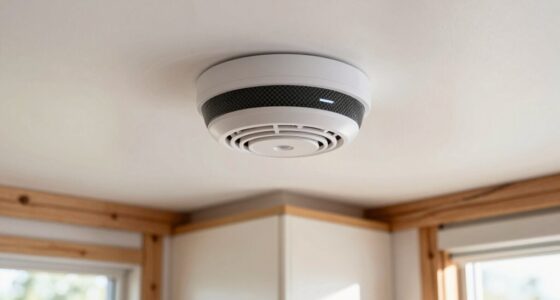
- Install carbon monoxide detectors near the stove and ensure adequate ventilation for indoor air quality.
- Regularly inspect and maintain the stove and venting system to ensure safe, efficient operation.

Installing a wood stove in a tiny house can be be a great way to keep warm and reduce energy costs, but it’s crucial to understand the unique challenges involved. One of the most critical considerations is fire safety. Because tiny houses are small and tightly packed, a fire can spread quickly if proper precautions aren’t in place. You need to choose a stove that’s appropriately sized for your space and confirm it’s installed following manufacturer instructions and local building codes. Installing a proper hearth pad beneath the stove is essential to protect your flooring from heat and stray sparks. Keep combustible materials like furniture, curtains, and decorations at a safe distance, and always have a fire extinguisher nearby. Regularly inspecting your stove and chimney for creosote buildup and cracks helps prevent potential fires and keeps your heating system running efficiently. Proper ventilation requirements are equally important. Wood stoves produce smoke and gases that need to be safely vented outside to prevent dangerous indoor air quality issues. You should install a chimney or stovepipe that meets local codes, ensuring it’s properly secured and sealed to prevent leaks. Good ventilation also involves adequate airflow within your tiny house so that combustion gases don’t linger indoors. You might need to add vents or windows to facilitate fresh air intake and exhaust, and considering air exchange systems can further enhance indoor air quality. Without proper ventilation, you risk carbon monoxide buildup, which can be deadly. It’s advisable to install carbon monoxide detectors near the stove and throughout your home to alert you to dangerous levels of this odorless, colorless gas. Furthermore, you should consider how your stove interacts with your tiny house’s overall ventilation system. If your space is sealed tightly for energy efficiency, you’ll need to balance airtightness with sufficient airflow. You might also want to incorporate a dedicated flue or venting system designed specifically for tiny house applications to ensure safe and effective operation. Additionally, understanding fire safety standards and how they apply to tiny houses can help you better prepare for potential hazards. Being aware of building codes related to tiny house heating systems can also help prevent costly mistakes and ensure compliance. Proper installation practices are essential to prevent issues from arising over time and to maintain safety and efficiency.

Hot Tent Stove,AVOFOREST Wood Burning Stove,Small Wood Stove with 7 Stainless Chimney Pipes for Outdoor Heating & Cooking, Ice Fishing, Hunting
- Detachable Chimney Sections: 7 adjustable chimney segments for portability
- Flame Management Damper: Includes damper for controlling flame size
- Viewing Glass Window: High flame-retardant silicone glass for observation
As an affiliate, we earn on qualifying purchases.
As an affiliate, we earn on qualifying purchases.
Frequently Asked Questions
Can I Install a Wood Stove Without a Chimney?
You can’t install a traditional wood stove without a chimney, as proper venting is crucial for safety and efficiency. However, alternative heating options like insulated pellet stoves or ethanol fireplaces might work without chimneys. Always prioritize fire safety measures, including proper clearance and ventilation, to prevent hazards. If unsure, consult a professional to ensure your setup complies with safety codes and provides effective heating for your tiny house.
How Do I Prevent Smoke From Entering the Tiny House?
To prevent smoke from entering your tiny house, guarantee proper ventilation strategies are in place. Install a chimney or stovepipe that’s correctly sealed and vented outdoors. Use a high-quality smoke alarm placed near the stove and throughout your space for safety. Regularly check for leaks or blockages in your venting system, and keep windows slightly open during stove operation to improve airflow and reduce smoke buildup.
What Are the Insurance Implications of Adding a Wood Stove?
Did you know that adding a wood stove can increase your insurance premiums by up to 25%? You need to check your insurance coverage and understand liability concerns. Some insurers might require special safety measures or exclude coverage for fire damage. Before installing, speak with your provider to confirm your policy accommodates the stove. Proper safety precautions not only protect your home but also help you avoid potential coverage issues.
How Often Do I Need to Clean the Stove and Chimney?
You should clean your wood stove and chimney at least once a month during regular use to maintain fire safety and guarantee efficient stove performance. Regular stove maintenance prevents creosote buildup, which is a major fire hazard. Always inspect for damage or obstructions, especially before winter. Proper cleaning not only keeps your tiny house safe but also extends the lifespan of your stove, making sure it operates safely and effectively year-round.
Are There Eco-Friendly Wood Stove Options Suitable for Tiny Homes?
Yes, there are eco-friendly alternatives for tiny homes. You can choose sustainable heating options like EPA-certified wood stoves, which burn cleaner and produce fewer emissions, or opt for pellet stoves made from compressed biomass, which are highly efficient. These eco-friendly choices help reduce your carbon footprint, promote sustainable heating, and guarantee safer, healthier indoor air quality. Embracing these options makes your tiny house more environmentally responsible and energy-efficient.
Conclusion
Before installing a wood stove in your tiny house, remember it’s more than just a cozy feature—it’s the heart of your warmth and safety. Doing your homework on proper placement, ventilation, and maintenance guarantees it’ll serve you well without turning your tiny sanctuary into a smoky firepit. Think of it as the beating heart of your home, providing comfort and life, but only when you handle it with care and respect.