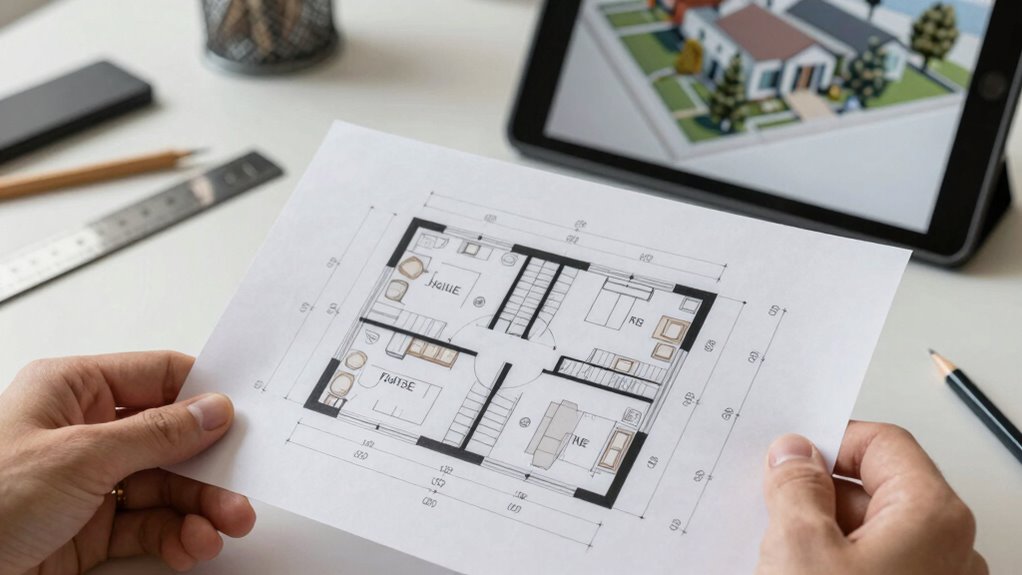
To interpret tiny house plans like a builder, focus on understanding the interior layout, noting how walls, doors, and windows connect and flow. Pay attention to structural elements like support walls, foundation details, and roof structure to see how they support the design. Check utility placements for electrical, plumbing, and HVAC to guarantee easy access and compliance. By grasping these key details, you’ll see how the design functions and reflects durability—keep exploring for even more insights.
Key Takeaways
- Identify walls, doors, windows, and key features to understand room layout and flow.
- Recognize symbols and notes indicating structural elements like load-bearing walls and foundation types.
- Examine utility routes for electrical, plumbing, and HVAC systems for functionality and future modifications.
- Use elevation views to visualize interior height, space proportions, and overall spatial relationships.
- Assess how layout and structural details align with your lifestyle needs and aesthetic preferences.
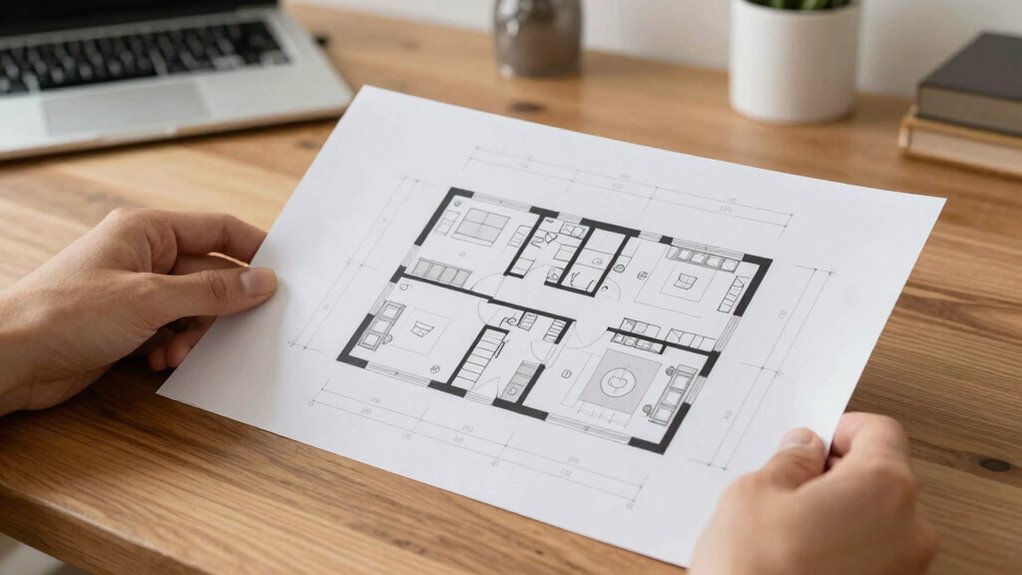
Understanding tiny house floor plans can seem challenging at first, but with a few key tips, you’ll quickly learn how to read them effectively. When you look at a plan, start by focusing on the interior layout. This shows how the space inside is organized, including the placement of walls, doors, windows, and key features like beds, kitchen areas, and bathrooms. By visualizing how the rooms connect and flow, you get a clearer sense of how functional the design is for your needs. Pay attention to the dimensions marked on the plan—these tell you the size of each room and the overall space, helping you determine if it fits your lifestyle.
Start with the interior layout and room dimensions to understand flow and space efficiency.
Once you’ve grasped the interior layout, shift your focus to the structural details. This part of the plan reveals how the tiny house is built and supports its design. Look for symbols and notes indicating the foundation type, wall framing, roof structure, and load-bearing elements. These details are essential because they influence the house’s durability and how well the interior layout can be realized. For instance, understanding where the load-bearing walls are located will help you see which walls can be modified or removed if you want to customize the space later. Check for window and door placements in relation to structural supports to guarantee natural light and ventilation aren’t compromised. Recognizing how these structural components are integrated ensures you’re planning for both stability and livability. Additionally, some plans may include details on insulation and weatherproofing, which are crucial for energy efficiency and comfort in different climates.
As you interpret the plan, don’t forget to take into account the orientation and utility connections. Many plans include details about electrical wiring, plumbing routes, and HVAC placements. These are critical because they impact how comfortable and habitable the tiny house will be. If the plan shows a kitchen or bathroom, look for nearby utility lines or access points—they’ll help you understand the complexity of installing or modifying these systems. Additionally, understanding the importance of building codes and standards ensures your tiny house remains compliant and safe. Recognizing the types of foundation used can also influence your decision, as some foundations are more suitable for certain climates or terrains. Being aware of utility connections can help you plan for future upgrades or modifications more efficiently. Moreover, considering the material choices used in construction can influence the overall energy efficiency and longevity of your tiny house. Understanding these elements helps ensure your tiny house is not only functional but also sustainable and durable over time.
Finally, keep in mind that tiny house floor plans often include elevation views or sections, which give you a sense of how the space looks from different angles and how the interior height is managed. This is especially useful for visualizing storage solutions and headroom. By combining your understanding of interior layout with structural details, you can better evaluate whether a tiny house design suits your lifestyle and whether it’s built on a solid foundation—literally and figuratively. With practice, reading these plans will become second nature, enabling you to assess and even customize tiny house designs confidently. Incorporating astrological influences or aesthetic considerations can further personalize your tiny home, making it a true reflection of your style and preferences.

Tiny House Designing, Building, & Living (Idiot's Guides)
As an affiliate, we earn on qualifying purchases.
As an affiliate, we earn on qualifying purchases.
Frequently Asked Questions
How Do I Interpret Tiny House Scale Measurements Accurately?
To interpret tiny house scale measurements accurately, start by understanding the scale ratio on the plan, like 1/4 inch equals 1 foot. Use a ruler to measure furniture placement and verify it fits comfortably within the space. Check material specifications for thickness and dimensions, which impact layout and function. This way, you can visualize how everything fits, ensuring your design is both practical and efficient.
What Symbols Are Commonly Used in Tiny House Floor Plans?
In tiny house floor plans, you’ll find symbols representing doors, windows, and appliances, which are part of design symbolism. Look for arrows indicating door swings and rectangles for windows. Room labeling clearly marks spaces like kitchen or bathroom, helping you understand layout. Familiarize yourself with these symbols and labels to interpret the plan accurately, ensuring you grasp the overall flow and functionality of the tiny house’s design.
How Can I Identify Load-Bearing Walls in a Plan?
They say, “Look before you leap,” and that’s true for identifying load-bearing walls. Focus on structural indicators like thicker walls, especially those running continuous from foundation to roof, which often signify load-bearing walls. Check for wall reinforcement details or support symbols. These clues help you pinpoint critical walls that support the structure, ensuring you understand the plan’s integrity—like reading a map that guides your next move.
What Should I Look for in Plumbing and Electrical Layouts?
When reviewing plumbing and electrical layouts, look for appliance placement to guarantee efficient connections and minimal pipe or wire runs. Check for strategically placed outlets and switches, especially near storage solutions, to maximize space. Notice the location of plumbing lines for sinks and bathrooms, and electrical panels for easy access. These details help you understand how the tiny house functions practically and ensure your design integrates seamlessly with your daily needs.
How Do I Assess Natural Light and Ventilation in the Plan?
You probably don’t want your tiny house to feel like a cave, right? Check window placement carefully—more windows mean more natural light and better views. Look for clues on airflow optimization, like vents or window direction, to guarantee good ventilation. A well-designed plan maximizes sunlight and fresh air, making your tiny space feel airy and bright. Ironically, tiny houses often succeed or fail on just these tiny details!
Conclusion
By mastering how to read tiny house floor plans, you can confidently envision your perfect space and avoid costly surprises. Don’t worry if plans seem overwhelming at first—practice makes perfect, and every detail reveals your dream home’s potential. Remember, understanding these layouts isn’t just for builders; it’s for anyone enthusiastic to create a tiny house that truly fits their lifestyle. So immerse yourself, ask questions, and start turning blueprints into your cozy reality.