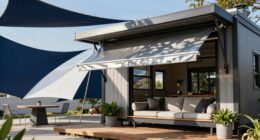
You can cut your heating and cooling costs by using passive design choices like incorporating materials with thermal mass, such as concrete or brick, to absorb and slowly release heat. Position windows to maximize natural ventilation and strategic shading to block summer heat. Orient your building to optimize winter sunlight and minimize summer heat gain. Landscaping with trees can provide shade and airflow. Exploring these strategies further will help you make your home more energy-efficient year-round.
Key Takeaways
- Incorporate thermal mass in floors and walls to absorb and slowly release heat, stabilizing indoor temperatures.
- Design for natural cross-ventilation with strategic window and opening placement to reduce cooling needs.
- Use shading devices and properly positioned windows to block summer heat and maximize natural daylight.
- Orient buildings to optimize passive solar heating in winter and minimize heat gain in summer.
- Implement passive design principles combining thermal mass, ventilation, shading, and orientation for energy-efficient comfort.
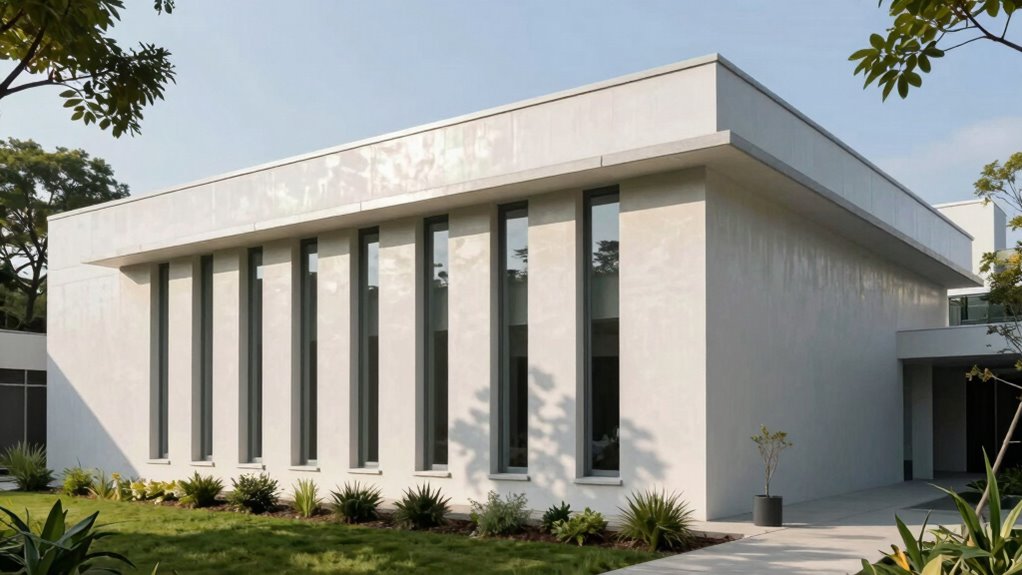
Have you ever wondered how to make a building more energy-efficient without relying heavily on mechanical systems? The answer lies in passive design choices that harness natural forces and materials to regulate indoor temperatures. One of the most effective strategies is incorporating thermal mass into your building. Thermal mass refers to materials like concrete, brick, or stone that absorb heat during the day and release it slowly at night. By using these materials in floors or walls, you can reduce temperature fluctuations, keeping your space warmer during winter and cooler during summer. This passive heat storage minimizes the need for active heating and cooling systems, saving you energy and money over time.
Alongside thermal mass, natural ventilation plays a crucial role in passive design. Instead of relying solely on air conditioning, you can design your space to encourage fresh air movement naturally. Strategic placement of windows, vents, and other openings allows cool breezes to flow through the building, removing excess heat during warm months. By creating cross-ventilation paths, you can markedly lower indoor temperatures without mechanical intervention. This not only cuts cooling costs but also improves indoor air quality, making your space more comfortable and healthier.
In addition to thermal mass and natural ventilation, thoughtful shading and daylighting contribute to energy efficiency. Overhangs, awnings, or shading devices block high summer sun, preventing unwanted heat gain. Meanwhile, large, well-placed windows maximize natural light, reducing the need for artificial lighting during the day. Properly designed shading devices work in harmony with natural ventilation, ensuring your space stays comfortable year-round without excessive energy use.
Furthermore, orienting your building correctly from the start amplifies these passive techniques. Positioning living spaces to face south (in the northern hemisphere) allows maximum sunlight in winter for passive solar heating, while minimizing heat gain in summer. Incorporating landscape elements like trees and shrubs can also provide additional shading and wind protection, enhancing natural ventilation and thermal comfort.
thermal mass concrete flooring
As an affiliate, we earn on qualifying purchases.
As an affiliate, we earn on qualifying purchases.
Frequently Asked Questions
How Much Can Passive Design Reduce Energy Bills Annually?
Passive design can reduce your energy bills by up to 30-50% annually. By improving thermal insulation, you keep heat in during winter and out during summer, lowering heating and cooling needs. Incorporating natural ventilation allows fresh air to circulate without relying solely on HVAC systems, further decreasing energy costs. These strategies work together to make your home more energy-efficient, saving you money while enhancing comfort year-round.
Are Passive Design Strategies Suitable for All Climate Zones?
Passive design strategies aren’t suitable for all climate zones due to design limitations and varying climate adaptability. In hot, humid areas, these strategies help reduce cooling costs but might need supplementing with mechanical systems. Conversely, cold climates may require additional insulation and heating solutions. You should assess your local climate and consult experts to determine if passive design fits your specific needs, ensuring maximum efficiency and comfort.
What Initial Costs Are Associated With Implementing Passive Design?
Think of passive design as planting seeds for future savings. You’ll face initial costs primarily through material selection and construction techniques, such as high-quality insulation, strategic window placement, and durable building materials. These investments might seem high at first, but they pay off over time by reducing energy bills. Preparing for these expenses guarantees your home naturally stays comfortable, making passive design a smart, long-term choice.
How Long Does It Take to See Savings From Passive Design?
You can usually see savings within the first year after implementing passive design strategies like thermal mass and daylighting. Thermal mass helps regulate indoor temperatures, reducing heating and cooling needs, while daylighting lowers lighting costs. As these features stabilize indoor conditions and maximize natural light, your energy bills start decreasing soon after installation. Over time, the cumulative savings grow, making passive design a cost-effective choice for long-term energy efficiency.
Can Passive Design Be Combined With Renewable Energy Systems?
Yes, you can definitely combine passive design with renewable energy systems. Passive strategies, like proper insulation and natural ventilation, work alongside renewable integration such as solar panels or wind turbines to maximize efficiency. This synergy not only reduces your energy bills but also minimizes your carbon footprint. By blending passive and renewable solutions, you create a sustainable, cost-effective home that leverages natural resources for heating, cooling, and power generation.

4 Pack Shipping Container Air Vent Kit,Galvanized Steel Transportation Container Vents for Shipping Container,Cross Flow Ventilation Cargo Container Vent Preventing Excessive Heat and Condensation
Boost Ventilation: Shipping containers often suffer from humidity, passive heat, and condensation due to poor ventilation, which can…
As an affiliate, we earn on qualifying purchases.
As an affiliate, we earn on qualifying purchases.
Conclusion
By embracing passive design choices, you harness nature’s silent symphony to keep your home comfortable. Like a skilled conductor, you orchestrate sunlight, shade, and airflow to dance in harmony, reducing your reliance on energy-hungry systems. These thoughtful touches act as your home’s invisible armor against the extremes, turning your space into a cozy fortress that breathes with the seasons. With each smart choice, you’re not just saving money—you’re planting seeds for a greener, more sustainable future.
Advances in Passive Cooling (BEST (Buildings Energy and Solar Technology))
As an affiliate, we earn on qualifying purchases.
As an affiliate, we earn on qualifying purchases.

Kozyard Adjustable Window Awning – 4-Level Tilt, 42" W × 32" Sloped Panel, Adjustable Projection 22"–31", Powder-Coated Iron Canopy, All-Weather Rain, Snow & UV Protection Dark Gray
4-Level Adjustable Sunshade – Customized Comfort: Unlike fixed-angle awnings, this door awning features four adjustable angles, allowing you…
As an affiliate, we earn on qualifying purchases.
As an affiliate, we earn on qualifying purchases.