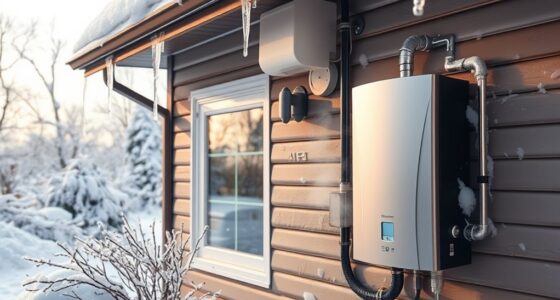
To guarantee your small home stays resilient during outages, you can combine rainwater harvesting and solar generator systems. Collecting rainwater provides a reliable source for drinking, cleaning, and gardening, while solar generators keep your essential devices powered. Stockpiling extra water, batteries, and basic tools helps maintain your setup over time. Proper planning and regular maintenance ensure these systems work when you need them most. Stay with us to discover how to build your ideal backup kit.
Key Takeaways
- Combine rainwater harvesting systems with filtration for reliable, off-grid water supply during emergencies.
- Use portable solar generators with sufficient capacity to power essential devices and LED lighting.
- Maintain regular system checks and cleaning to ensure optimal performance and longevity of backup water and power setups.
- Stock extra bottled water, batteries, and inverter systems to supplement primary backup solutions.
- Customize systems based on household needs, integrating water and power backups for comprehensive resilience.

In small homes, having reliable backup water and power supplies can mean the difference between comfort and crisis during emergencies. One practical way to guarantee you’re prepared is by setting up a rainwater harvesting system. This allows you to collect rainwater from your roof and store it for various uses, reducing dependence on municipal water supplies. You can install a simple system with gutters, filters, and storage tanks. During dry spells or outages, this stored water can be used for drinking, cooking, cleaning, or even watering your garden. It’s a sustainable, cost-effective solution that enhances your resilience and reduces reliance on external sources. Incorporating water filtration techniques into your rainwater system ensures the water remains safe for household use, especially during extended shortages. Regularly testing your water quality can also help identify potential contaminants early, maintaining safety and health.
Alongside rainwater harvesting, exploring solar generator options can notably boost your preparedness. These portable or stationary units convert sunlight into electricity, giving you a reliable power source when the grid fails. Modern solar generators are compact, easy to use, and often come with multiple outlets, allowing you to power essential devices like LED lights, small appliances, or communication equipment. When choosing a solar generator, consider its capacity and the type of batteries it uses to guarantee it can meet your energy needs during extended outages. Pairing a solar generator with energy-efficient appliances and LED lighting maximizes your power supply and extends its usefulness. Additionally, understanding renewable energy sources can help you make informed decisions when expanding your backup systems. Routine maintenance and monitoring of your solar setup can also improve longevity and efficiency, ensuring you’re always prepared when it’s most critical. A well-maintained system can significantly reduce the risk of unexpected failures when it’s most needed, especially if you incorporate regular system checks into your routine.
Solar generators provide reliable, portable power when the grid is down, especially when paired with energy-efficient devices.
To create an effective backup water and power resilience kit, you should also include additional essentials. For water, keep extra bottled water or portable water containers on hand, especially if rainwater harvesting isn’t sufficient during winter or drought periods. For power, stock up on extra batteries, power banks, or inverter systems compatible with your solar generator. It’s also wise to have basic tools for maintenance, such as filters for your rainwater system or cleaning supplies for your solar panels. These additions ensure your system remains functional and efficient over time. Planning for emergency preparedness by maintaining these supplies can significantly reduce stress during crises and ensure your home remains operational.
Combining rainwater harvesting with solar generator options provides a holistic approach to resilience in small homes. This dual setup not only secures your immediate water and power needs but also promotes sustainability and independence. During emergencies or grid failures, you’ll have peace of mind knowing you can access clean water and electricity. Investing in these systems might require upfront effort and expense, but the long-term benefits—reliability, cost savings, and environmental impact—make it well worth your while. The key is to plan ahead, customize your kit based on your specific needs, and regularly maintain your systems to stay prepared for any situation. Properly integrating backup water and power strategies ensures a resilient and self-sufficient home environment.

Portable Solar Generator 300W Portable Power Station with 60W Solar Panel
- Portable power station with solar panel: Includes 60W foldable solar panel
- High-capacity battery: 280Wh battery for multiple device charges
- Multiple outlets for devices: 2 AC, 1 DC, 4 USB ports including quick charge
As an affiliate, we earn on qualifying purchases.
As an affiliate, we earn on qualifying purchases.
Frequently Asked Questions
How Long Can Backup Kits Sustain a Small Home’s Needs?
You can expect your backup kits to sustain your small home’s needs for varying durations, typically from a few days up to a week, depending on your kit’s size and customization. For effective emergency preparedness, you should tailor your kit to meet your household’s specific water and power needs. Regularly testing and updating your kit guarantees it provides reliable support during emergencies, giving you peace of mind when it matters most.
Are These Kits Suitable for All Climate Conditions?
Did you know that climate change increases extreme weather events by 50%? These resilience kits offer climate adaptability, but their effectiveness depends on kit customization. While they’re designed for various conditions, some kits may need modifications for extreme cold or heat. It’s essential to evaluate your local climate and tailor your kit accordingly, ensuring your small home remains resilient no matter what weather challenges come your way.
What Is the Maintenance Required for Backup Water and Power Kits?
You need to follow a regular maintenance schedule to keep your backup water and power kits reliable. Check components like batteries, filters, and pumps monthly, and replace any worn or damaged parts promptly. It’s also wise to perform a full system inspection every six months, ensuring everything functions correctly. Proper maintenance extends the life of your kits, guarantees readiness during emergencies, and prevents unexpected failures when you need your backup systems the most.
Can These Kits Be Expanded for Future Needs?
Yes, you can expand these kits for future needs, but it’s not always straightforward. As you consider adding alternative energy sources or water conservation tools, determine your evolving energy and water demands. Check if your current setup allows modular upgrades and guarantee compatibility. Planning ahead now helps you seamlessly integrate new components later, making your small home more resilient in uncertain times. Stay flexible and proactive to maximize your kit’s potential.
What Are the Initial Costs of Installing These Resilience Kits?
The initial costs of installing these resilience kits depend on your home’s size and the kit’s complexity. Conduct a cost analysis to understand expenses for equipment and installation. The installation process involves evaluating your energy and water needs, then setting up the kits accordingly. While costs vary, investing upfront can save you money and stress during emergencies, ensuring a reliable backup system tailored to your small home’s requirements.
Conclusion
By equipping your small home with backup water and power kits, you’re building a safety net that’s ready when you need it most. Think of these kits as your personal lifeboats during a storm—they keep you afloat when the skies grow dark. Just like a tiny seed can grow into a mighty tree, small preparedness measures can strengthen your resilience, ensuring you weather any storm with confidence and peace of mind.