
TL;DR

Get compact home essentials delivered free — and shop member deals
- Fast, free delivery on millions of items
- Access to Prime Big Deal Days deals on October 6–7
- Prime Video, Amazon Music and more included
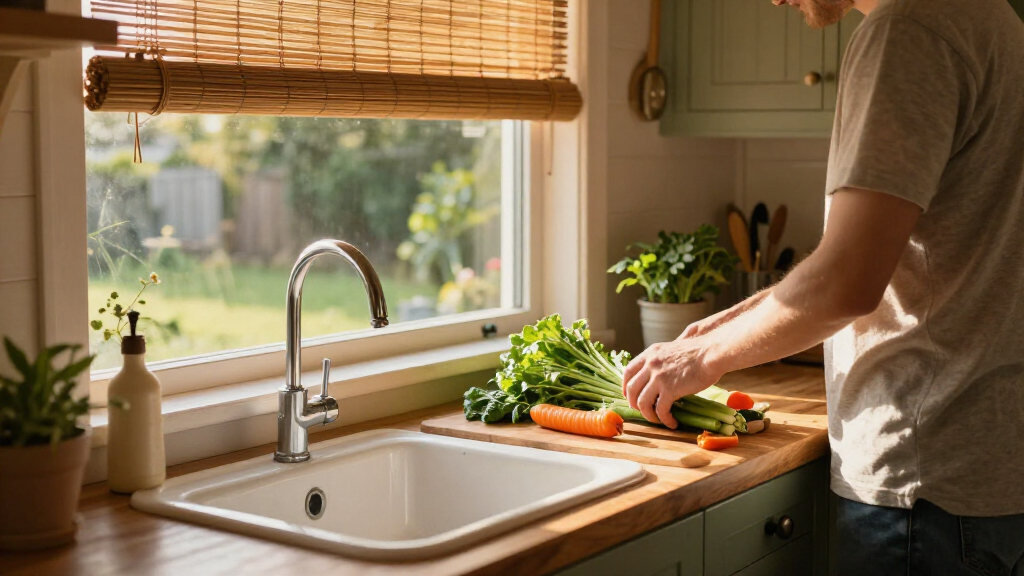
Interior designer Craig Gritzen recommends wide-slat faux wood blinds for kitchen windows, pointing to their resistance to humidity and ease of cleaning. The advice comes from a Hunker report, not a comparative product test; vinyl roller shades, other composite blinds and washable fabric treatments are also options.
Interior designer Craig Gritzen recommends wide-slat faux wood blinds for kitchen windows, saying their composite construction can handle kitchen humidity and is easier to clean than natural wood. The advice, published by Hunker, offers homeowners a design option for spaces where cooking residue and moisture can make window coverings harder to maintain; it does not establish that faux wood is best for every kitchen.
Gritzen, founder and principal designer of Los Angeles-based Curated Style Collective, told Hunker that he favors simple, wide-slat blinds in a warm wood tone or a finish that fits the room. His preference is for treatments that blend with the kitchen rather than compete with countertops and cabinets. He also advises against faux wood finishes with an exaggerated grain, saying the material should not try too hard to imitate natural wood.
The report says faux wood composites are more resistant to humidity, fading, cracking and warping than natural wood in high-moisture settings. Gritzen also described the blinds as non-porous and easy to wash, making them a possible fit for windows over sinks, where moisture and splashes are common. The source does not identify specific brands, materials or product test results.
Gritzen’s suggestions are not limited to faux wood. He also favors vinyl roller shades, which can be raised out of view to admit more daylight. For rooms where privacy is less important, leaving a window uncovered may be an option. Café curtains and Roman shades can preserve an airy look, but the report cautions that fabric treatments need regular washing because cooking grease can collect on them.
Choosing Blinds for Kitchen Conditions
Kitchen window coverings face different demands from those in many other rooms: steam, moisture and airborne grease can affect their appearance and upkeep. A material that is easy to wipe down may reduce the work of maintaining a window treatment, while resistance to warping can matter near sinks or during frequent cooking. Faux wood is presented here as one way to balance practicality and appearance, rather than as a universal solution.
The recommendation also clarifies the trade-offs homeowners may want to weigh. Slatted blinds offer adjustable light and privacy, but require cleaning between slats. Roller shades can be lifted to open up the window, while fabric curtains may soften a room but need laundering. The right choice depends on privacy needs, window placement, cleaning habits and design preferences, none of which can be settled by material alone.
faux wood blinds for kitchen windows
As an affiliate, we earn on qualifying purchases.
As an affiliate, we earn on qualifying purchases.
Alternatives Beyond Natural Wood
The Hunker report frames faux wood as an alternative to traditional vinyl blinds and natural wood in kitchen settings. Gritzen’s case for faux wood centers on its composite construction and suitability for humid conditions, while his design advice focuses on restrained finishes that sit quietly alongside other kitchen features. These are professional recommendations relayed in an interview, not findings from a controlled comparison of window treatments.
The source also notes that high-quality vinyl can be easy to clean, and specifically describes vinyl roller shades as a favored alternative. That distinction matters: the headline’s contrast with vinyl does not mean every vinyl product is unsuitable. The report’s practical point is to compare the form and material of a treatment with the kitchen’s conditions, rather than treating all vinyl options as the same.
“My favorite type of blinds for kitchen windows are simple wide-slat faux wood blinds in either a warm wood tone or color finish that works with the design direction.”
— Craig Gritzen, founder and principal designer of Curated Style Collective, speaking to Hunker
Limits of the Blind Recommendation
The source provides one designer’s advice, not independent testing or a product-by-product comparison. It does not specify how particular faux wood products perform under different levels of heat, steam or grease, or how their cleaning requirements compare with specific vinyl blinds. The material and construction of products sold under labels such as “faux wood” can also vary, but the report does not assess those differences.
It is also unclear which treatment would suit any individual kitchen without details about window location, ventilation, privacy and light. Gritzen recommends using an extractor hood to reduce cooking residue, but the report does not quantify how much this might limit buildup on blinds. Homeowners should check product care instructions and suitability for the conditions at their own windows.
Compare Materials and Care Needs
The report does not announce a new product or a change in industry guidance, and it gives no upcoming milestone. For homeowners choosing a covering, the next practical step is to compare cleaning instructions, moisture resistance, light control and privacy across the products they are considering. Product specifications and manufacturer guidance can help clarify whether a particular blind is intended for a humid room.
Gritzen’s recommendations also point to routine maintenance: operate an extractor hood while cooking to help limit residue, and clean window coverings according to their care instructions. The source offers no timeline or follow-up assessment, so whether faux wood proves more convenient in a particular kitchen will depend on the product and how it is used.
Key Questions
What type of blinds does the designer recommend for kitchen windows?
Craig Gritzen recommends simple, wide-slat faux wood blinds in a finish that suits the kitchen. He favors understated finishes that do not compete with cabinets or countertops.
Why does the report favor faux wood over natural wood?
The report says faux wood composites are more resistant to humidity, fading, cracking and warping than natural wood. Gritzen also says the non-porous material is easy to wash, though the source does not include comparative product testing.
Does the designer rule out vinyl blinds?
No. Gritzen also recommends vinyl roller shades as an alternative, particularly when a homeowner wants a treatment that can be raised out of view. The headline’s contrast with vinyl is not a blanket rejection of every vinyl product.
Are curtains suitable for kitchen windows?
The report identifies café curtains and Roman shades as options that can keep a kitchen feeling airy. It also says fabric treatments may collect grease and need regular washing.
How can homeowners reduce residue on kitchen blinds?
Gritzen recommends using an extractor hood to help limit cooking residue on surfaces. The report does not quantify the effect, so blinds still need cleaning in line with their product care instructions.
Source: rss
Halloween Picks
halloween
As an affiliate, we earn on qualifying purchases.