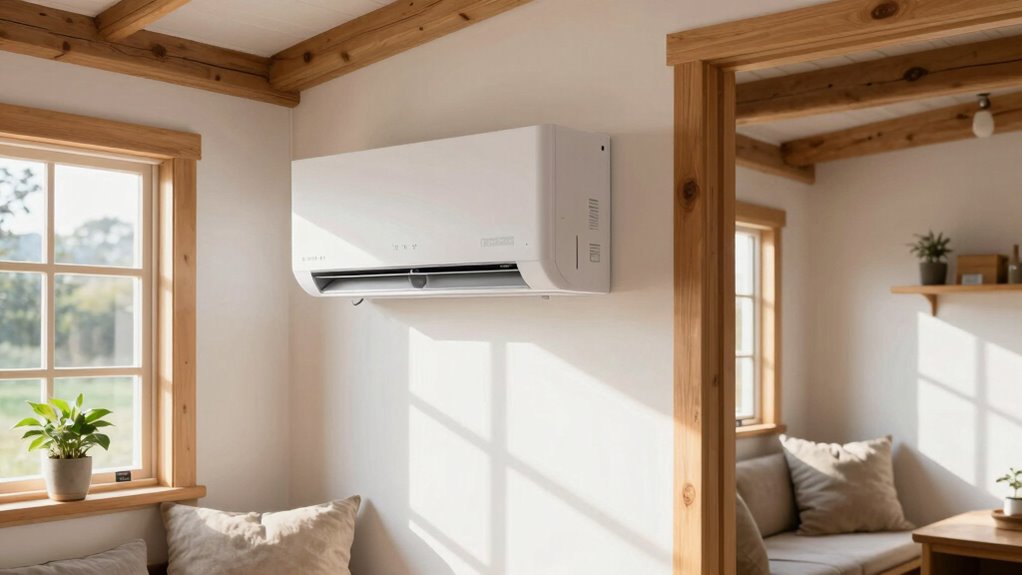

When choosing a mini split for your tiny house, sizing and layout are key. You need a unit that matches your space’s square footage, insulation quality, and open or segmented layout. Proper placement of indoor and outdoor units guarantees even heating and cooling. Avoid undersized systems that struggle to keep up or oversized ones that waste energy. To get the best comfort and efficiency, consider your house’s unique design—more details can help you optimize your setup.
Key Takeaways
- Proper mini split sizing depends on house size, insulation, and design to ensure efficient heating and cooling.
- Indoor unit placement affects airflow, temperature distribution, and overall comfort in tiny houses.
- Open floor plans may require different system setups than segmented spaces for optimal efficiency.
- Outdoor condenser location should be shaded and well-ventilated to enhance performance and reduce noise.
- Tailoring system size and layout to house-specific factors maximizes energy efficiency and system longevity.

If you’re living in or designing a tiny house, choosing the right heating and cooling system is vital for comfort and efficiency. Mini splits are a popular choice because they provide effective climate control without taking up too much space. When considering mini splits, the size and layout of your tiny house are key factors that influence how well the system works. You want to select a unit that matches your home’s heating and cooling needs, which depends on its square footage, insulation, and overall design. An undersized unit won’t adequately heat or cool your space, leading to discomfort and higher energy bills. Conversely, an oversized unit may cycle on and off too frequently, wasting energy and reducing the system’s lifespan.
Choosing the right mini split size is essential for comfort, efficiency, and energy savings in your tiny house.
Energy efficiency should be a top priority. Mini splits are generally energy-efficient compared to traditional HVAC systems because they avoid duct losses and can be zoned to heat or cool only occupied areas. To maximize efficiency, you need to evaluate your tiny house’s layout carefully. Open floor plans might require a different setup than segmented spaces, and the placement of the indoor units affects airflow and temperature distribution. Properly sizing the mini split involves considering not just the total square footage but also factors like ceiling height, window placement, and insulation quality. A well-calculated size ensures you won’t need excessive energy to maintain a comfortable temperature, which is especially important in a tiny house where space and power resources are limited. Additionally, understanding the benefits of ductless systems can help you make an informed choice.
Installation considerations also play an important role. Tiny houses often have unique constraints, such as limited wall space or unconventional construction materials, which can affect where and how you install your mini split. Some units are designed for easy installation, but you still need to think about the placement of the outdoor condenser—ideally in a shaded spot, away from direct sunlight, and with clear airflow. Proper installation not only maximizes energy efficiency but also reduces noise and maintenance issues. You should also consider whether you want a single-zone system for the entire house or multiple mini splits to control different areas independently. This can improve comfort and further enhance energy savings by avoiding unnecessary heating or cooling of unoccupied zones. Proper system sizing is crucial to avoid unnecessary energy consumption and ensure reliable operation. Moreover, considering climate-specific factors can help select the most suitable system for your environment, further optimizing performance.
A thorough assessment of your tiny house’s layout and insulation can lead to more precise system sizing and better overall performance.

Oylus Mini Split Ac/Heating System – 12000 BTU Ductless Mini Split Air Conditioner with Heat Pump, 19 SEER2 115V Energy Efficient Ac Unit Up to 750 Sq.Ft with Installation Kit
【Efficient Cooling & Heating】 – Stay comfortable all year round with 12,000 BTU cooling and 12,500 BTU heating….
As an affiliate, we earn on qualifying purchases.
As an affiliate, we earn on qualifying purchases.
Frequently Asked Questions
How Energy-Efficient Are Mini Splits in Tiny Houses?
Mini splits are highly energy-efficient for tiny houses because they use an alternative installation method that minimizes energy consumption. You’ll find they heat and cool effectively without wasting power, thanks to their inverter technology that adjusts output based on your needs. This means you’ll save money on energy bills and reduce your carbon footprint, making mini splits a smart, eco-friendly choice for tiny house climate control.
Can Mini Splits Handle Extreme Weather Conditions?
Mini splits can handle extreme weather conditions, especially when paired with solar compatibility and ductless installation. They’re designed to operate efficiently in both hot and cold climates, providing reliable heating and cooling. You should select a unit with a high BTU rating for colder weather. Proper installation and choosing models suited for your climate guarantee your mini split stays effective, even during severe weather.
What Maintenance Is Required for Mini Split Systems?
Did you know that regular maintenance can extend a mini split system’s lifespan by up to 50%? To keep it running efficiently, you should clean or replace filters monthly, check the refrigerant levels annually, and clear debris from the outdoor unit. Proper maintenance reduces long-term costs, prevents breakdowns, and guarantees peak performance, saving you money on repairs and boosting energy efficiency. Consistent upkeep makes your mini split last longer.
Are Mini Splits Suitable for Off-Grid Tiny Houses?
Yes, mini splits can be suitable for off-grid tiny houses, especially if you prioritize off-grid compatibility and renewable energy integration. They’re energy-efficient, reducing power consumption, and can work well with solar panels or other renewable sources. Just make certain you select a system with a compatible inverter and proper sizing for your space. Proper setup and energy management allow you to enjoy climate control without relying on traditional grid power.
How Noisy Are Mini Split Air Conditioning Units?
You’ll notice mini split units are surprisingly quiet, often humming softly like a gentle lullaby. Thanks to sound insulation and noise mitigation features, they blend into your tiny house’s background noise, avoiding disruptive clangs or loud buzzes. Their whisper-quiet operation keeps your space peaceful, letting you relax or work without disturbance. So, you won’t be jolted by noise, making them a smart, calming choice for your cozy sanctuary.
Oylus Mini Split Ac/Heating System – 12000 BTU Ductless Mini Split Air Conditioner with Heat Pump, 19 SEER2 115V Energy Efficient Ac Unit Up to 750 Sq.Ft with Installation Kit
【Efficient Cooling & Heating】 – Stay comfortable all year round with 12,000 BTU cooling and 12,500 BTU heating….
As an affiliate, we earn on qualifying purchases.
As an affiliate, we earn on qualifying purchases.
Conclusion
Choosing the right mini split for your tiny house guarantees comfort and efficiency. For example, if you live in a small, open-concept space, a single ductless unit with adequate BTU capacity can heat and cool the entire area effectively. Think about your layout and insulation to pick a system that suits your needs. With the right size and placement, you’ll enjoy cozy temperatures year-round without wasting energy or space.

GarveeLife 12,000 BTU Mini Split Air Conditioners, AC/Heating System, 21 SEER2, Quiet Operation, 115V WIFI Enabled Energy Efficient Mini Split Unit, Heat Pump for Rooms Up to 750 Sq.ft
【High-Efficiency Year-Round Comfort】25% Energy Savings: ETL and AHRI certified, this inverter system delivers powerful cooling and heating with…
As an affiliate, we earn on qualifying purchases.
As an affiliate, we earn on qualifying purchases.
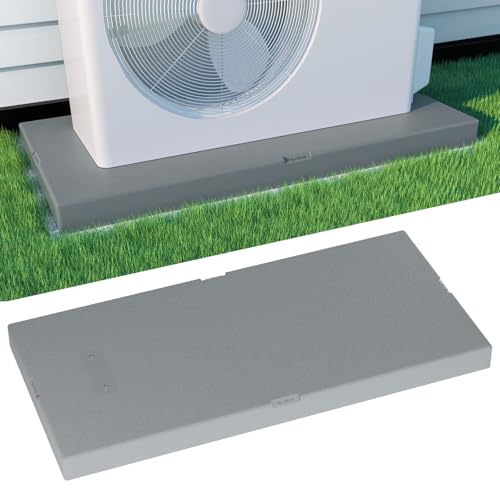
Toutgood Mini Split Pad for Condenser: Ground Base for Air Conditioner Outdoor Condenser Units, Plastic Equipment Pad for Ductless Minisplit Heat Pump Systems HAVC, Gra, 38'' x 18'' x 3''
Reinforced Design: The mini split base pad features proprietary size and design, size 38" x 18" x 3"…
As an affiliate, we earn on qualifying purchases.
As an affiliate, we earn on qualifying purchases.