
When searching for the best compact laundry appliances for tiny spaces, look for models that are energy-efficient and fit your available area. Focus on appliances with high ratings, like Energy Star, to save water and electricity. Measure your space carefully, and choose units with the right features for your laundry needs. Proper installation and maintenance can boost performance and longevity. Keep exploring to discover tips that help you select and care for your perfect compact laundry solution.
Key Takeaways
- Prioritize Energy Star-rated models for optimal energy efficiency in small spaces.
- Measure available space precisely to ensure proper fit and ventilation.
- Choose appliances with versatile cycle options tailored to your laundry needs.
- Check user reviews for reliability and durability in compact models.
- Ensure easy installation with accessible water and electrical connections for hassle-free setup.
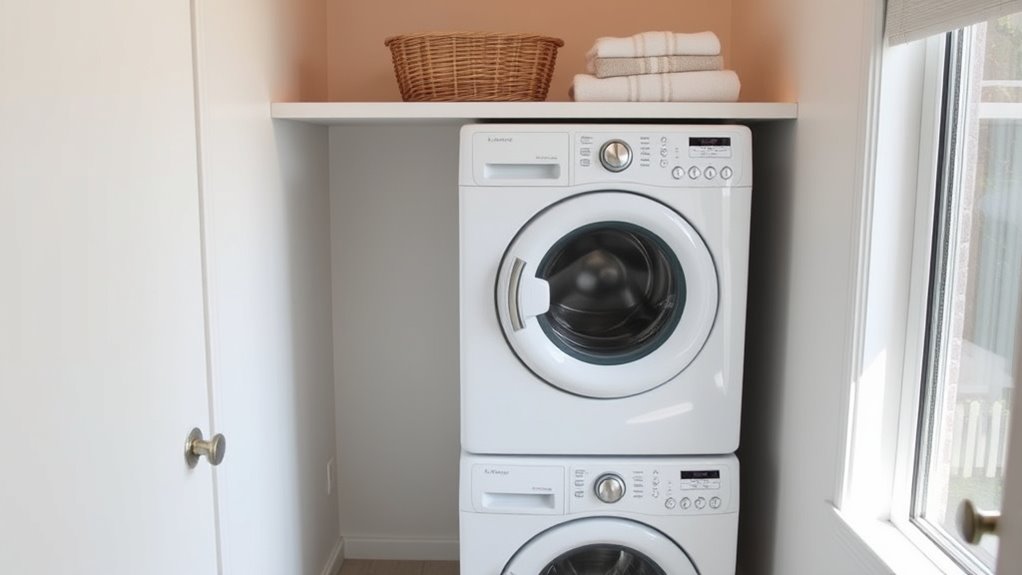
If space is limited but you still need effective laundry solutions, compact laundry appliances are an excellent choice. These appliances are designed to fit into small areas without sacrificing performance, making them perfect for apartments, studios, or tiny homes. When selecting the best compact laundry appliances, you’ll want to consider energy efficiency, as these units often use less water and electricity, helping you save on utility bills and reduce your environmental footprint. Look for models with an Energy Star rating, which guarantees that the appliance meets high standards for energy conservation. Choosing energy-efficient units not only benefits the planet but also ensures economical operation over time.
Compact laundry appliances offer efficient, space-saving solutions ideal for small living spaces and eco-friendly operation.
Installation is a critical step that can influence your overall satisfaction with compact laundry appliances. To maximize efficiency and avoid issues, start by measuring your available space precisely. Check the dimensions of the appliance, ensuring there’s enough clearance for doors and ventilation, and consider the proximity to water outlets and electrical connections. When installing, follow the manufacturer’s installation tips carefully. These tips often include advice on leveling the machine to prevent vibrations, securing hoses properly to prevent leaks, and ensuring proper drainage. If you’re unsure about the installation process, it’s wise to hire a professional. Proper installation guarantees ideal performance, reduces noise, and extends the lifespan of your appliance.
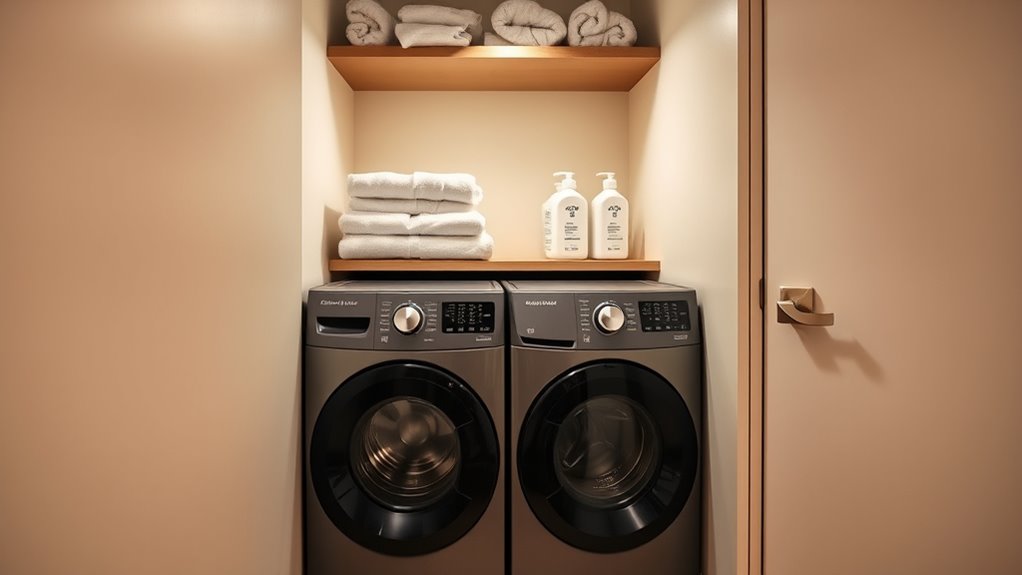
Another key point in installation is selecting the right location. Place your compact washer or dryer in a well-ventilated area to prevent overheating and moisture buildup. If you’re installing in a closet or small alcove, make sure there’s enough space around the unit for air circulation and that the area is accessible for maintenance. Don’t forget to check the electrical requirements—most compact appliances need a standard outlet, but some may require a dedicated circuit. Additionally, consider the water supply: ensure hoses are securely connected and check for any leaks before running your first load. Developing a creative approach to organizing your laundry space can also help maximize limited areas and improve overall efficiency.
Maintenance and care are just as important as proper installation. Keep the area around your appliance clean, and regularly inspect hoses and connections for signs of wear or leaks. Using the right detergents and avoiding overloading your machine will also help maintain efficiency and extend its lifespan. Remember, your goal is to make laundry as effortless and energy-efficient as possible, even in a small space. With the right choice of compact laundry appliances and a little effort during installation, you’ll enjoy clean clothes without sacrificing precious space or wasting energy.
Frequently Asked Questions
Do Compact Laundry Appliances Require Special Installation?
No, compact laundry appliances generally don’t require special installation, but you should check the installation requirements for your specific model. You’ll need to take into account plumbing considerations, like water supply and drain hookups, which are usually straightforward. Make sure your space can accommodate the necessary hookups and electrical outlets. Following the manufacturer’s guidelines ensures proper installation and safe operation, helping you avoid any future issues.
Can I Upgrade Compact Machines for Larger Capacity?
You can’t easily upgrade compact machines for larger capacity, as they’re designed for small spaces and specific machine capacity. Think of it like fitting a square peg in a round hole—your upgrade options are limited. If you need more capacity, consider replacing your current unit with a larger appliance that fits your needs. It’s better to invest in the right size from the start than trying to stretch the limits later on.
Are Compact Laundry Units Energy-Efficient?
Yes, compact laundry units are generally energy-efficient, helping you save on energy bills and promote eco-friendliness. They use less water and electricity compared to larger models, making them an excellent choice for small spaces. By choosing energy-saving features and eco-friendly cycles, you can maximize your savings while reducing your environmental impact. These appliances are designed to deliver effective cleaning without sacrificing sustainability or efficiency.
How Long Is the Typical Lifespan of Small Appliances?
Like the timeless resilience of a Greek temple, small appliances typically last about 5 to 10 years with proper maintenance. You can prolong their lifespan by following key maintenance tips, such as regular cleaning and avoiding overloading. Appliance durability depends on quality and usage, so investing in reputable brands helps. Staying attentive to signs of wear guarantees your compact laundry unit remains efficient, making it a reliable addition to your tiny space.
Do Compact Washers Handle Bulky Items Effectively?
Compact washers can handle bulky items effectively if you choose models with a larger washer capacity, typically around 2.0 cubic feet or more. Look for features specifically designed for bulky item handling, like extra rinse cycles and adjustable spin speeds. Keep in mind that smaller capacity washers may struggle with large comforters or thick blankets, so assess your laundry needs and select a model that balances size and performance for bulky loads.
Conclusion
So, there you have it—your tiny space’s new best friends. Who knew that fitting a washing machine and dryer into your closet could actually make laundry less of a chore? With these compact appliances, you’ll finally enjoy the thrill of laundry day without sacrificing your precious square footage. Now, go ahead, conquer your tiny laundry room like a pro—because nothing says “organized” quite like a washer that’s smaller than your cereal box.