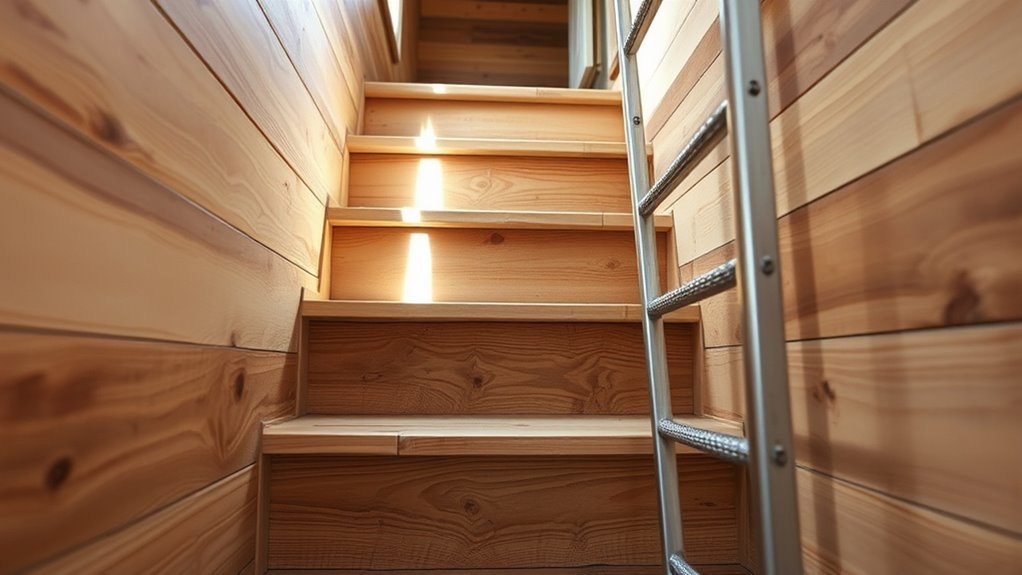

When building DIY tiny house stairs or ladders, consider your space, usage needs, and safety features. Foldable or retractable ladders save room for infrequent access, while small stairs with handrails provide stability for regular use. Choose lightweight, durable materials like plywood or metal, and guarantee everything is securely anchored. Adding non-slip treads and proper lighting enhances safety. If you keep exploring, you’ll discover more tips to create functional, secure stairs or ladders tailored to your tiny home.
Key Takeaways
- Assess available space and usage frequency to choose between foldable ladders or small stairs.
- Incorporate safety features like handrails, non-slip treads, and secure anchoring for stability.
- Select lightweight, durable materials such as plywood or metal for easy handling and longevity.
- Use space-saving designs like retractable or foldable structures to maximize room efficiency.
- Double-check measurements, secure attachments, and add lighting to ensure safety and functionality.

Thinking about how to access your tiny house’s loft or storage area? Finding the right stairs or ladder is essential, especially when space is limited. You need a solution that maximizes space saving solutions without compromising safety. Fortunately, designing and building your own stairs or ladder can be both achievable and cost-effective, giving you control over the design while ensuring it fits your specific needs.
When choosing between stairs and ladders, consider the available space and how often you’ll use the access point. A compact, foldable ladder might be perfect if you want to save space and don’t plan to use the loft daily. On the other hand, if you need frequent access, a small set of stairs could offer more stability and comfort. Whichever option you pick, remember that safety considerations should always come first. Your DIY project must include sturdy handrails, non-slip treads, and secure anchoring to prevent accidents. Ensure that the steps or rungs are wide enough for comfortable footing and that the overall structure is solid and well-balanced.
Constructing your own stairs or ladder allows you to tailor the height, width, and style to match your tiny house’s interior. Use lightweight but durable materials like plywood or metal to keep the structure manageable and safe. When designing a ladder, consider adding side rails and slip-resistant steps to improve safety. For stairs, include gentle inclines with a handrail on one or both sides. Incorporate space-saving features such as retractable or foldable designs if you’re tight on room. These solutions help you gain easy access without sacrificing precious floor space. Proper planning and measurement are crucial to ensure your DIY stairs or ladder fit perfectly and function reliably.
Remember to double-check all measurements before cutting any materials. Proper planning guarantees your stairs or ladder will be functional, safe, and comfortable. Securely attach your DIY stairs or ladder to the wall or floor to prevent shifting or wobbling. Test the stability thoroughly before regular use. You might also want to add lighting along the steps or ladder to improve visibility and reduce the risk of falls, especially at night.
Frequently Asked Questions
What Materials Are Best for Lightweight Tiny House Stairs?
For lightweight tiny house stairs, you should consider materials that balance durability with weight considerations. Aluminum is ideal because it’s strong yet light, making it easy to install and handle. You might also explore engineered wood or plywood for cost-effective, lightweight options that still provide strength. Avoid heavy materials like solid hardwood or concrete. Your goal is to select materials that guarantee safety without adding unnecessary weight, making your stairs practical and easy to use.
How Can I Ensure Safety on Narrow Ladders?
To guarantee safety on narrow ladders, you should focus on securing ladder grip and installing safety railings. Keep your hands dry and use slip-resistant materials to prevent slipping. Add sturdy safety railings for added support and stability, especially when climbing or descending. Regularly inspect the ladder for wear or damage, and always maintain three points of contact. These steps help you stay safe, confident, and secure while maneuvering narrow ladders.
Are There Space-Saving Stair Designs Suitable for Tight Areas?
Yes, you can optimize vertical space with space-saving stair designs like spiral or alternating tread stairs. Multi-functional stairs also serve as storage or seating, maximizing limited areas. These designs minimize footprint while maintaining safety and accessibility. By choosing the right style, you guarantee efficient use of tight spaces, making your tiny house more functional without sacrificing comfort. Always prioritize sturdy construction and proper handrails for safety.
What Is the Average Cost to Build Tiny House Stairs?
You’ll likely spend between $100 and $500 to build tiny house stairs, depending on materials and design. Cost considerations include choosing affordable options like plywood or reclaimed wood, which can save money. Budget planning helps you allocate funds for tools, hardware, and finishing touches. Keep in mind that custom or complex designs may increase costs, so balancing style with your budget guarantees you create functional stairs without overspending.
How Do I Incorporate Storage Into Stair Design?
To incorporate storage into your stair design, you should focus on multi-functional storage solutions that maximize space. Consider building drawers or cabinets into each step for creative space utilization. You can also add open shelves underneath the stairs for easy access. Using space-efficient designs like fold-away compartments or hidden storage compartments allows you to keep your tiny house organized without sacrificing style or functionality.
Conclusion
So, go ahead, build those tiny stairs and ladders—it’s not just about saving space, but proving you’re a master of DIY genius. Who knew that squeezing into a cozy home would require such engineering prowess? Just remember, when you finally conquer that ladder, it’s not just about reaching the loft, but about reaching new heights of independence. Just don’t forget, if your DIY fails, at least you’ll have a great story to tell—and plenty of excuses for the chaos.