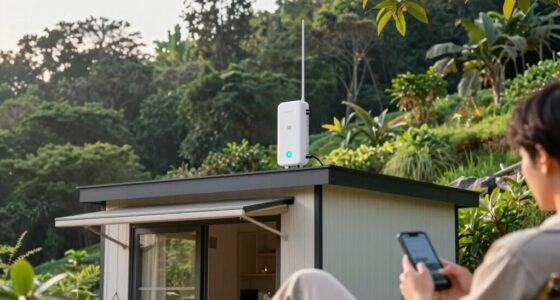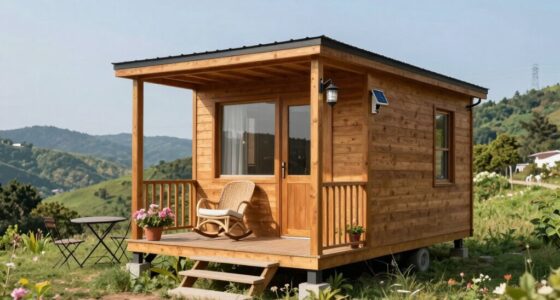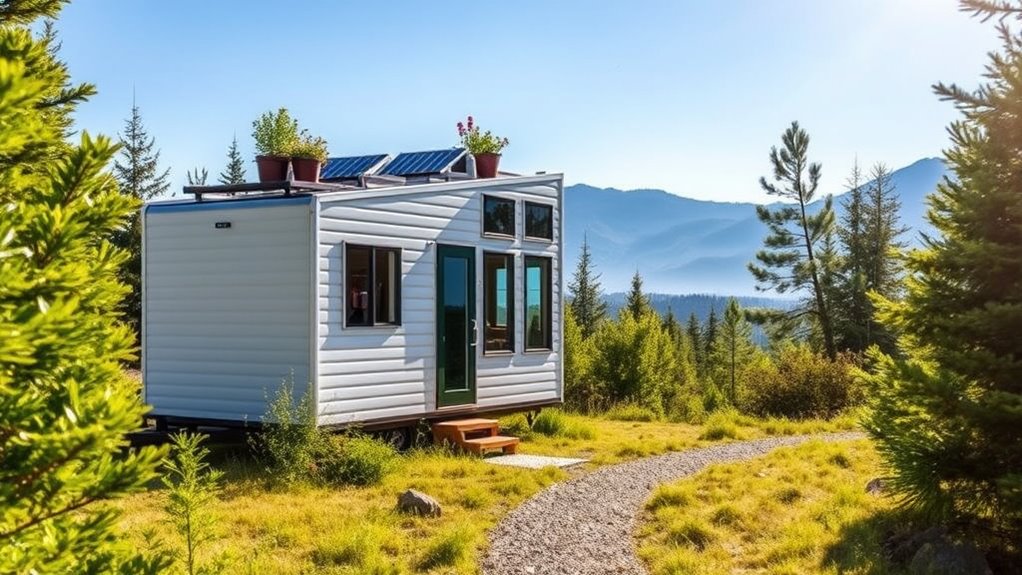

To build a mobile tiny home for remote living, focus on eco-friendly, durable materials and smart insulation to guarantee energy efficiency and comfort. Incorporate off-grid power sources like solar panels, wind turbines, and high-capacity batteries for reliable energy supply. Design on a lightweight trailer chassis for easy transportation, maximizing space with multi-purpose furniture and vertical storage. Including rainwater collection and composting toilets boosts self-sufficiency. Keep exploring to discover how all these elements come together seamlessly.
Key Takeaways
- Use lightweight, durable trailer chassis for mobility and ease of transport.
- Incorporate compact, flexible layouts maximizing vertical space and multi-purpose furniture.
- Integrate off grid energy solutions like solar panels and high-capacity batteries for reliable power.
- Implement eco-friendly features such as rainwater harvesting and energy-efficient appliances.
- Design for easy maintenance and resilience in remote environments to ensure long-term sustainability.

Have you ever wondered how to live comfortably off the grid while maintaining mobility? Building a mobile tiny home offers that perfect balance, allowing you to explore remote locations without sacrificing modern comforts. One of the key aspects to contemplate is incorporating sustainable design into your tiny home. This means selecting materials that are eco-friendly, energy-efficient, and durable enough to withstand various weather conditions. By doing so, you reduce your environmental footprint and create a space that’s both functional and respectful of nature. Sustainable design also emphasizes smart insulation, efficient water use, and renewable resources, making your tiny home not just portable but also environmentally responsible.
When it comes to off grid power, you want a system that’s reliable and tailored to your needs. Solar panels are often the go-to choice, providing clean energy during the day to power your appliances, lights, and electronics. Pairing solar with a high-capacity battery bank ensures you have electricity even during cloudy days or at night. Wind turbines can supplement solar energy if you’re in a windy area, offering additional off grid power stability. It’s vital to design your energy system with efficiency in mind, minimizing power consumption by choosing energy-efficient appliances and LED lighting. This way, your tiny home remains self-sufficient and reduces reliance on external power sources.
Mobility doesn’t mean you have to compromise on energy solutions. Your tiny home should be built on a sturdy and lightweight trailer chassis, allowing for easy towing and transport to different locations. When designing the layout, keep things compact but functional—maximize vertical space with clever storage solutions and multi-purpose furniture. This approach helps keep your tiny home lightweight, which is essential for maintaining mobility and reducing fuel costs during transit. Additionally, consider integrating versatile systems like composting toilets and rainwater collection, which support off grid living without adding unnecessary weight or complexity.
To truly live comfortably off the grid while remaining mobile, you need to plan ahead. Invest in high-quality insulation, energy-efficient appliances, and a resilient power system. Prioritize sustainable design principles, ensuring your tiny home is eco-friendly and easy to maintain. By doing so, you’ll create a self-sufficient, portable dwelling that lets you explore remote areas without sacrificing comfort or environmental responsibility. With careful planning, your mobile tiny home becomes more than just a shelter—it becomes a sustainable, adaptable lifestyle choice that keeps you connected to nature while providing all the essentials for everyday living.
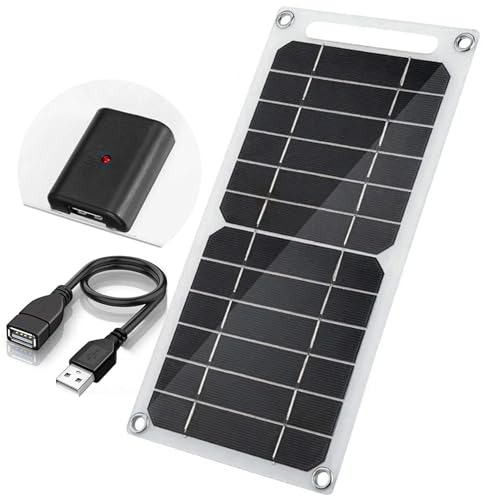
Aocoray Mini 5V 6W USB Solar Panel, Portable 5 Volt 6 Watt High Efficiency Monocrystalline Solar Panel Charger with 55inch Cable for Cellphone Camera Fan Camping Lantern etc.
- Compatible with Multiple Devices: Supports phones, fans, lights, and more
- High Efficiency & Eco-Friendly: Converts sunlight into electricity with high efficiency
- Durable & Weather-Resistant: Built to withstand harsh outdoor conditions
As an affiliate, we earn on qualifying purchases.
As an affiliate, we earn on qualifying purchases.
Frequently Asked Questions
How Much Does a Mobile Tiny Home Typically Cost?
A mobile tiny home typically costs between $30,000 and $80,000, depending on size, features, and customizations. Cost considerations include materials, appliances, and craftsmanship, which influence affordability factors. You can find basic models on the lower end, while premium options with high-end finishes cost more. To stay within your budget, prioritize essential features and explore options for DIY upgrades or financing to make your tiny home more affordable.
Are Mobile Tiny Homes Weatherproof and Durable?
Yes, your mobile tiny home can be weatherproof and durable if you choose the right weatherproofing features and durability materials. Look for homes with insulated, waterproof exteriors, quality sealants, and sturdy framing. Using high-grade siding and corrosion-resistant metals guarantees it withstands harsh weather conditions. Regular maintenance also helps maintain durability. When built with these features, your tiny home remains resilient and safe, no matter the weather outside.
What Permits Are Needed for Remote Tiny Home Placement?
You’ll need to check remote zoning laws and construction regulations before placing your tiny home. Permits vary by location, so contact local authorities to understand if you require a building permit, a special use permit, or zoning clearance. Some remote areas have relaxed rules, but others may have strict regulations. Always verify these requirements beforehand to guarantee legal placement and avoid potential fines or relocation issues.
How Is Waste Management Handled in Remote Locations?
Imagine you’re a pioneer, like those in old frontier days. In remote locations, you handle waste with solar composting or septic systems. Solar composting turns waste into nutrient-rich soil using natural processes, perfect for eco-conscious living. Septic systems, on the other hand, treat and dispose of wastewater efficiently where municipal sewer access isn’t available. Both options help you stay environmentally friendly while maintaining comfort and sanitation.
Can Mobile Tiny Homes Be Expanded or Customized Easily?
Yes, you can easily expand or customize mobile tiny homes thanks to their modular design. You simply add or rearrange modules to increase space or tailor features to your needs. Interior customization is straightforward, allowing you to choose finishes, fixtures, and layouts that suit your lifestyle. This flexibility lets you personalize your tiny home and adapt it as your needs change, making it a versatile solution for remote living.
Conclusion
Building mobile tiny homes for remote living can truly transform your lifestyle, offering freedom and flexibility you might not find elsewhere. Some believe these homes foster a deeper connection to nature and self-sufficiency, and evidence shows many thrive in such setups. While the theory of ultimate independence is appealing, remember it requires careful planning and adaptation. If you’re ready to embrace simplicity and adventure, tiny homes could be your perfect escape into a more intentional, mobile life.