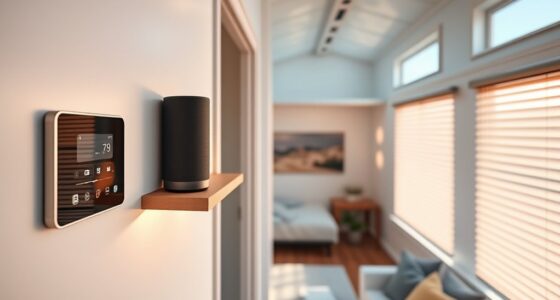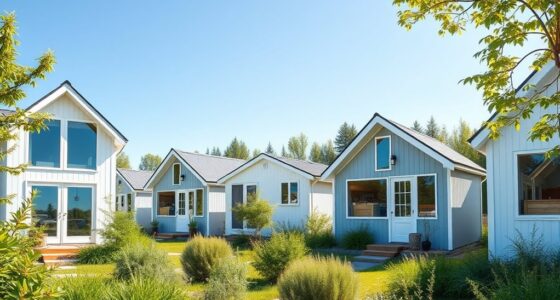
In 2026, you’ll see tiny house designs focus on sustainability, using recycled steel, bamboo, and reclaimed wood to reduce environmental impact. Smart technology will seamlessly control lighting, climate, and security, creating efficient and connected living spaces. Multi-functional furniture and hidden storage maximize limited space, while eco-friendly systems like solar power and rainwater harvesting promote self-sufficiency. If you want to explore how these trends are shaping future tiny homes, there’s more to discover ahead.

Get compact home essentials delivered free with Prime
- Fast, free delivery on millions of items
- Prime Video, Amazon Music and more included
- Member-only deals all year
Key Takeaways
- Increased use of sustainable, recycled, and eco-friendly materials like bamboo, reclaimed wood, and recycled steel.
- Integration of advanced smart home technology for automation, energy efficiency, and remote control.
- Innovative space-saving features such as hidden storage, fold-away furniture, and multi-functional designs.
- Adoption of eco-friendly utility systems including solar panels, rainwater harvesting, and composting toilets.
- Design trends emphasizing environmental responsibility, emotional intelligence, and future-ready, sustainable aesthetics.
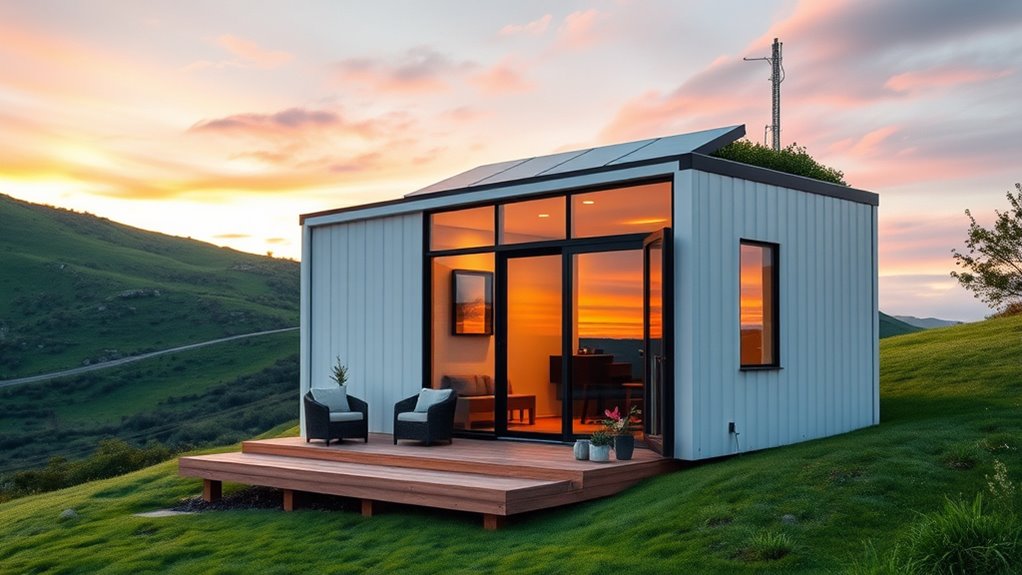
As we approach 2026, tiny house architecture continues to evolve, blending innovative design with sustainable practices. You’ll notice that more tiny homes are built with sustainable materials, emphasizing eco-friendly choices that reduce carbon footprints and promote longevity. Instead of traditional lumber, many builders incorporate recycled steel, bamboo, or reclaimed wood, which not only minimizes environmental impact but also adds unique character to each structure. This shift toward sustainable materials reflects a broader commitment to environmental responsibility, ensuring your tiny home isn’t just stylish but also eco-conscious. Incorporating emotional intelligence into the design process can foster stronger connections between homeowners and their spaces, creating a more personalized and meaningful living experience.
Smart home integration plays a pivotal role in modern tiny house design, transforming small spaces into highly efficient, connected environments. You’ll find that smart technology seamlessly integrates into these homes, allowing you to control lighting, climate, security, and appliances remotely or through voice commands. This integration maximizes space and energy efficiency, making your tiny house more livable and convenient. For example, smart thermostats learn your schedule, reducing energy waste, while automated lighting systems adapt to your preferences, saving space and clutter from traditional switches and controls.
Designers are also focusing on multi-functional features that enhance space utilization. With smart home systems, you can incorporate hidden storage, fold-away furniture, and adjustable lighting, all controlled via centralized apps. This not only keeps your tiny house organized but also elevates comfort and functionality. The combination of sustainable materials and smart technology allows you to create a home that’s both environmentally friendly and highly adaptable to your lifestyle.
Multi-functional features and smart tech make tiny homes more organized, comfortable, and eco-friendly in 2026.
The trend toward sustainability extends beyond materials and technology. Many tiny houses now include solar panels, rainwater harvesting systems, and composting toilets, further reducing reliance on external utilities. These features are increasingly integrated into the design, making your home more self-sufficient. When you choose to build or buy a tiny house in 2026, you’ll be investing in a space that’s smart, sustainable, and tailored to your needs, reflecting a future where eco-awareness and technology go hand in hand.
tiny house smart home automation system
As an affiliate, we earn on qualifying purchases.
As an affiliate, we earn on qualifying purchases.
Frequently Asked Questions
How Do Tiny House Designs Adapt to Different Climates?
You adapt tiny house designs to different climates by implementing climate responsive architecture, which considers local weather conditions. In cold areas, you use adaptive insulation techniques to keep warmth in and reduce energy use. For hot climates, you might incorporate shading devices or reflective materials. These strategies help you create comfortable, energy-efficient tiny homes tailored to diverse environments, ensuring they perform well regardless of where you build.
What Innovative Materials Are Shaping Tiny House Construction in 2026?
Think of tiny house materials as the building blocks of innovation. In 2026, you’ll see sustainable insulation that keeps your space cozy without harming the environment. Lightweight composites are also making waves, allowing you to have durable, easy-to-transport structures. These materials act like a secret sauce, blending eco-friendliness with strength and flexibility, helping you create smarter, more sustainable tiny homes that adapt beautifully to your lifestyle.
How Do Tiny Houses Integrate Renewable Energy Solutions Effectively?
You can effectively integrate renewable energy solutions by focusing on solar integration, installing rooftop solar panels to power your tiny house. Prioritize energy efficiency through high-quality insulation, energy-saving appliances, and smart systems that reduce consumption. By combining solar energy with these efficiency measures, you’ll lower your reliance on grid power and enjoy sustainable living, all while maximizing the limited space and resources typical of tiny house designs.
What Are the Latest Trends in Maximizing Space Storage?
Think of your tiny house as a Tetris game, fitting everything perfectly. You can maximize space storage by using smart, space-saving furniture like fold-outs and wall-mounted units. Incorporate multi-functional storage solutions, such as beds with drawers underneath or stairs with built-in compartments. These strategies help you make full use of every inch, ensuring your home feels spacious and organized without sacrificing style or comfort.
How Are Tiny House Communities Evolving Around Urban Areas?
You see tiny house communities in urban areas evolving through innovative urban planning that promotes density and sustainability. These communities focus on social integration by creating shared spaces and fostering connections among residents. As cities recognize the benefits, you’ll notice more collaborations with local governments, emphasizing accessible living and eco-friendly development. This evolution helps you enjoy a close-knit, sustainable lifestyle while fitting seamlessly into expanding urban landscapes.
Conclusion
As you embrace the latest tiny house trends for 2026, remember that simplicity and innovation go hand in hand—like a vintage typewriter in a digital age. These designs aren’t just about saving space; they reflect a mindful shift towards sustainable, personalized living. So, whether you’re channeling minimalism or blending old and new, stay adaptable. After all, in a world that’s constantly changing, your tiny house should be a timeless sanctuary, much like a classic novel waiting to be rediscovered.
Halloween Picks
halloween
As an affiliate, we earn on qualifying purchases.