
To design for natural cooling and heating, focus on site analysis to understand climate patterns, wind, and sun paths. Orient your building to maximize shade in summer and sun exposure in winter. Incorporate insulation, thermal mass, and shading devices to regulate temperature better and reduce energy use. Use natural ventilation techniques like cross-breezes and stack effect to keep spaces comfortable year-round. Keep exploring these strategies to craft a sustainable, climate-responsive environment that works with nature.
Key Takeaways
- Orient buildings to minimize heat gain in summer and maximize solar access in winter using site analysis and strategic placement.
- Incorporate shading devices like overhangs and louvers to block high summer sun while allowing winter sunlight.
- Design natural ventilation pathways with cross-ventilation, stack effect, and openings aligned with prevailing winds.
- Use thermal mass materials to absorb and release heat, stabilizing indoor temperatures across seasons.
- Integrate insulation and climate-responsive elements to reduce reliance on mechanical heating and cooling systems.
Designing buildings that harness natural cooling and heating is essential for creating energy-efficient and sustainable spaces. When you focus on passive strategies, you’re tapping into design elements that work with the environment rather than against it. These strategies can include orientation, insulation, shading, and natural ventilation, all aimed at reducing reliance on mechanical systems. By making your structure climate responsive, you guarantee it adapts seamlessly to seasonal changes, optimizing comfort while minimizing energy consumption. This approach not only lowers operational costs but also considerably reduces your building’s carbon footprint.
Harness natural cooling and heating through passive design for energy efficiency and sustainability.
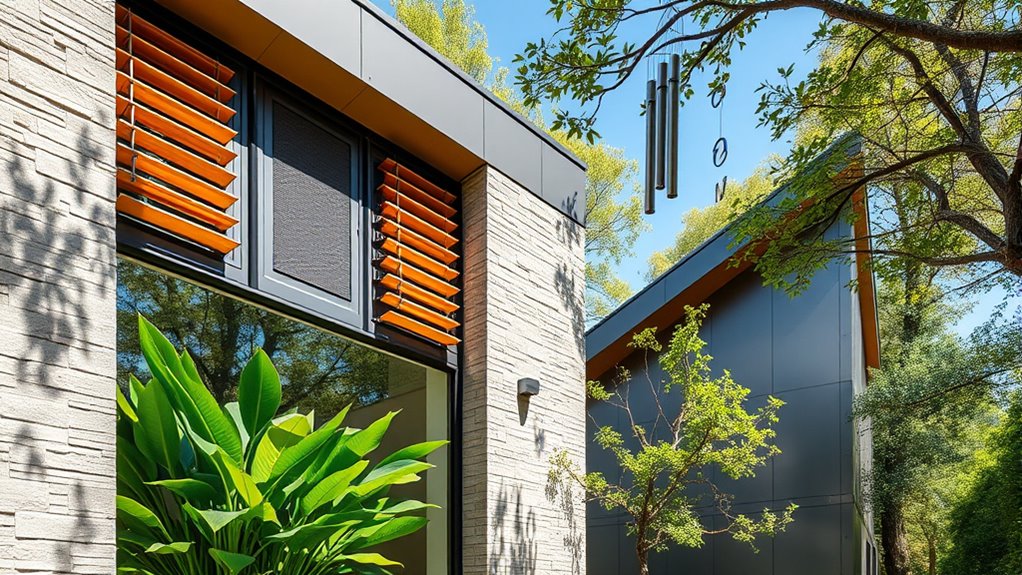
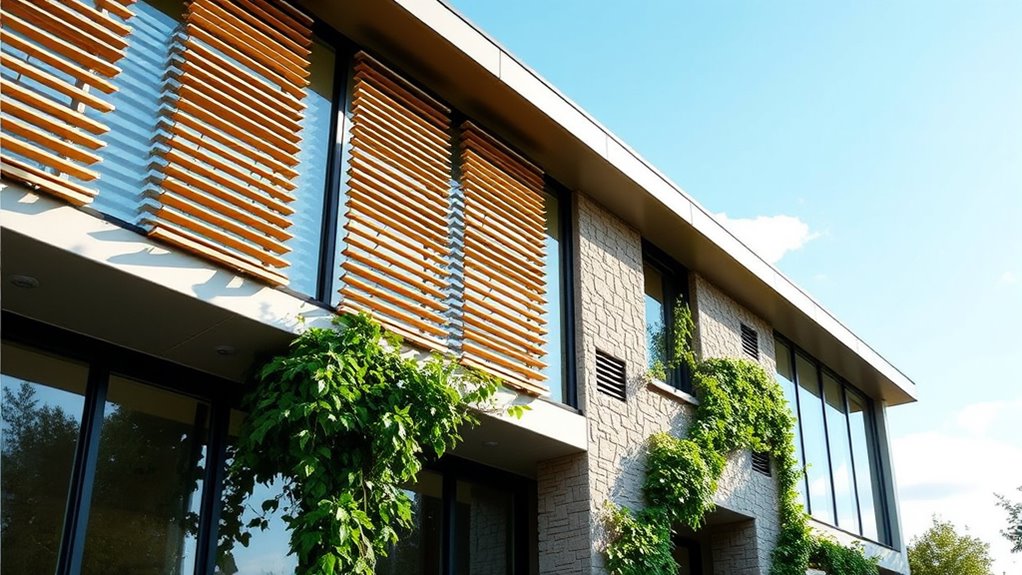
To effectively employ passive strategies, start with site analysis. Understand the local climate patterns, prevailing winds, sun paths, and temperature fluctuations. Position your building to maximize benefits like shade during hot months and sun exposure during cooler periods. For example, orienting the long axis east-west minimizes heat gain in summer while maximizing solar access in winter. Incorporating deep overhangs or louvers can block high summer sun while allowing low winter sun to warm interiors. Such measures create a climate-responsive design that naturally maintains comfortable indoor temperatures.
Insulation plays a key role in passive strategies by reducing heat transfer through walls and roofs. Use high-quality, properly installed insulation materials to keep heat out during summer and retain warmth during winter. This helps maintain a stable indoor environment without over-reliance on mechanical heating or cooling. Complement insulation with thermal mass elements, like concrete or stone, which absorb heat during the day and release it at night, smoothing temperature swings. This combination of passive strategies makes your building more resilient to climate variations and less dependent on active systems.
Natural ventilation is another crucial component. Design windows, vents, and openings to facilitate cross-ventilation, allowing breezes to cool interior spaces naturally. Positioning operable windows on opposite sides encourages airflow, which can considerably reduce indoor temperatures on warm days. Incorporate stack ventilation by designing taller spaces or atriums that use temperature differences to draw cooler air in and expel warm air out. When you optimize ventilation based on local wind patterns and climate responsiveness, you create a dynamic environment that adapts to changing conditions without mechanical intervention.
Incorporating all these passive strategies and making your design climate responsive ensures your building responds intelligently to its environment. It’s about creating a harmonious relationship between your structure and nature, reducing energy use, and promoting comfort year-round. By prioritizing natural cooling and heating techniques, you’re not just constructing a building — you’re cultivating an environment that respects the climate, conserves resources, and benefits both occupants and the planet.
passive solar shading devices
As an affiliate, we earn on qualifying purchases.
As an affiliate, we earn on qualifying purchases.
Frequently Asked Questions
How Do Climate Variations Affect Natural Cooling Strategies?
Climate variations notably impact your natural cooling strategies by requiring climate adaptation to seasonal variability. In warmer seasons, you’ll need to optimize shading and ventilation, while in cooler times, insulation and passive heating become essential. You should monitor changing weather patterns and adjust your design accordingly, ensuring your home remains comfortable year-round. Understanding these climate influences helps you create a resilient, energy-efficient space that responds effectively to seasonal shifts.
What Are the Costs Involved in Implementing Natural Heating Systems?
Think of natural heating systems as planting seeds for future savings. Your initial cost analysis might reveal higher upfront investments, especially for passive solar design or thermal mass materials. But, over time, you’ll enjoy reduced energy bills and lower maintenance costs. These investment considerations make natural heating systems cost-effective, turning your home into a sustainable haven. While the initial costs may seem steep, the long-term benefits outweigh them, making it a smart choice.
How Does Building Orientation Influence Energy Efficiency?
You can boost energy efficiency by optimizing building orientation, which influences sunlight exposure and airflow. Position windows strategically to maximize natural light and ventilation, reducing reliance on artificial heating and cooling. Use shading techniques like overhangs or trellises to control heat gain during hot months and retain warmth in winter. Proper orientation minimizes energy costs, enhances comfort, and promotes sustainable living by leveraging natural conditions effectively.
Can Natural Cooling Techniques Be Integrated With Modern HVAC Systems?
You can absolutely integrate natural cooling techniques with modern HVAC systems. By combining passive design strategies like solar shading and natural ventilation, you reduce reliance on mechanical systems, saving energy and costs. Modern HVAC can then fine-tune comfort levels, creating a seamless, efficient system. This synergy ensures your building stays cool naturally when possible, while the HVAC steps in only when necessary, boosting overall efficiency and sustainability.
What Maintenance Is Required for Passive Heating and Cooling Features?
Passive design features require minimal maintenance, but you should regularly check for blockages, leaks, and debris in elements like vents, shading devices, and insulation. Keep windows and vents clean to make certain proper airflow, and inspect thermal mass components for cracks or damage. Seasonal adjustments, such as reapplying reflective coatings or cleaning shading devices, help maintain efficiency. Regular upkeep ensures your passive heating and cooling features continue to work effectively and save energy.

Thermal Inertia in Energy Efficient Building Envelopes
As an affiliate, we earn on qualifying purchases.
As an affiliate, we earn on qualifying purchases.
Conclusion
By harnessing the sun’s gentle warmth and whispering breezes, you become the architect of comfort in harmony with nature. Think of your space as a living breath, ebbing and flowing with the environment’s rhythm. When you design with nature’s cooling and heating in mind, you’re not just building a home—you’re creating a sanctuary that dances effortlessly with the seasons. Embrace this dance, and let your space breathe easy all year round.

Daisypower Dryer Vent Window Kit, Adjustable Window Vent Kit with Outdoor Dryer Vent Cover,4 Inch Hood for Exhaust Ventilation
【4 inch Adjustable Window Vent Kit】This Dryer Vent window vent kit design provide the solution of indoor dryer…
As an affiliate, we earn on qualifying purchases.
As an affiliate, we earn on qualifying purchases.

Insulate and Weatherize: For Energy Efficiency at Home (Taunton's Build Like a Pro)
Insulate and weatherize
As an affiliate, we earn on qualifying purchases.
As an affiliate, we earn on qualifying purchases.