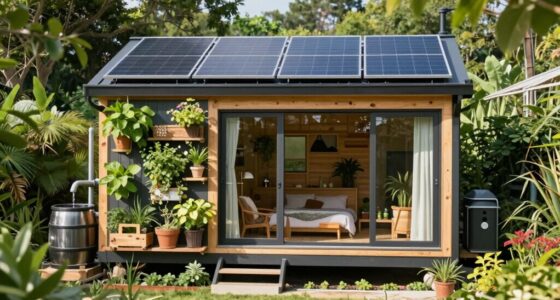
Rainwater systems support your sustainable tiny house lifestyle by providing a reliable, eco-friendly water source that reduces dependence on municipal supplies. By collecting rainwater from your roof and filtering it, you guarantee safe and clean water for daily use, lowering utility bills and minimizing your environmental impact. Proper maintenance keeps your system efficient and durable, giving you peace of mind. Keep exploring to discover how these systems can transform your tiny house into a truly self-sufficient home.

Get compact home essentials delivered free with Prime
- Fast, free delivery on millions of items
- Prime Video, Amazon Music and more included
- Member-only deals all year
Key Takeaways
- Provides a renewable, local water source, reducing dependence on municipal supplies and lowering utility costs.
- Filters rainwater to ensure safe, clean water for drinking and daily use, promoting health and safety.
- Supports eco-friendly living by utilizing natural resources and minimizing environmental impact.
- Enhances self-sufficiency, allowing tiny houses to operate independently from city water systems.
- Promotes sustainable resource management through regular maintenance and efficient system design.

Rainwater systems play a crucial role in making tiny houses more sustainable by providing a reliable source of water while reducing dependence on municipal supplies. When you install a rainwater harvesting system, you tap into a natural, abundant resource that’s often overlooked. As rain falls on your tiny house’s roof, it’s collected through gutters and directed into storage tanks. This process allows you to gather fresh water directly from the sky, cutting down on your reliance on external water sources and lowering your utility bills. Plus, harvesting rainwater is an eco-friendly choice that minimizes your environmental footprint.
However, collecting rainwater isn’t enough on its own. The water you gather needs to be safe for use, especially if you plan to drink or cook with it. That’s where water filtration comes into play. You’ll want to incorporate a reliable filtration system to remove debris, bacteria, and other contaminants. Modern water filters are compact, easy to maintain, and highly effective, making them ideal for tiny houses. By filtering rainwater before use, you guarantee it’s clean and safe, allowing you to enjoy the benefits of sustainable living without sacrificing safety or comfort.
Implementing rainwater harvesting and water filtration together creates a self-sufficient water system that aligns perfectly with tiny house lifestyles. You won’t need to connect to city water lines or worry about running out of supply during dry spells. Instead, you rely on nature’s gift—rain—to keep your water needs met, whether it’s for drinking, cooking, or even bathing. This independence grants you more control over your resource consumption and supports your eco-conscious goals.
Furthermore, maintaining your rainwater system is straightforward. Regularly checking and cleaning your gutters, filters, and tanks ensures your system functions efficiently. You can also add features like first flush diverters, which discard the initial dirty runoff from the roof, further improving water quality. Properly designed systems can also support biodiversity by incorporating native plants around storage tanks, enhancing the ecological benefits. Understanding the technologies used in rainwater systems helps optimize performance and durability. Implementing water testing procedures periodically can also help ensure water quality remains high over time. Additionally, incorporating appropriate materials during system installation can prevent contamination and extend system longevity. Staying informed about rainwater management practices ensures your system remains effective and sustainable in the long run. With proper setup and maintenance, your rainwater system becomes a dependable, sustainable solution that complements the minimalist, eco-friendly ethos of tiny house living.
In essence, rainwater harvesting combined with effective water filtration forms the backbone of a sustainable tiny house water system. It saves you money, reduces environmental impact, and provides peace of mind knowing that you have a dependable water source. As you embrace tiny house living, these systems empower you to live more independently, responsibly, and in harmony with nature.
rainwater harvesting system for tiny house
As an affiliate, we earn on qualifying purchases.
As an affiliate, we earn on qualifying purchases.
Frequently Asked Questions
How Much Does a Rainwater System Typically Cost to Install?
A rainwater system typically costs between $1,000 and $3,000 to install, depending on size and complexity. You’ll want to contemplate expenses for rainwater filtration to guarantee water quality and system durability for long-term use. While initial costs might seem high, these systems save money over time by reducing reliance on municipal water. Proper installation and quality components help ensure your rainwater system remains durable and reliable for sustainable living.
What Maintenance Is Required for Rainwater Harvesting in Tiny Homes?
Think of your rainwater system as a gentle garden stream that needs regular tending. You’ll check the rain filtration to keep debris out, ensuring pure water flows smoothly. Regularly inspect system durability components like pipes and filters for wear, and clean filters to prevent clogs. These simple tasks keep your tiny house’s rainwater harvesting flowing efficiently, safeguarding your sustainable lifestyle with minimal effort and maximum benefit.
Are Rainwater Systems Legal in All Regions?
Rainwater systems aren’t legal everywhere; it depends on regional regulations and rainwater legislation. You need to check your local laws before installing a rainwater harvesting system in your tiny house. Some regions have strict rules or require permits, while others promote rainwater collection for sustainability. Always research your area’s regulations, consult local authorities, and guarantee your system complies with regional laws to avoid potential legal issues.
How Much Water Can a Tiny House’s System Realistically Collect?
You can realistically collect around 50 to 70 gallons of water daily with your tiny house’s rainwater system, depending on your location’s rainfall and roof size. To guarantee safe use, you’ll need rainwater filtration to remove debris and contaminants. Confirm your storage capacity matches your water needs, so you don’t run out during dry spells. Properly sizing your system helps you maximize collection and maintain sustainable water use.
Can Rainwater Systems Fully Meet All Water Needs of a Tiny House?
Rainwater systems can meet most of your tiny house’s water needs, but full independence depends on your setup. You’ll need proper water filtration to guarantee safety and system durability to handle weather variations. While these systems are efficient, they may require supplementary sources during dry spells. Balancing rainwater collection with filtration and durability keeps your tiny home sustainable, but being prepared for occasional shortages makes your system truly reliable.
Conclusion
By integrating rainwater systems into your tiny house, you’re making a smart move toward sustainability. Did you know that capturing just 30% of rainfall can supply enough water for a household’s needs? This not only reduces your dependence on municipal water but also minimizes your ecological footprint. Embracing rainwater harvesting empowers you to live more self-sufficiently and eco-consciously, proving that even small homes can have a big impact on preserving our planet.
Halloween Picks
halloween
As an affiliate, we earn on qualifying purchases.