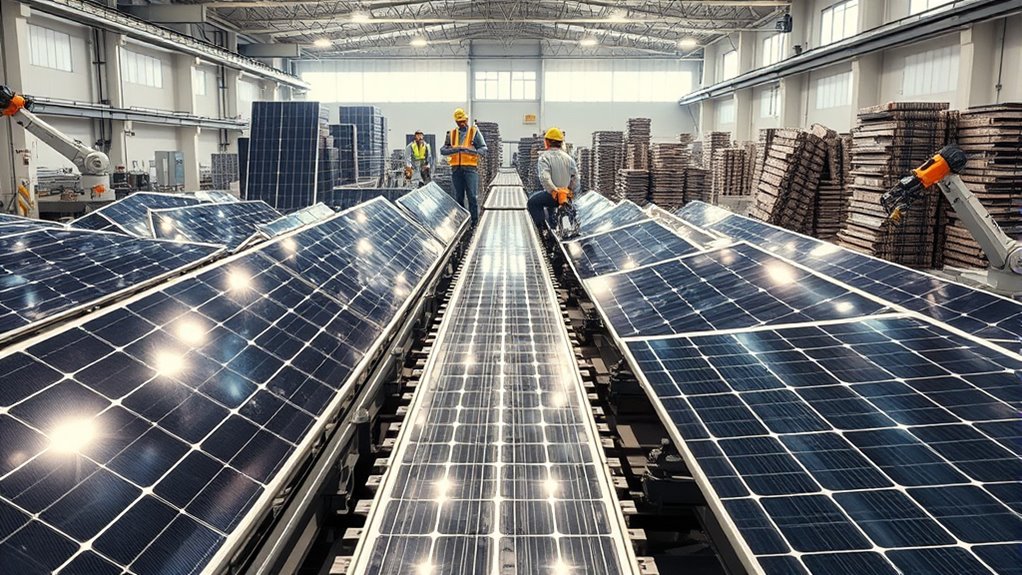

As someone interested in sustainable energy, you might wonder how close we are to achieving a truly closed-loop system for solar panel recycling. Significant technological strides are being made, but challenges still exist in fully reclaiming materials efficiently and economically. While progress indicates a future where waste is minimized and materials are reused, the path toward complete circularity remains complex. Exploring recent innovations and industry efforts can shed light on just how near we are to this goal.
Key Takeaways
- Advances in chemical and thermal recycling processes are improving recovery rates and reducing environmental impact.
- Industry efforts are moving toward closed-loop systems that seamlessly recycle panels into new products.
- Technological innovations are enabling more efficient extraction of valuable materials like silicon and rare metals.
- Economic incentives and policies are supporting the development of sustainable, circular solar panel recycling.
- While full closed-loop recycling is nearing feasibility, widespread implementation still faces technical and logistical challenges.
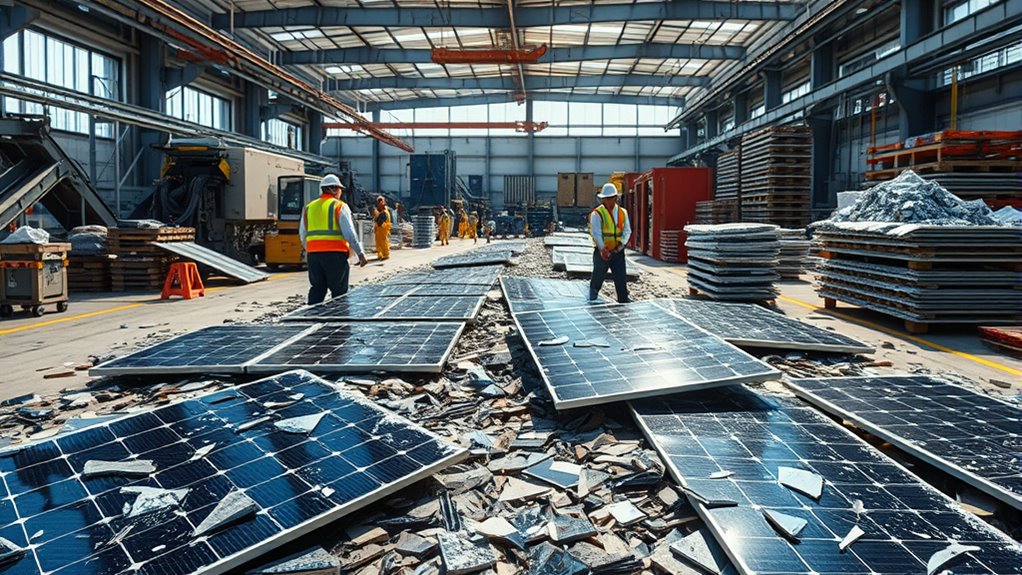
Have you ever wondered what happens to solar panels once they’ve reached the end of their lifespan? As more panels hit the recycling stage, it’s clear that developing efficient processes is essential. Recycling solar panels isn’t just about waste management; it’s about unlocking economic benefits and embracing technological innovations that can transform the industry. When panels are properly recycled, valuable materials like silicon, aluminum, and rare metals such as indium and gallium are recovered and reused. This reduces the need for mining new resources, saving energy and lowering costs. For you, this means a more sustainable and economically viable solar industry that can support growing demand without depleting finite resources.
Recycling solar panels recovers valuable materials, reduces resource depletion, and promotes a sustainable, economically efficient solar industry.
Technological innovations play a pivotal role in advancing solar panel recycling. New methods, such as chemical and thermal processes, are making it increasingly feasible to extract materials more efficiently and with less environmental impact. For example, researchers are developing techniques that can break down panels into their core components while preserving the purity of materials. These innovations aren’t just improving recovery rates—they’re also reducing costs, making recycling more accessible and attractive for companies and consumers alike. As these technologies evolve, they bring us closer to a closed-loop system, where old panels are seamlessly transformed into new ones without waste or significant environmental harm.
The economic benefits of improved recycling processes are substantial. When materials are recovered and reused, manufacturers save money on raw material procurement and reduce their environmental footprint, which can translate into lower prices for consumers. Plus, creating a robust recycling industry generates jobs and stimulates economic growth within local communities. Governments are increasingly supporting policies and incentives that encourage recycling efforts, recognizing that a circular approach to solar panel lifecycle management is both environmentally and economically sound.
For you, understanding these innovations and benefits highlights how the solar industry is moving towards sustainability and resilience. The goal isn’t just to dispose of panels but to reuse their components, minimizing waste and maximizing value. As research continues and recycling technologies improve, the vision of a closed-loop system becomes more attainable. This shift promises long-term sustainability for solar energy, ensuring that the environmental advantages of solar power aren’t undermined by waste. In the end, the future of solar panel recycling is about creating a smarter, greener, and more economically sustainable energy landscape—one where panels are not just discarded but reborn into new generations of clean energy solutions.

ECO-WORTHY 7.168KWH 800W Solar Panel Kit for RV Off Grid Complete System with 4PCS 200W Solar Panels, 3000W UPS Inverter Charger, 2PC 12.8V 280AH Lithium Batteries, 60A MPPT Controller Bluetooth
【800W Solar Panel Kit】The 800W off grid solar system complete kit is equipped with 25.2% High-Efficiency Solar Cell…
As an affiliate, we earn on qualifying purchases.
As an affiliate, we earn on qualifying purchases.
Conclusion
You’re probably wondering if a fully closed-loop solar panel recycling system is just around the corner. While challenges remain, recent innovations suggest we’re closer than ever. Breakthroughs in material recovery and policy support are pushing industry toward near-complete reuse of resources. Although a perfect cycle isn’t here yet, the rapid progress indicates that achieving a sustainable, circular solar industry could become a reality sooner than you think—making clean energy even greener.

Klein Tools 68426S Solar Panel Insulating Wrench, Assembly and Disassembly Tool for MC4 Style PV Connectors, 2-Piece
SOLAR INSULATING WRENCH: Designed for MC4 Style PV connectors, facilitating both assembly and disassembly tasks effortlessly
As an affiliate, we earn on qualifying purchases.
As an affiliate, we earn on qualifying purchases.

Svzadipe 200W Solar Panel Kit 12V Dual 5V USB Outputs Solar Panel Controller Combo,with 100A Solar Charge Controller for Boat Motorcycle Home Outdoor Lights RV Outdoor Camera Generators (Black)
Solar Panel Kit Use Of Good-Quality Materials, Built-In Multiple Intelligent Protection Systems To Ensure That The Inverter Is…
As an affiliate, we earn on qualifying purchases.
As an affiliate, we earn on qualifying purchases.

Rubbermaid 9W2773BLU Brute Recycling Rollout Container – 50 Gallon, Square, Blue, Plastic
Large container can serve as central repository for multiple collection stations.
As an affiliate, we earn on qualifying purchases.
As an affiliate, we earn on qualifying purchases.