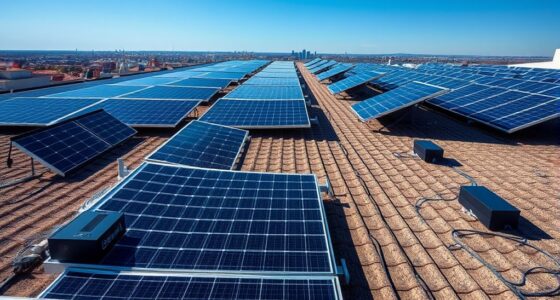
As you consider investing in solar power, you’ll notice that 2025 has brought notable improvements in payback math. Reduced panel costs, technological advances, and rising electricity rates make the financial case more compelling than ever. While upfront costs and grid connections still matter, streamlined permitting processes and incentives are shortening the time needed to recoup your investment. Understanding these shifts can help you make more informed decisions about going solar—so, what exactly has changed?
Key Takeaways
- Falling solar panel costs and improved efficiency shorten the payback period for 2025 investments.
- Incentives and rebates continue to reduce upfront costs, accelerating break-even timelines.
- Lower grid connection fees and streamlined permitting further improve financial returns.
- Technological advances, including affordable storage, enhance savings and shorten payback periods.
- Location-specific factors and electricity rates significantly influence the time to break even.
As solar technology continues to improve and prices drop, understanding the payback period for solar investments in 2025 becomes more important than ever. You want to know when your investment will start saving you money, and factors like solar panel incentives and grid integration costs play a vital role in that calculation. Governments and local authorities are offering various solar panel incentives, such as tax credits, rebates, and grants, that drastically reduce your upfront costs. These incentives can cut thousands of dollars from the total installation expense, making solar more accessible and financially attractive. However, it’s essential to factor in the timing and availability of these incentives, as they may phase out or change over the next year.
Understanding solar incentives and costs in 2025 helps you estimate your investment’s payback timeline.
In addition to incentives, grid integration costs are an important consideration. When you install solar panels, connecting them to the grid isn’t always straightforward or free. These costs include permits, upgrades to your electrical system, or even fees for grid connection, which can add hundreds or thousands of dollars to your overall investment. As solar adoption increases, grid operators are working to streamline these processes, but they still represent a notable expense that affects your payback period. Understanding these costs upfront helps you better estimate how long it will take for your solar system to pay for itself through energy savings.
The good news is that in 2025, the decreasing cost of solar panels combined with improved efficiency means you’ll need a smaller system to generate the same amount of energy. This reduces your initial investment and shortens your payback period. When you factor in solar panel incentives, the savings grow even more, making solar a faster return on investment than in previous years. Furthermore, as battery storage becomes more affordable, you might also consider pairing your solar system with energy storage, further enhancing your savings and independence from the grid. Additionally, understanding the building and legal considerations can help prevent unexpected costs or delays during installation.
Despite these benefits, it’s important to carefully analyze your specific situation. Your location, local electricity rates, available incentives, and the costs associated with grid integration all influence your payback timeline. A detailed financial analysis or consulting with a solar professional can help you understand how these variables balance out for your home. Ultimately, with the combined effect of falling prices, incentives, and technological advancements, the breakeven point for solar investments in 2025 is inching closer, making it an increasingly compelling choice for homeowners looking to cut energy costs and reduce their carbon footprint.
Top picks for "solar payback math"
Open Amazon search results for this keyword.
As an affiliate, we earn on qualifying purchases.
Conclusion
By 2025, solar payback math is like a race where you’re gaining ground faster than ever. With lower costs, better tech, and higher incentives, your investment’s return happens sooner, making solar more tempting than a sweet deal. As electricity rates rise and permitting gets easier, you’ll find yourself closer to breaking even—like reaching the finish line in record time. Now’s the perfect moment to contemplate solar and turn sunlight into savings.