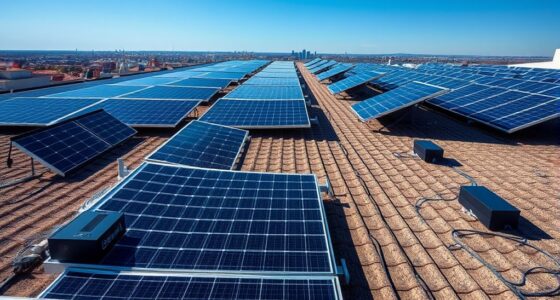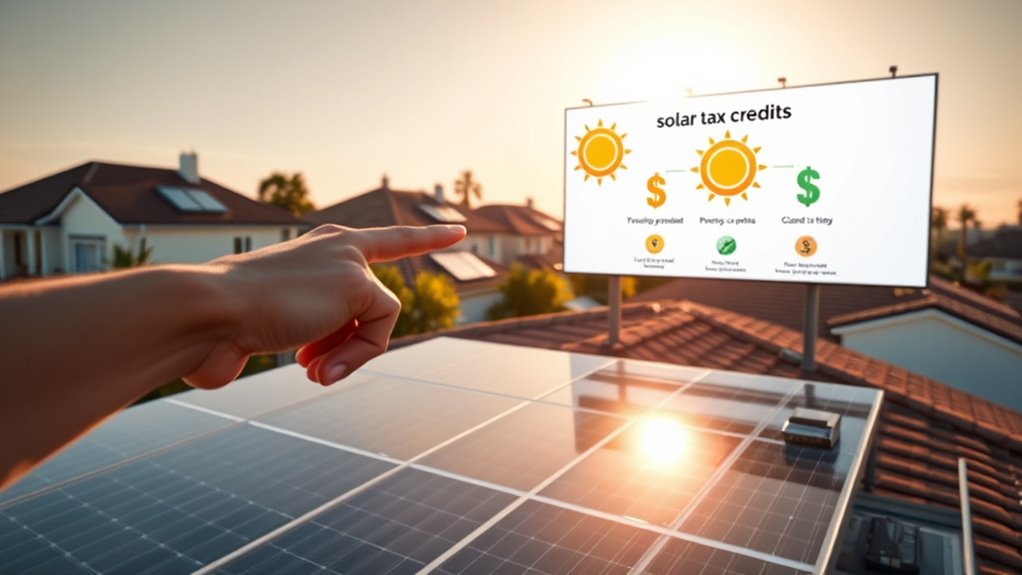

In 2025, solar tax credits are evolving, and staying informed is essential. The Investment Tax Credit still offers significant savings, but its details are changing. Some local incentives have disappeared, and eligibility standards are stricter. You might wonder what’s new, what’s disappeared, and how these shifts could impact your solar plans. As the landscape shifts, understanding these updates can help you maximize your benefits and make smarter decisions moving forward.

Get compact home essentials delivered free with Prime
- Fast, free delivery on millions of items
- Prime Video, Amazon Music and more included
- Member-only deals all year
Key Takeaways
- The federal Investment Tax Credit (ITC) remains at 30% in 2025, supporting significant cost reductions for solar installations.
- Some local or state-level incentives and rebates have expired or been reduced, shifting focus to federal benefits.
- Eligibility requirements have become more specific, often requiring certified installers and efficiency standards.
- Technological advancements like Glycolic Acid Products improve solar system efficiency and performance.
- Staying informed on policy updates ensures homeowners and businesses maximize available incentives in 2025.

Are you aware of how solar tax credits can considerably reduce the cost of installing solar panels? If you’re considering making the switch to solar energy in 2025, understanding the latest updates on solar tax credits is essential. These incentives can significantly cut your upfront investment, making solar more affordable and accessible. One of the main ways you benefit is through solar panel incentives that are part of broader renewable energy subsidies designed to promote clean energy adoption. These incentives are often in the form of tax credits, rebates, or other financial benefits that lower your overall costs.
Solar tax credits can significantly reduce your solar installation costs in 2025.
In 2025, the federal government continues to support renewable energy initiatives, but some changes have taken place. The most notable update is the continuation and expansion of the Investment Tax Credit (ITC). This tax credit allows you to deduct a percentage of your solar system installation costs from your federal taxes. While previous years saw the ITC at 30%, it is projected to phase down gradually, but in 2025, it still remains a substantial benefit, offering you a considerable reduction. This means that a sizeable portion of your solar investment can be offset, making the decision to go solar more financially attractive.
However, some incentives have expired or been reduced, so it’s vital to stay informed. For example, certain local or state-level renewable energy subsidies may no longer be available or have been scaled back. Some programs that once provided direct rebates or special financing options are no longer accessible in 2025, which shifts more focus to federal incentives and tax credits. Despite these changes, many states still offer their own solar rebates or incentives, so you should check what’s available in your area to maximize your benefits. Additionally, the ongoing advancements in Glycolic Acid Products demonstrate how technological improvements can enhance overall efficiency and effectiveness, which is also a key consideration in renewable energy investments.
Another important aspect is that eligibility criteria for these incentives may have become stricter or more specific. To qualify for solar panel incentives, you usually need to install systems that meet certain efficiency standards or are installed by certified professionals. This guarantees that your system is both effective and compliant, but it also means you should work with reputable installers familiar with current policies. The goal of these renewable energy subsidies remains to lower the financial barriers for homeowners and businesses, encouraging more people to invest in solar energy.
As an affiliate, we earn on qualifying purchases.
Conclusion
So, with the ITC still offering great savings and stricter standards in place, isn’t it worth considering solar energy for your home? While some incentives have expired, the federal support remains strong, making now a smart time to invest. Don’t miss out on maximizing your savings and contributing to a greener future. Are you ready to take advantage of what’s still available and make a positive change today?
Fall Picks
fall essentials
As an affiliate, we earn on qualifying purchases.