
To achieve balance in tiny living and work, focus on smart space management by creating dedicated zones for work and relaxation. Use multi-functional furniture and clever storage to maximize every inch and reduce clutter, which helps clear your mind. Establish boundaries to prevent work from spilling into your personal space, promoting mental clarity and reducing stress. By intentionally designing your environment, you’ll foster harmony and well-being— stay tuned to discover how to make your small space a sanctuary for both work and life.
Key Takeaways
- Designate a specific, organized workspace within the tiny home to separate work from personal life.
- Use multi-functional furniture and clever storage to maximize space and reduce clutter.
- Set clear boundaries and schedules to prevent work from encroaching on personal time.
- Minimize possessions and focus on meaningful items to promote mental clarity and reduce distractions.
- Create a calming environment through intentional organization to support well-being and work-life balance.
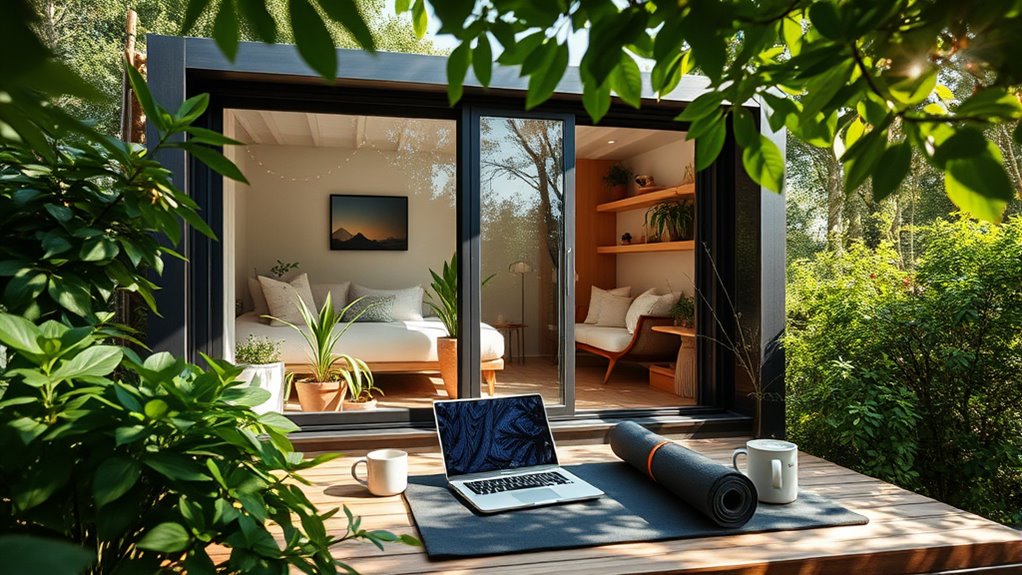
Have you ever wondered how to find harmony amidst life’s chaos? Achieving a balanced life, especially when juggling tiny living and work, starts with understanding the importance of space optimization. In small living spaces, every inch counts, and smart organization becomes essential. When you maximize your space effectively, you reduce clutter and create a sense of order. This isn’t just about making your home look tidy; it’s about fostering an environment that supports your mental well-being. Clutter can weigh heavily on your mind, making it difficult to focus or relax. By intentionally designing your space with purpose—using multi-functional furniture, clever storage solutions, and minimalistic decor—you clear the mental clutter that often accompanies physical disorder. When your environment is organized, your mind feels lighter, more focused, and less overwhelmed.
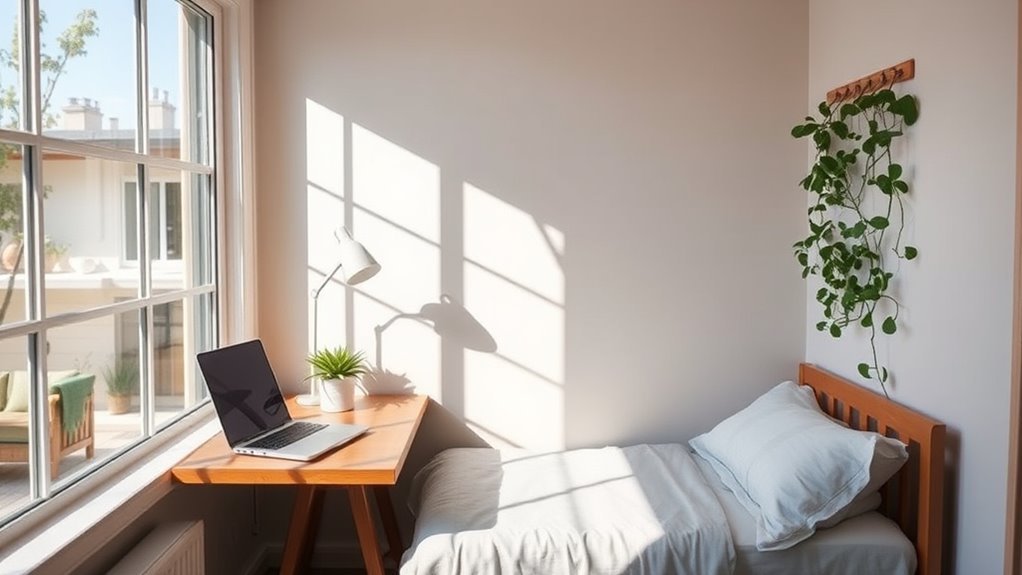
Balancing work and tiny living requires intentional space management. If your workspace is within your home, carving out a dedicated area helps establish boundaries between professional and personal life. This boundary is essential because it prevents work from spilling into your personal space, which can lead to stress and burnout. A well-defined work zone also boosts productivity. When you optimize this area, adding shelves or storage units to keep supplies out of sight, you create a calming environment that promotes mental clarity. Having a designated spot for work minimizes distractions and helps you switch gears easily between tasks, contributing to a healthier work-life balance. Plus, a neat workspace improves your mood and sense of control, supporting your overall mental well-being. Additionally, staying informed about legislative changes related to personal debt forgiveness bills can alleviate financial stress, freeing up mental space for other priorities.
Creating a dedicated workspace boosts productivity, reduces stress, and enhances mental well-being in tiny living environments.
Furthermore, space optimization extends beyond physical arrangements. It’s about cultivating a mindset that values simplicity and intentionality. When you limit unnecessary possessions and focus on what truly adds value to your life, you reduce decision fatigue and mental clutter. This minimalist approach encourages mindfulness, helping you stay present and appreciate the smaller, meaningful aspects of your life. It also enables you to better manage your time and energy, ensuring that neither your work nor personal life overwhelms you. In tiny living, every decision about space matters—each choice can either contribute to or detract from your mental well-being. By intentionally shaping your environment, you foster a sense of peace and control that’s essential for maintaining balance amid daily chaos.
In essence, mastering space optimization in tiny living is a powerful step toward achieving harmony. When your environment supports your mental well-being, work becomes less stressful, and life feels more manageable. It’s about creating a sanctuary where you can thrive, no matter how limited your space may be. With mindful organization and intentional design, you build a foundation of stability and calm that helps you navigate life’s ups and downs with resilience. Achieving balance isn’t about having more space; it’s about making the most of what you have to foster a peaceful, productive, and fulfilling life.
Frequently Asked Questions
How Can I Maximize Space in a Tiny Living Environment?
To maximize space in your tiny living environment, invest in multi-functional furniture like sofas that double as beds or fold-away desks. Get creative with storage solutions by using under-bed drawers, wall-mounted shelves, and hidden compartments. Keep clutter to a minimum and choose pieces that serve multiple purposes. This approach helps you utilize every inch efficiently, making your space feel larger and more comfortable without sacrificing functionality.
What Are Effective Time Management Strategies for Tiny Home Dwellers?
You can maximize your time by using space optimization and routine planning. Set specific work hours and stick to them, creating clear boundaries between work and leisure. Use a calendar or digital reminders to stay organized, and prioritize tasks to avoid cluttering your schedule. Incorporate quick breaks to recharge, and keep your tiny space tidy to maintain focus. These strategies help you stay productive while enjoying your compact living environment.
How Do I Set Boundaries Between Work and Personal Life?
To set boundaries between work and personal life, you need to prioritize work life separation by establishing clear start and end times for your workday. Create designated personal spaces within your tiny home where work isn’t allowed, reinforcing personal boundaries. Communicate your availability to others, and stick to these limits consistently. This helps you maintain a healthy balance, ensuring work doesn’t spill into your personal time.
What Are Best Practices for Maintaining Mental Health in Small Spaces?
To sustain your mental health in small spaces, establish daily routines that promote well-being. Incorporate self-care practices like regular exercise, mindfulness, and quiet time to reduce stress. Keep your environment organized to avoid clutter, which can cause anxiety. Prioritize mental health routines such as journaling or deep breathing, and set boundaries to make sure you have time for yourself. Consistent self-care helps you stay resilient and balanced in compact living spaces.
How Can Technology Improve Work-Life Balance in Tiny Living Situations?
You can improve your work-life balance in tiny living by leveraging a smart home setup, which automates routines and creates designated work zones. Virtual collaboration tools let you connect seamlessly with colleagues, reducing the need for physical space while maintaining productivity. This integration helps you switch effortlessly between work and personal life, minimizing stress and maximizing your tiny space’s potential for both relaxation and efficiency.
Conclusion
Finding balance between tiny living and work isn’t just about space; it’s about creating a lifestyle that suits you. Did you know that 78% of tiny homeowners report feeling happier and less stressed? By embracing minimalist habits and setting clear boundaries, you can enjoy the freedom and simplicity tiny living offers. Remember, achieving harmony takes effort, but the rewards—more time, less clutter, and greater happiness—are well worth it.