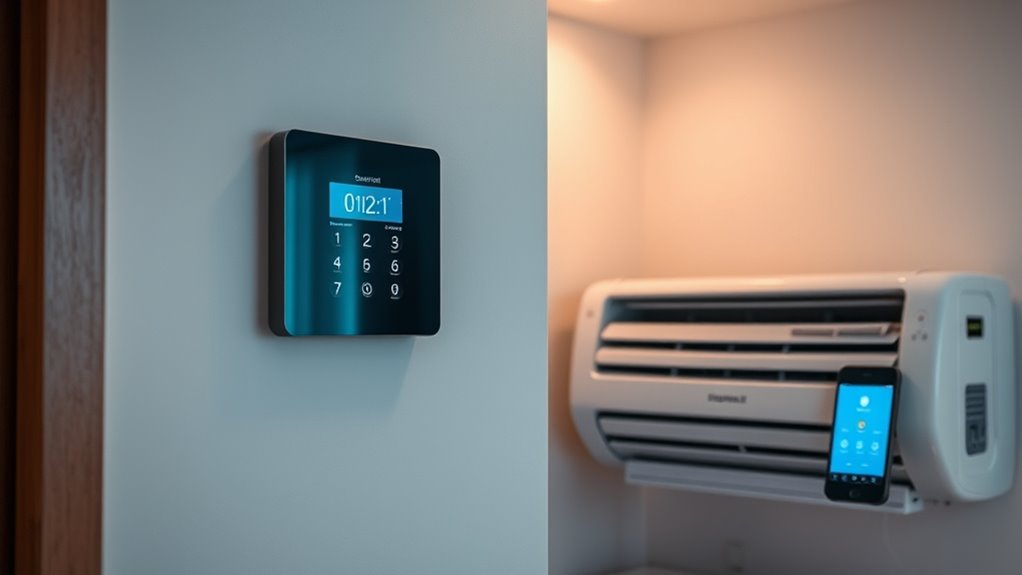
Smart HVAC systems for small homes make it easy to stay comfortable while saving energy and money. With remote control and automation, you can adjust your climate from anywhere, pre-cool or heat your home, and avoid waste when you’re away. They also offer zoning options to heat or cool specific areas, reducing unnecessary energy use. If you want to discover how these features work together to improve your home’s efficiency, keep exploring the benefits they provide.
Key Takeaways
- Smart HVAC systems enhance comfort and energy efficiency, reducing utility bills in small homes.
- Remote control and automation allow personalized climate management and pre-conditioning from anywhere.
- Data monitoring provides insights for optimizing energy use and scheduling maintenance proactively.
- Zoning capabilities enable targeted heating or cooling, minimizing waste and lowering costs.
- These systems promote sustainability by reducing energy waste and supporting integration with renewable sources.
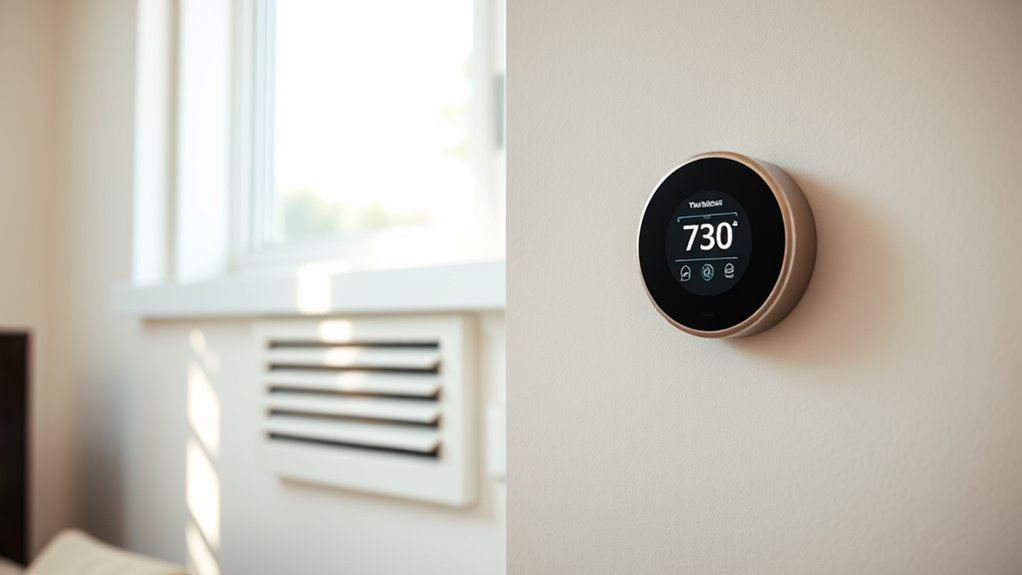
Smart HVAC systems are transforming how small homes maintain comfort and energy efficiency. These advanced systems leverage technology to optimize heating and cooling, ensuring you stay comfortable while reducing energy consumption. For you, this means not only enjoying a more consistent indoor climate but also reaping significant cost savings over time. When your HVAC system operates more efficiently, it uses less energy, which translates directly into lower utility bills. This is especially important for small homes, where energy waste can be more noticeable and costly, making smart systems a smart investment.
Smart HVAC systems improve comfort and cut energy costs in small homes.
With smart HVAC, you gain the ability to control your climate remotely through your smartphone or voice commands. You can adjust the temperature before you get home or turn off the system when you’re away, preventing unnecessary energy use. This kind of control helps you fine-tune your home’s environment and avoid energy waste, leading to better energy efficiency. Furthermore, many smart systems learn your routines over time, automatically adjusting settings for peak performance. This adaptive functionality ensures your home maintains comfort without overworking the system, further boosting energy efficiency and helping you save money.
Another benefit is the detailed data smart HVAC systems provide about your energy consumption. By monitoring usage patterns, you can identify opportunities to improve efficiency, such as adjusting thermostat settings or scheduling maintenance before issues develop. These insights empower you to make informed decisions that enhance energy efficiency and prolong your system’s lifespan, saving you even more money in the long run. Additionally, integrating smart home technology can streamline your home’s systems for greater overall efficiency.
Installing a smart HVAC system also often comes with features like zoning, which allows you to heat or cool only specific areas of your home. This targeted approach minimizes wasted energy by avoiding unnecessary heating or cooling of unoccupied spaces. As a result, your system works smarter, and your energy bills decrease. Plus, many smart systems are compatible with renewable energy sources or smart home integrations, further enhancing your home’s overall efficiency and sustainability.
In the end, investing in a smart HVAC system for your small home is about more than just comfort—it’s a strategic move toward reducing energy waste and lowering costs. The convenience of remote control, intelligent learning, detailed usage data, and zoning capabilities all work together to maximize efficiency. Over time, these features help you save money and reduce your environmental footprint, making your home not only more comfortable but also more sustainable and budget-friendly.
smart HVAC system for small home
As an affiliate, we earn on qualifying purchases.
As an affiliate, we earn on qualifying purchases.
Frequently Asked Questions
How Do Smart HVAC Systems Impact Energy Bills Long-Term?
Smart HVAC systems considerably lower your energy bills over time by optimizing heating and cooling based on your schedule and preferences. They offer energy savings through precise temperature control, reducing unnecessary energy usage. As a result, your utility costs decrease consistently, especially when the system learns your habits and adjusts accordingly. Over the long term, investing in a smart HVAC system pays off with reduced utility expenses and more efficient energy consumption.
Are Smart HVAC Systems Compatible With Existing Home Insulation?
Yes, smart HVAC systems are compatible with your existing home insulation. They work well with various levels of insulation because they can adapt to the home’s thermal conditions, optimizing energy use. Proper home insulation enhances HVAC efficiency, and smart systems can automatically adjust settings based on insulation quality. This integration helps you save energy and maintain comfortable temperatures without needing to replace your current insulation.
What Are the Initial Costs for Installing a Smart HVAC System?
Think of the initial costs for installing a smart HVAC system as planting a seed for future savings. Typically, installation costs range from $2,500 to $6,000, depending on the system and your home. Luckily, financing options are like a gentle rain that helps your budget grow over time. While the upfront investment may seem steep, the energy savings and convenience make it a worthwhile journey toward a smarter, more efficient home.
Can Smart HVAC Systems Be Integrated With Other Smart Home Devices?
Yes, smart HVAC systems can be integrated with other smart home devices. You can easily connect your system through home automation platforms, enabling device interoperability. This allows you to control your HVAC alongside lighting, security, and other smart devices from a single app or voice command. By integrating these systems, you enhance convenience, energy efficiency, and overall home comfort, making your smart home more seamless and intuitive.
How Secure Are Smart HVAC Systems Against Hacking or Data Breaches?
Your smart HVAC system is like a delicate castle, vulnerable to cybersecurity risks if not properly guarded. While manufacturers implement encryption and regular updates, vulnerabilities still exist, risking data privacy breaches. You should guarantee your device uses strong passwords, updates firmware promptly, and connects through secure networks. Staying vigilant helps protect your home’s digital fortress from hackers, keeping your climate control safe and private.
remote control smart thermostat
As an affiliate, we earn on qualifying purchases.
As an affiliate, we earn on qualifying purchases.
Conclusion
Embracing a smart HVAC system for your small home is like giving it a heartbeat, pulsing with efficiency and comfort. With just a tap, you can orchestrate perfect temperatures, turning your space into a cozy haven or a breezy retreat. Think of it as your home’s silent guardian, always watching, always adjusting—making life simpler and more comfortable. Upgrade today, and let your home breathe easy, like a gentle breeze on a warm day.
zoning compatible smart HVAC
As an affiliate, we earn on qualifying purchases.
As an affiliate, we earn on qualifying purchases.
energy monitoring smart HVAC
As an affiliate, we earn on qualifying purchases.
As an affiliate, we earn on qualifying purchases.